Built to be too much: 80s & 90s German Tuner Icons at Autoworld Brussels
Growing up in 90s Germany with an interest in anything with wheels, it was practically impossible to miss Manta Manta, a cheesy comedy film making fun of Opel Manta drivers. As much as they tried to make it into a comedy, they also unintentionally created almost a documentary, a time capsule of German car culture as it was in the early 90s. The hero car of the film absolutely embodies German car culture of that era: an exercise in excess, taking an Opel Manta and turning it into a garish monstrosity in yellow, turquoise, and magenta that was wider than a stock Ferrari Testarossa. That car is practically seared into the minds of multiple generations of German gearheads.
Having grown up with said film and also reading whatever modified car magazines I could get my hands on as a kid, it is no wonder that I have always felt drawn to these fibreglass monstrosities that our local tuners churned out in the 80s and 90s. Colourful names like Rieger, Mattig, Koenig, and Strosek did their best to turn cars into wild creations the original designers never even dared to think of. Many of them started with everyday cars like VW Golfs and Opel Mantas at first, but the modification craze did not stop there. It went all the way to the top, where even Ferraris got cut up and widened.
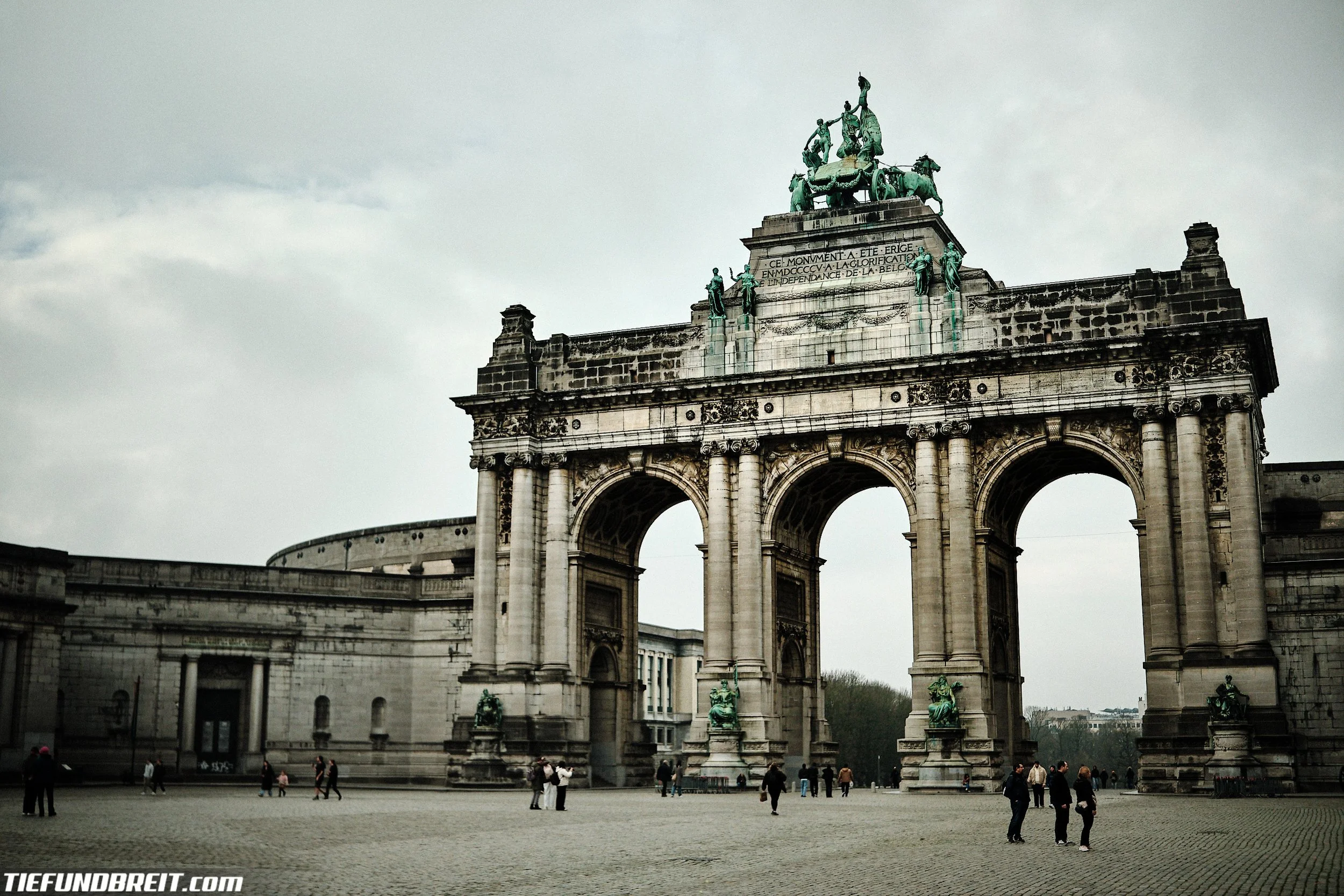
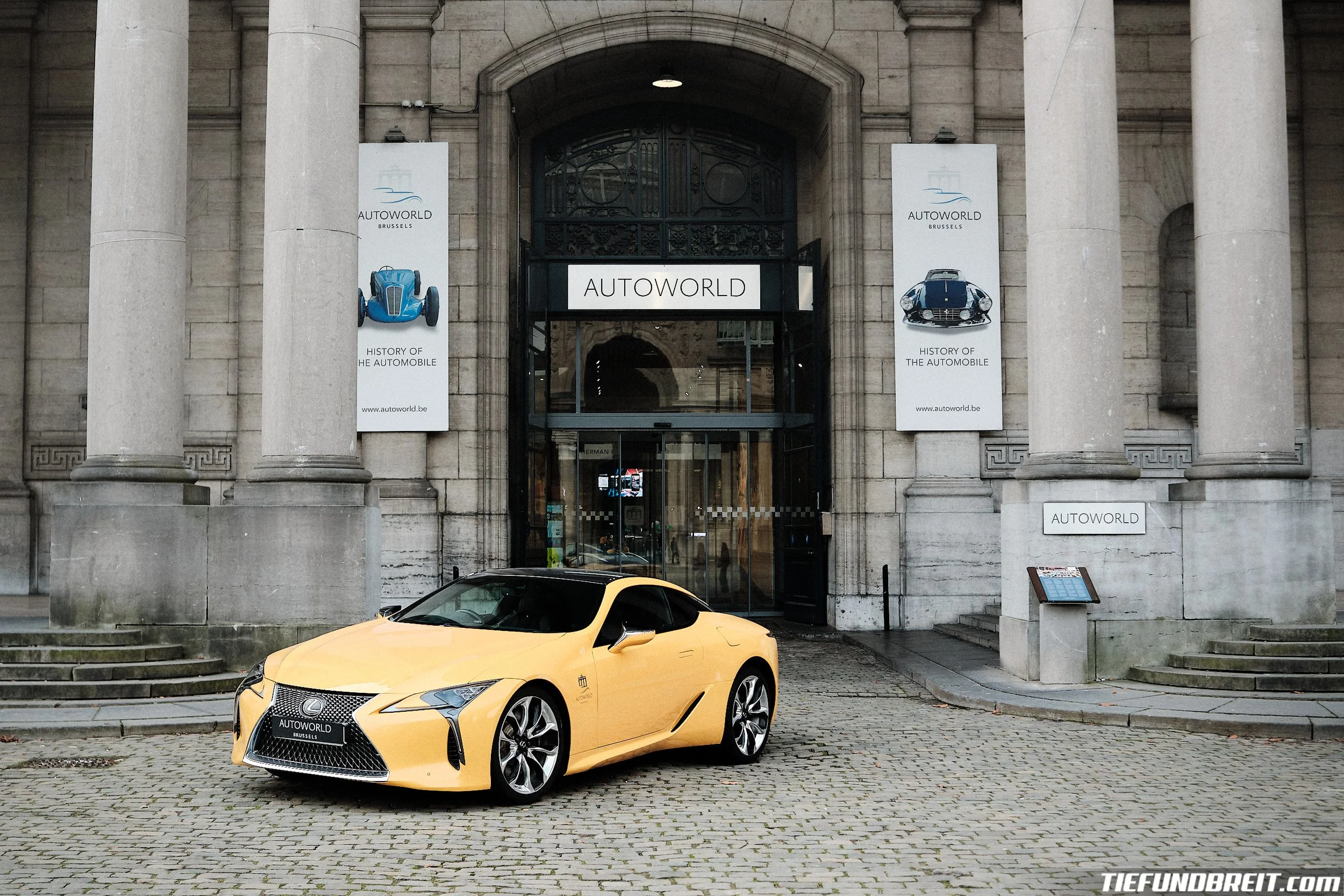
Autoworld Brussels just happened to be hosting a special pop-up exhibit centered around exactly these kinds of cars, so I made it my personal mission to go there. Luckily, I managed to catch it on the last day it was open in December before the exhibit got swapped out for another special exhibit. Autoworld Brussels is located smack in the center of the Belgian capital, just inside Parc du Cinquantenaire along with a military museum and an art museum. From the outside, there is really not much telling you what you will find inside.
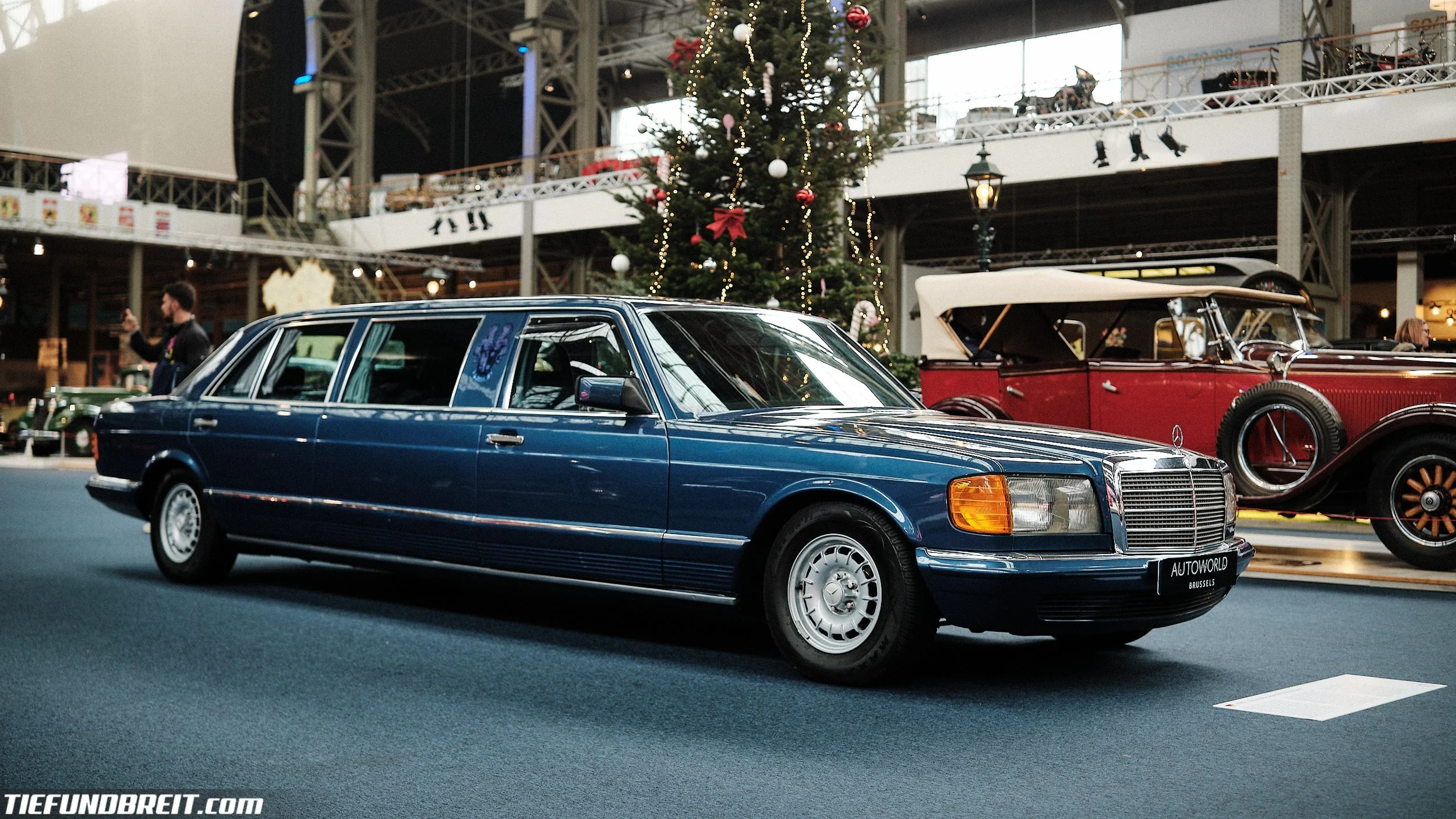
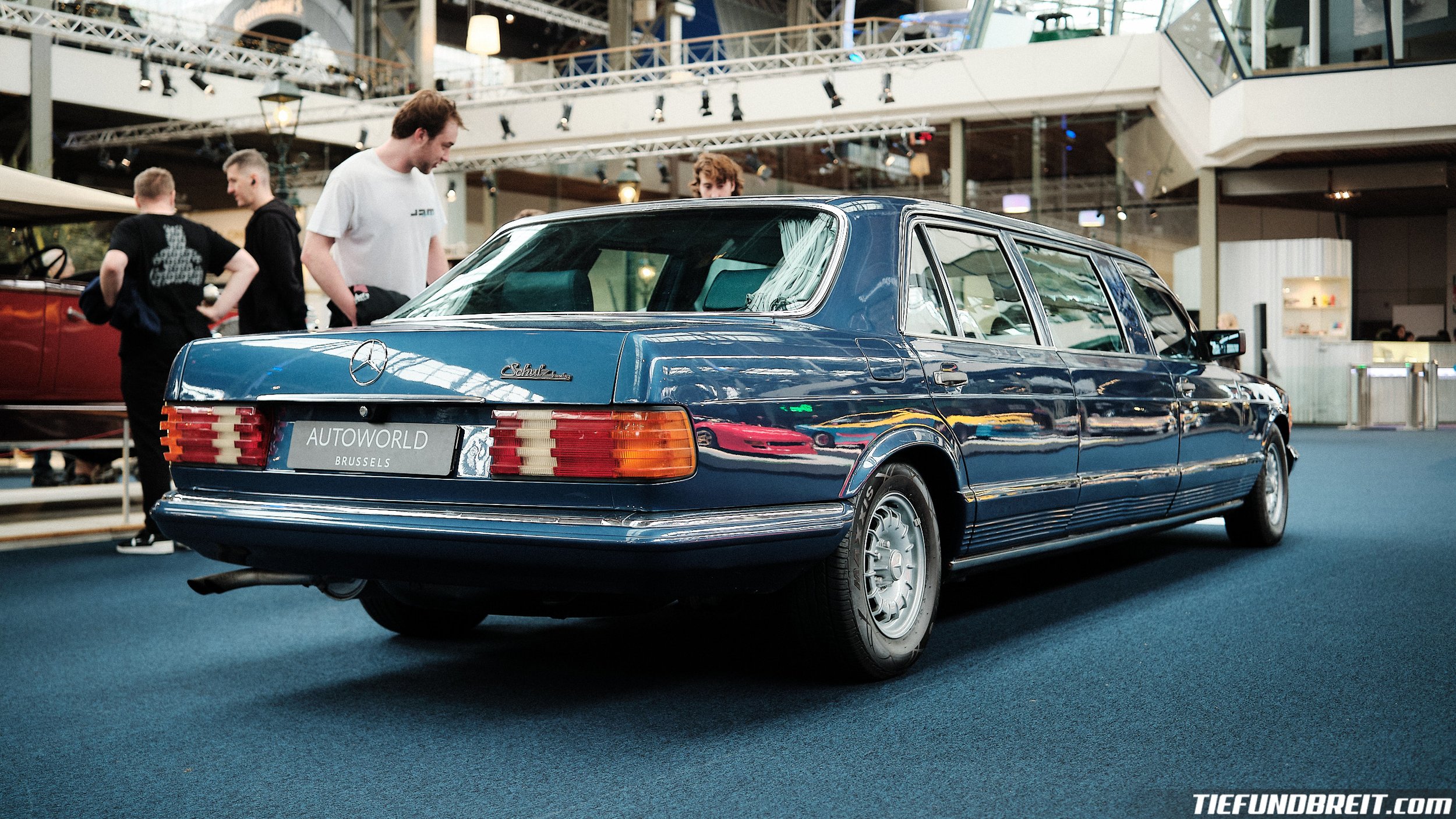
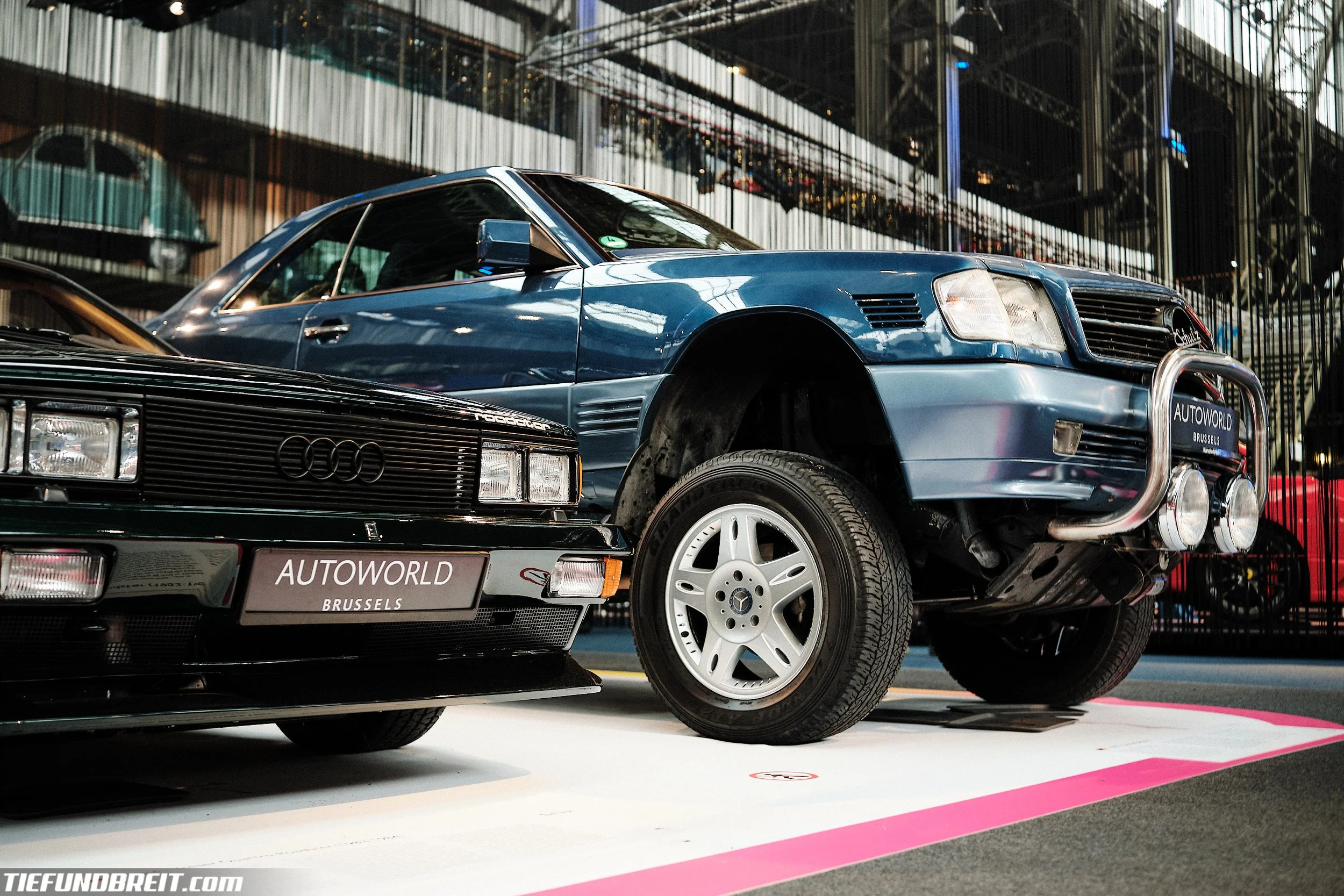
As soon as you step into their halls, you are immediately greeted by a great overview of the exhibits, with the huge skylights in the ceiling providing a beautiful, creamy, soft light. For this special exhibit, a Mercedes W126 took the center spot from the entrance, with the placement ensuring you would not even realize what you are really seeing here until you stepped around to the side and saw how long it is, a stretch limousine built by coachbuilder Schulz. Schulz also built some other wild creations, like a W124 coupe off-roader that could also be found in the exhibit.
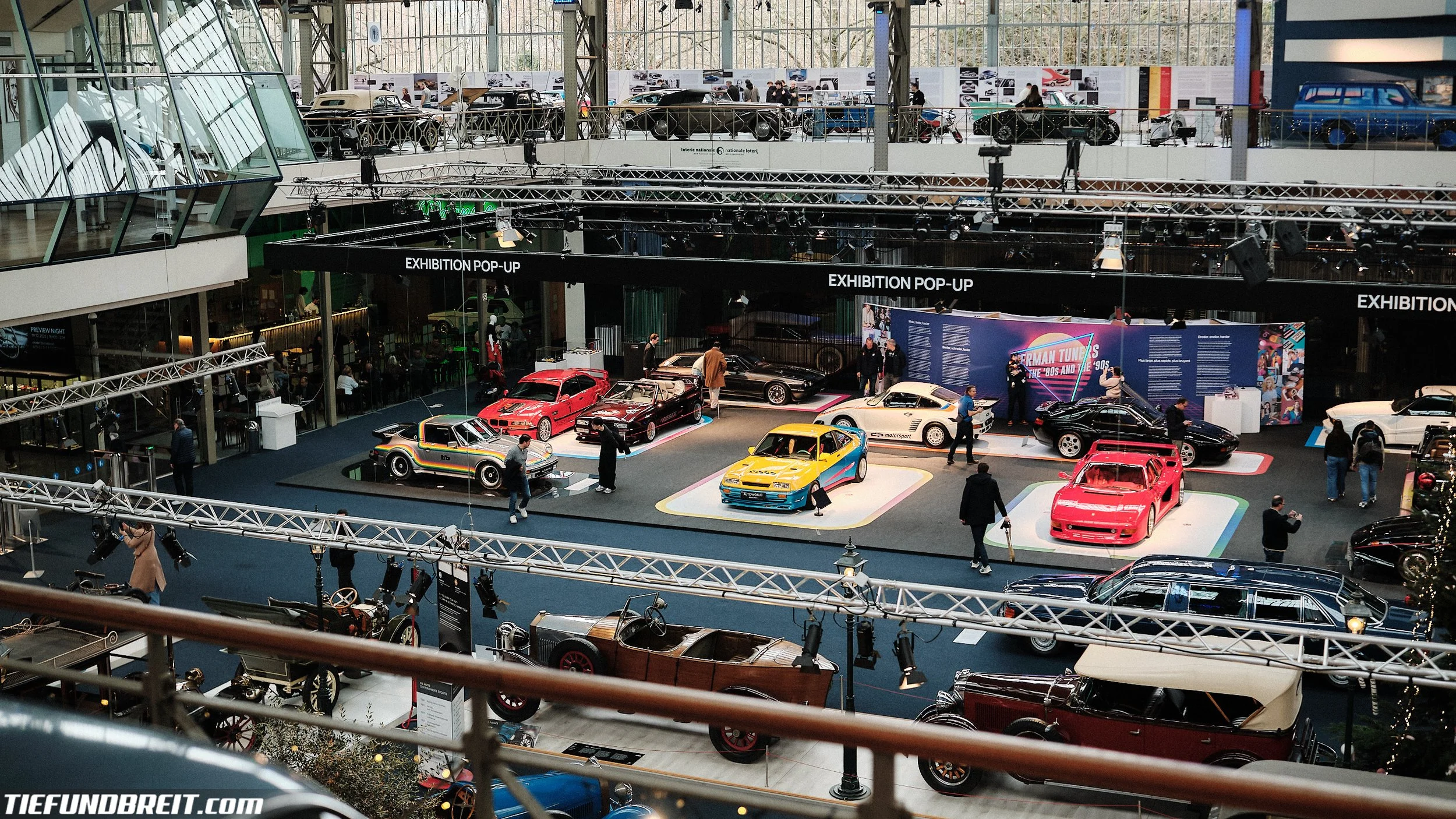
Once you turned to your left, you were greeted by the actual pop-up exhibit: garish colors, wide fenders, deep-dish wheels. A celebration of the insane excess that was the late 80s and 90s in terms of automobile culture.
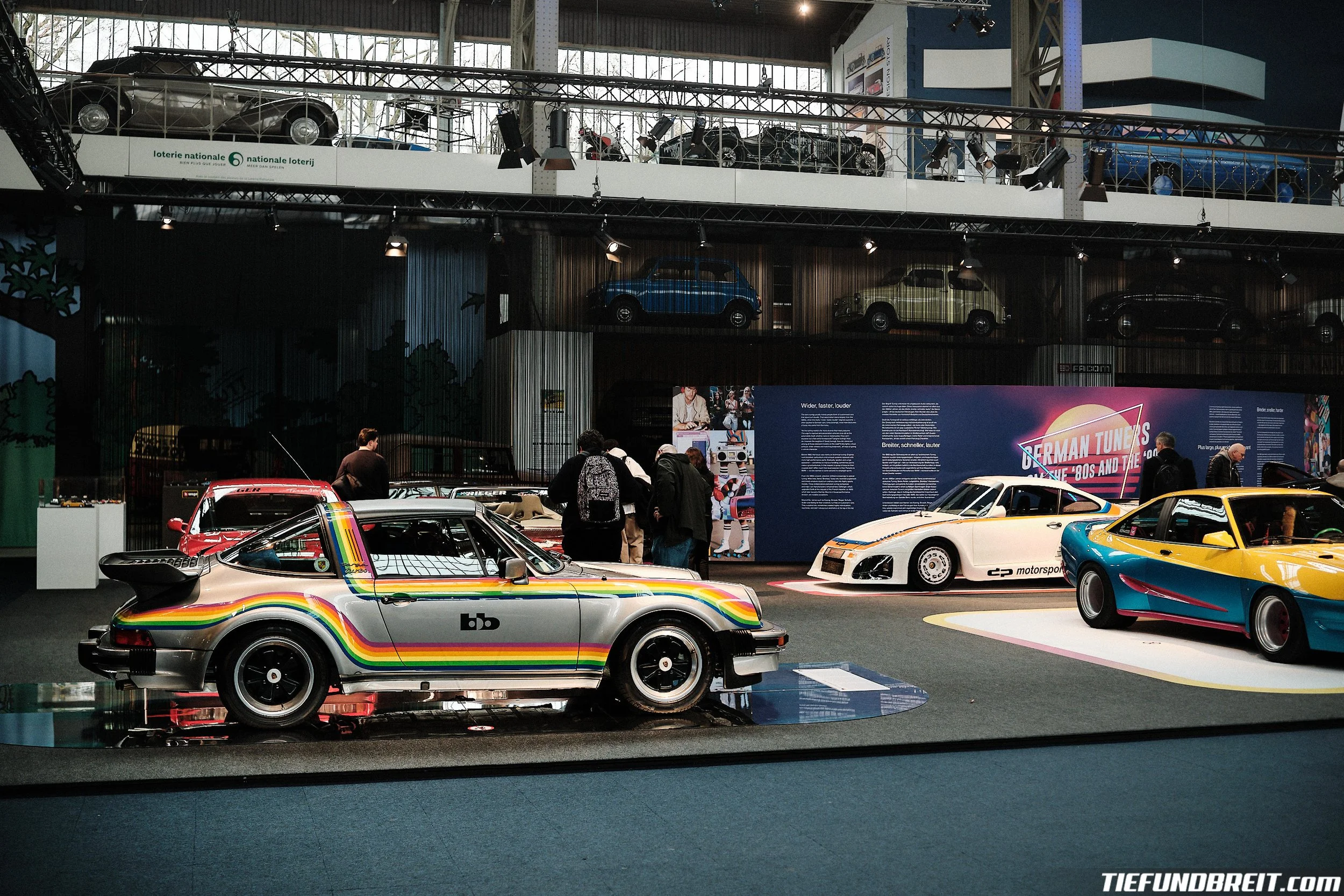
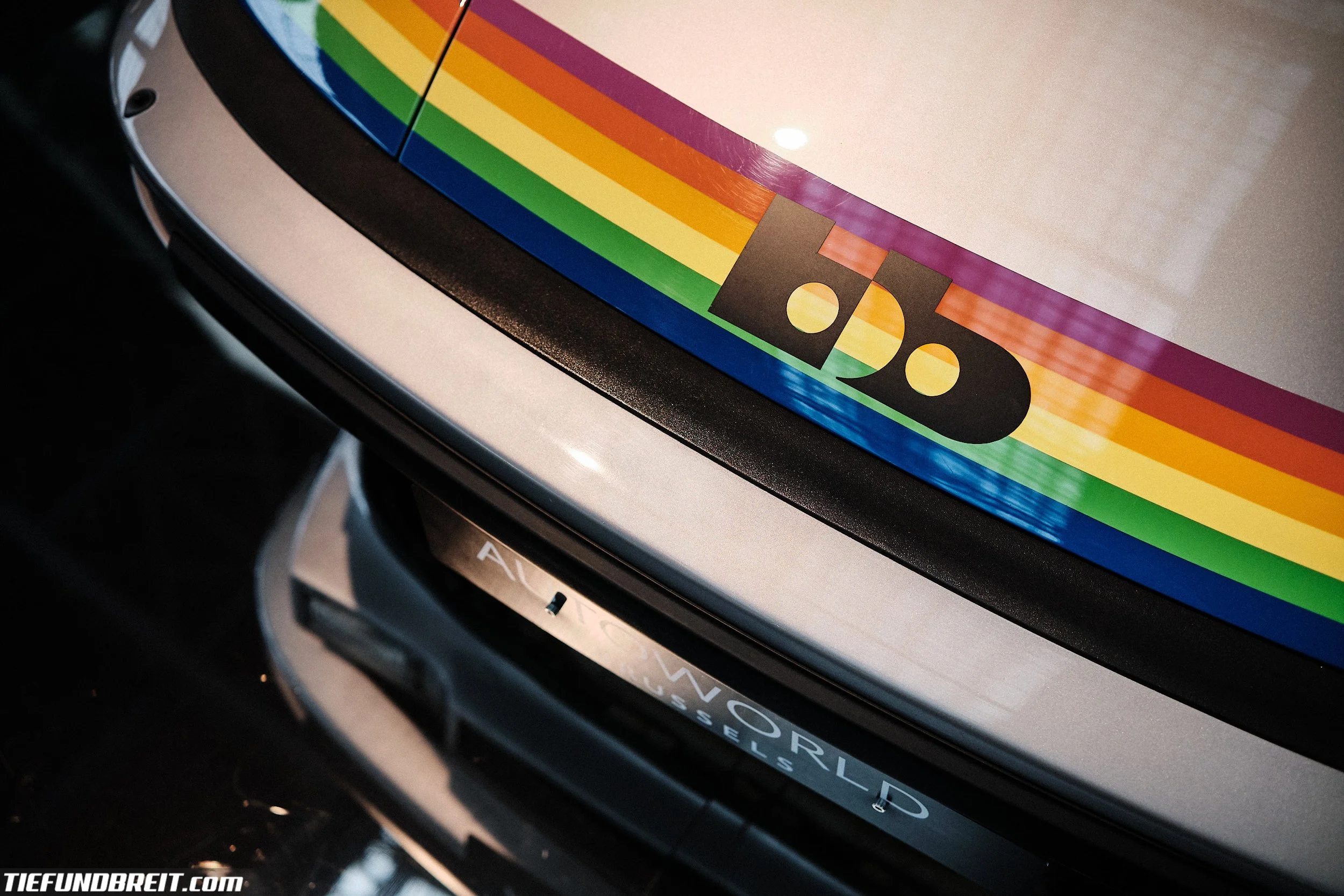
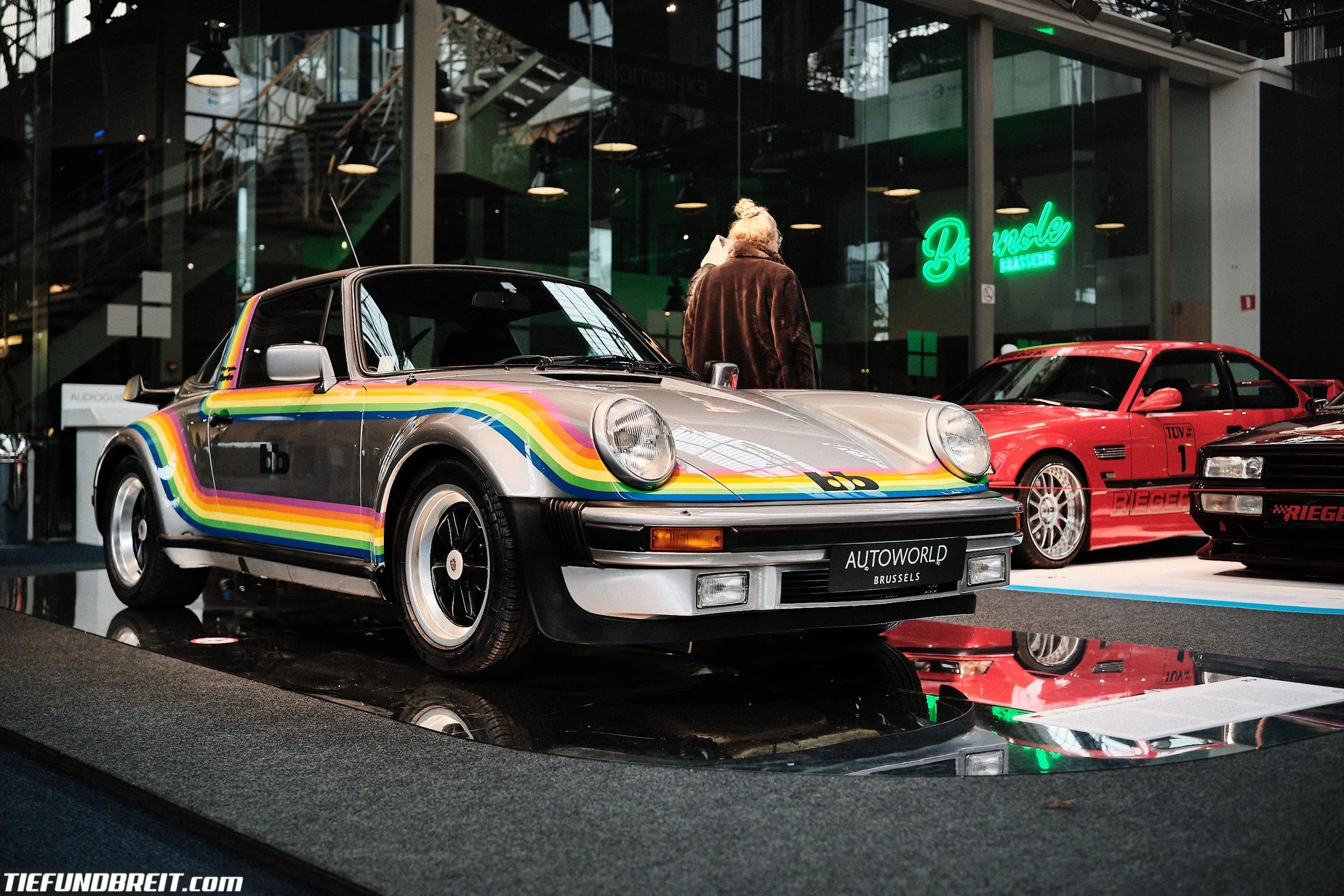
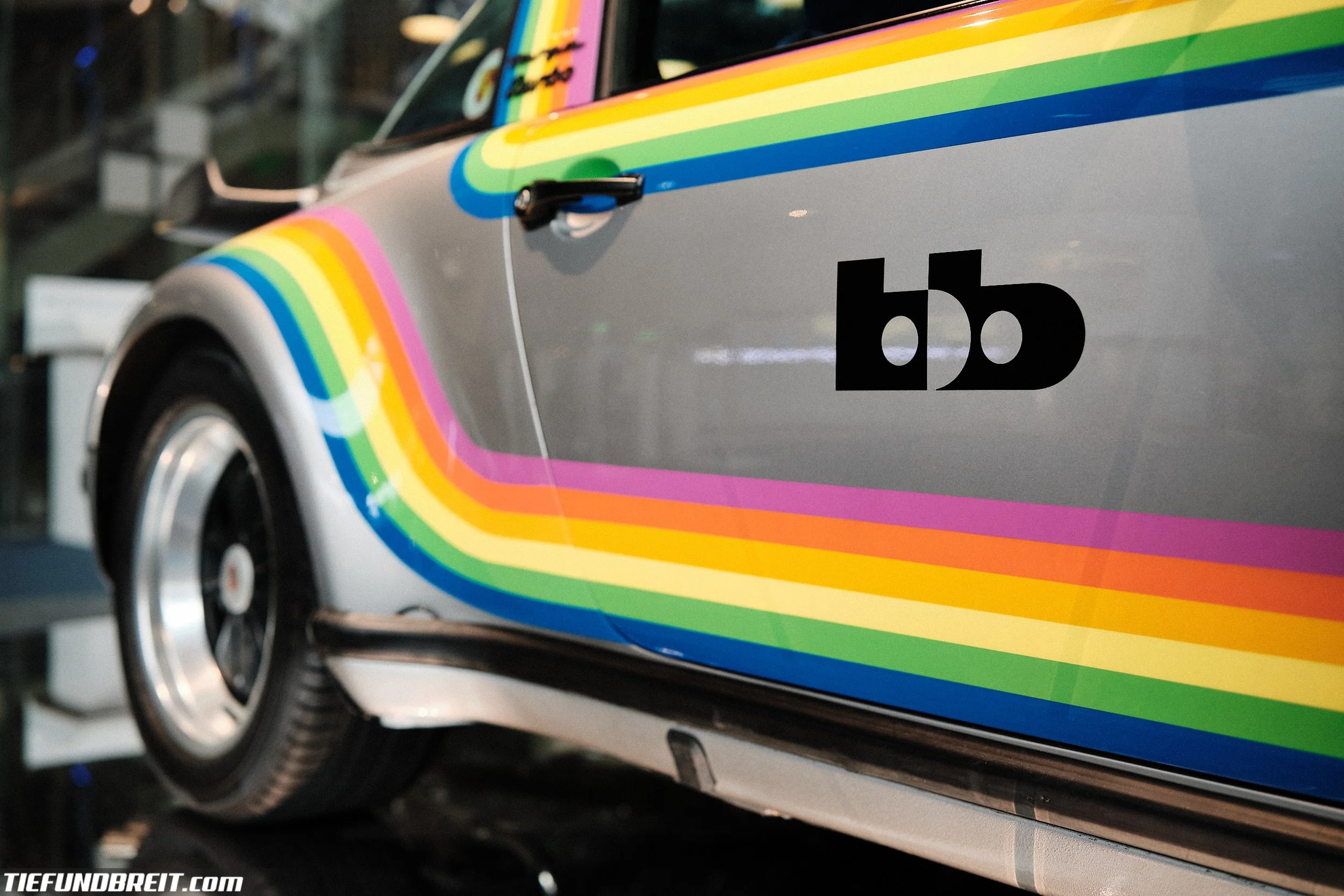
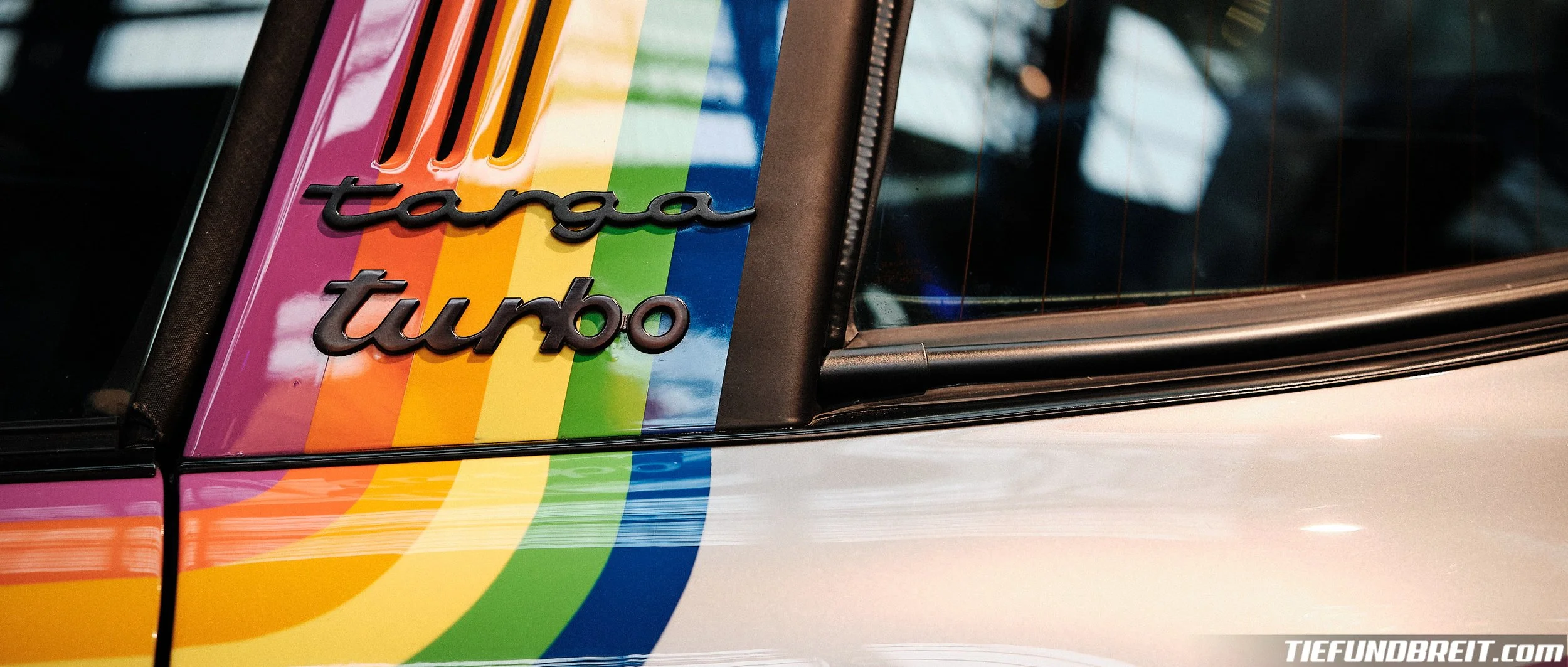
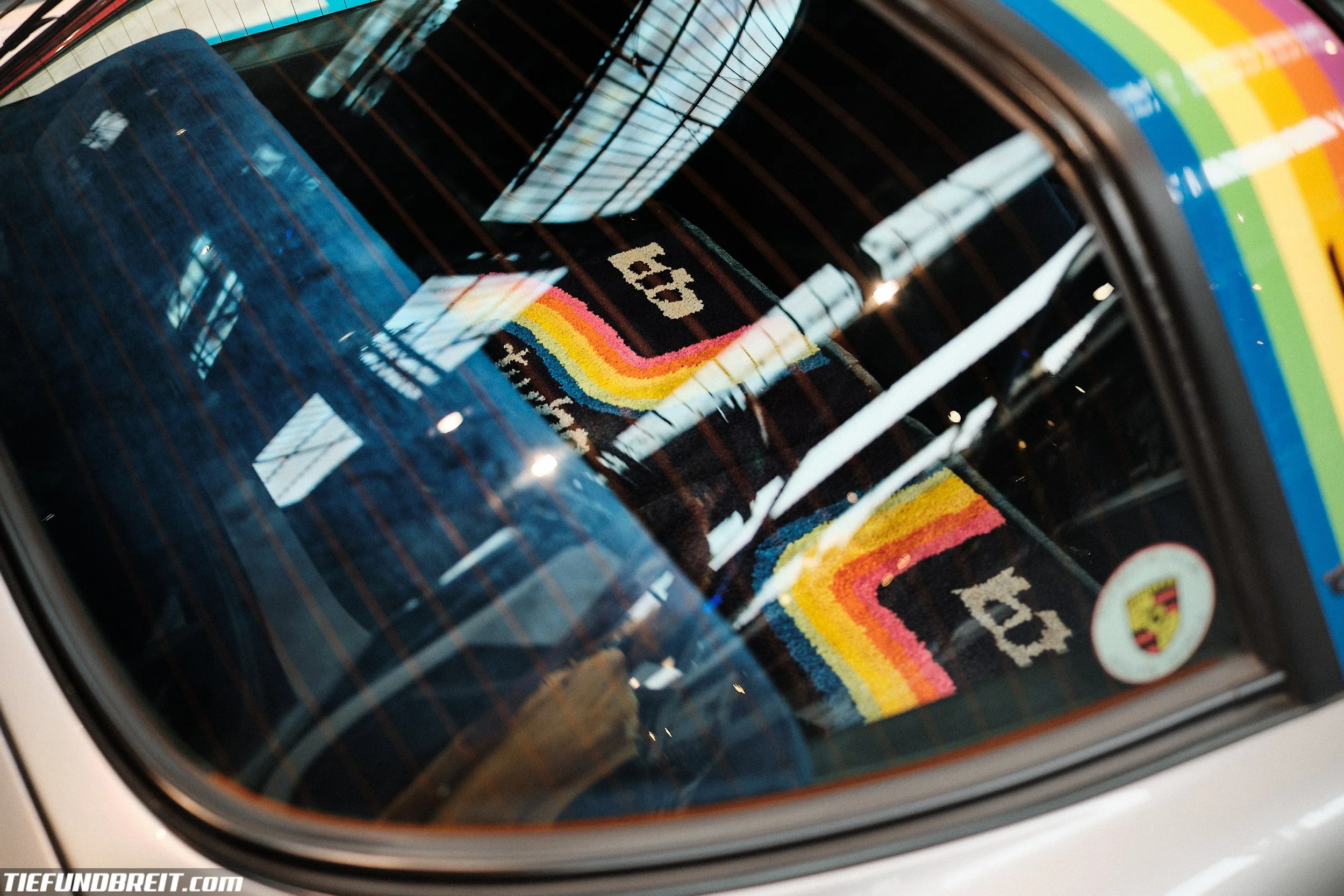
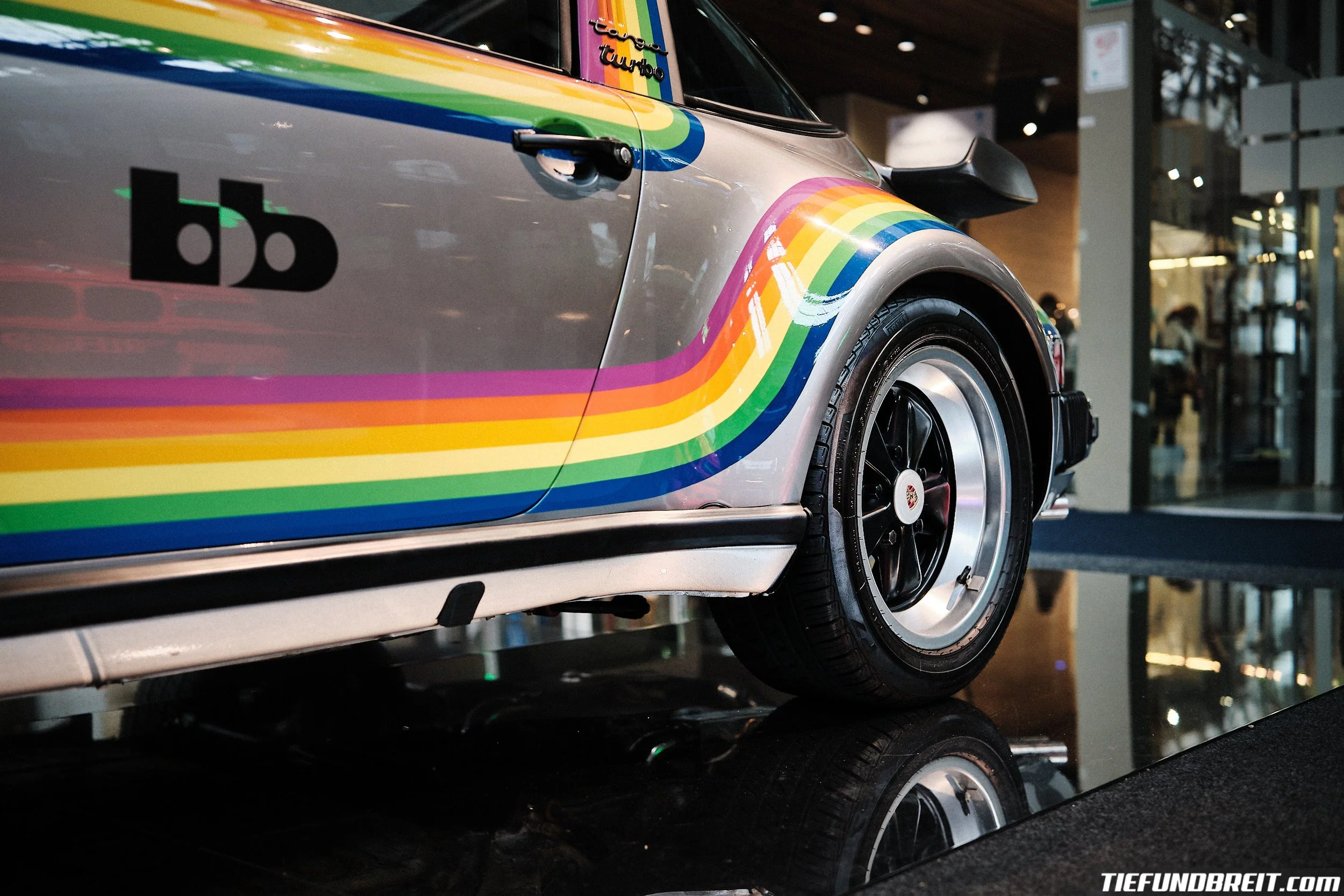
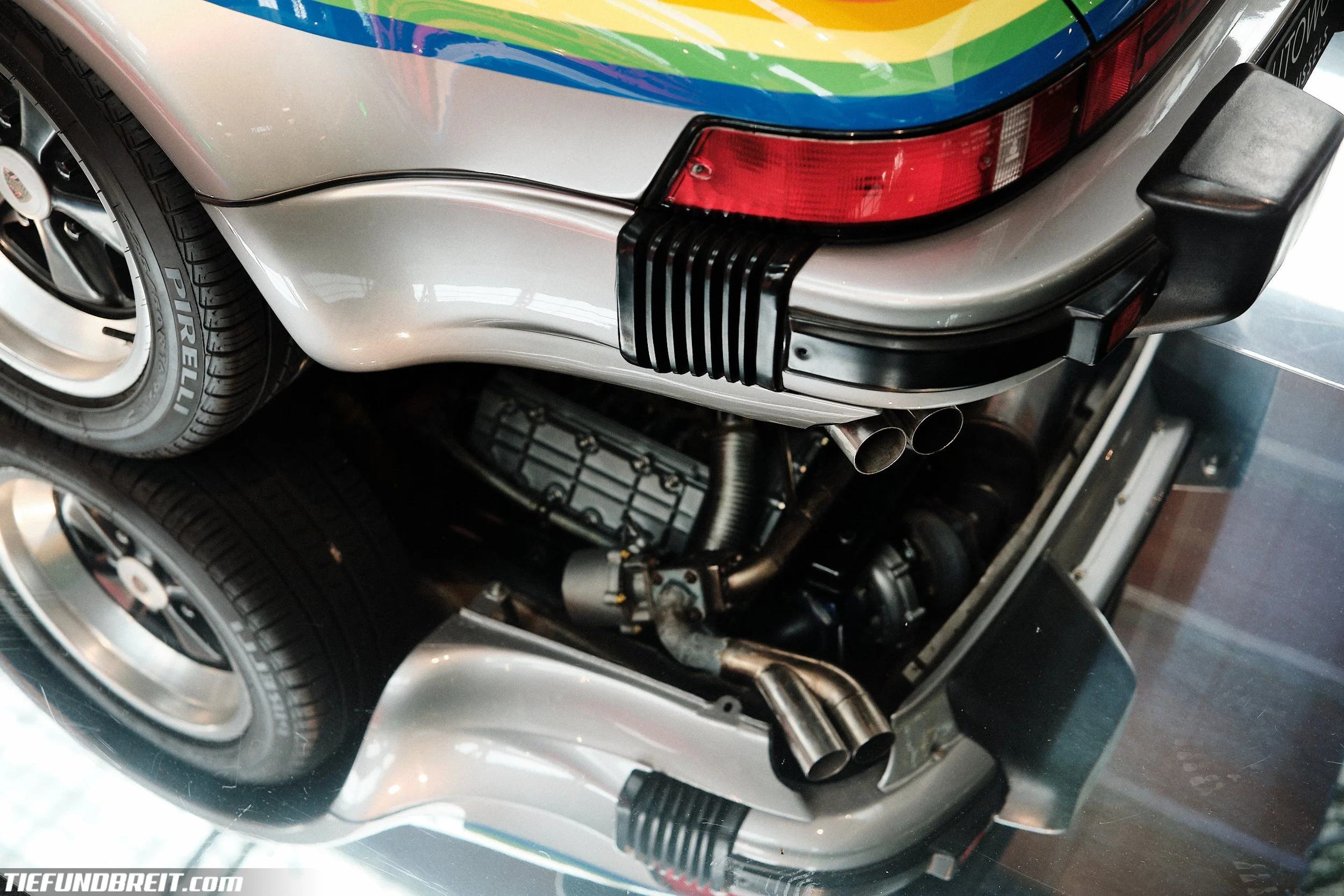
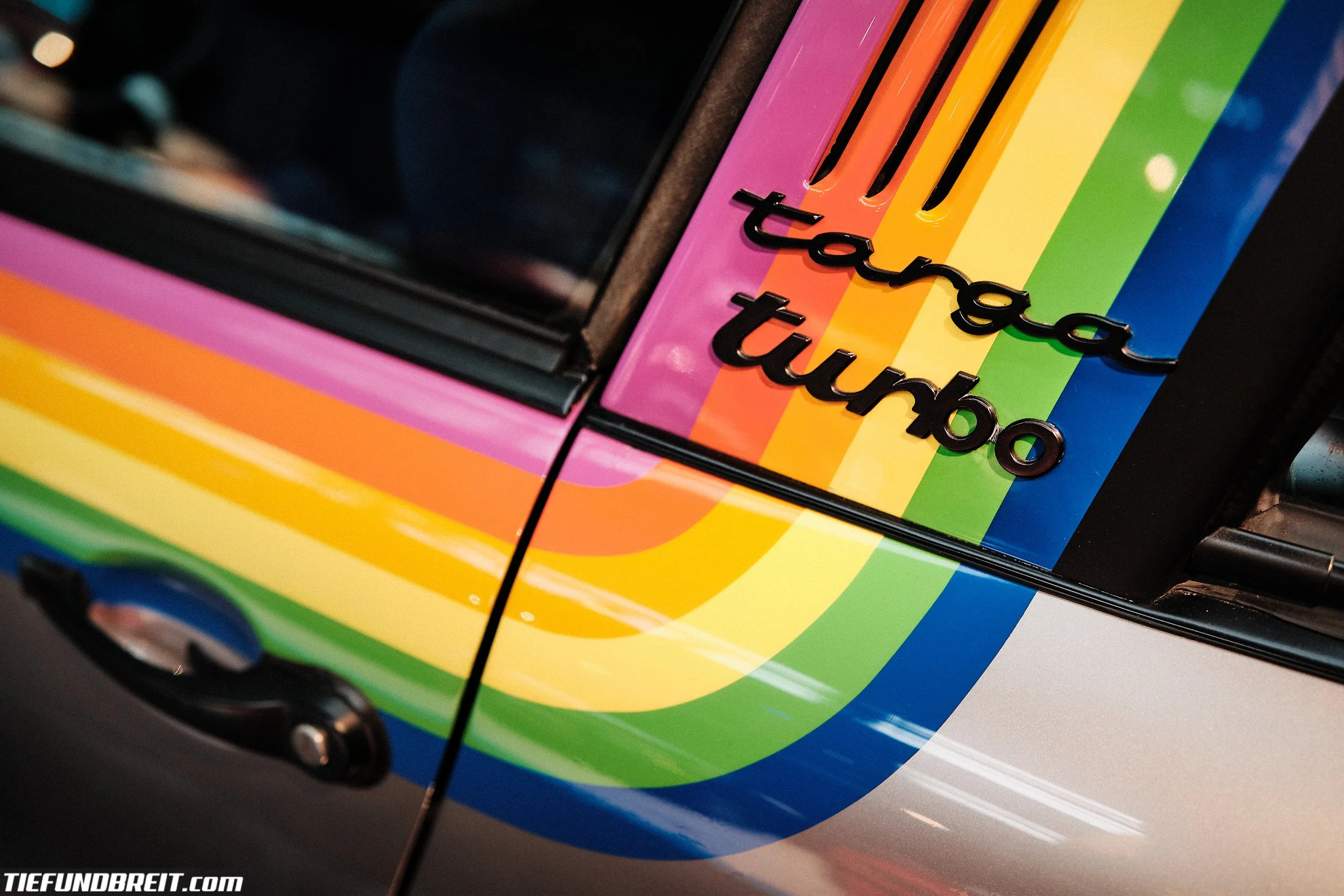
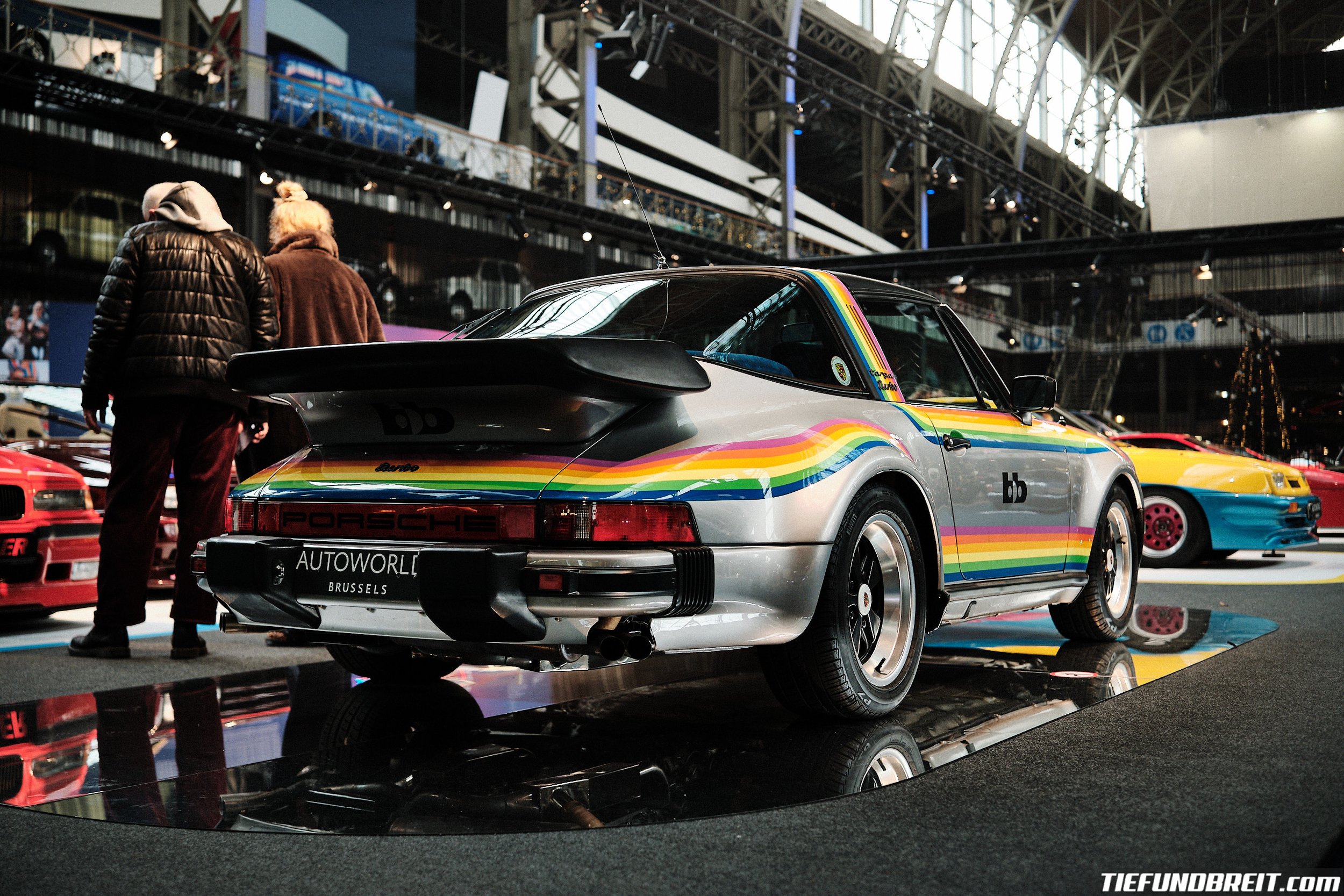
The first car that I took note of in the exhibit was the colourful bb Auto Rainbow Targa. bb Auto was a tuning company founded by Rainer Buchmann in 1973, then still called ‘bb Auto Exklusiv Service’. They specialized in interiors at first, but later also moved onto body modifications. Their most famous car, and the car that truly put them on the map, has to be the Rainbow Targa. Built in 1976, Buchmann took Porsche’s claim that the 911 Turbo could not be built as a targa as a challenge and set out to prove them wrong. They took a 911 Targa, widened it with 911 Turbo fenders, and strengthened and stiffened the body as much as possible, all while also implanting the 911 Turbo running gear. The car got its famous rainbow colors when Polaroid entered the picture; they wanted to display the car on their booth at the Photokina that year, so the car got the iconic Polaroid colors applied all over, forever earning it the nickname of Rainbow Targa.
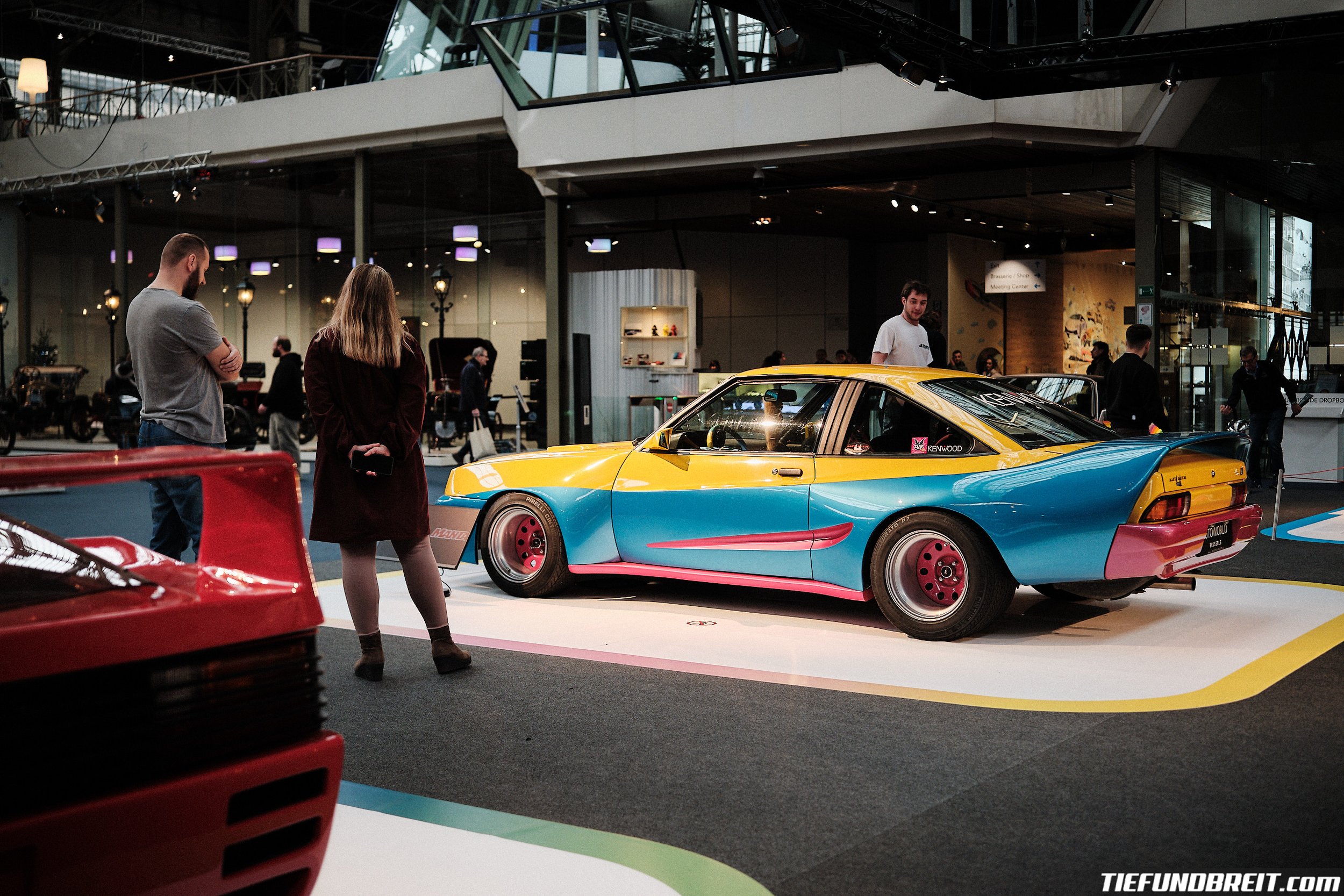
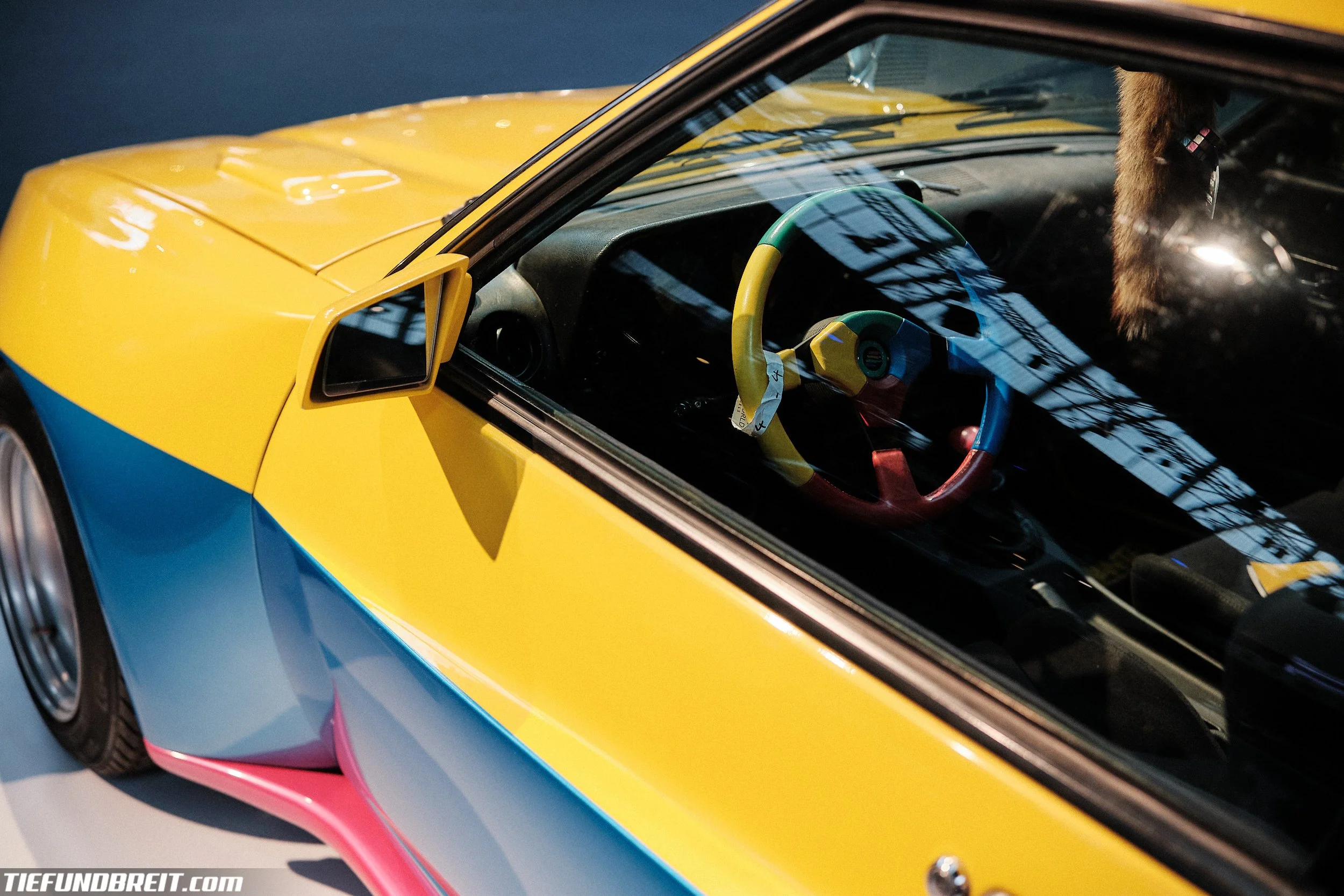
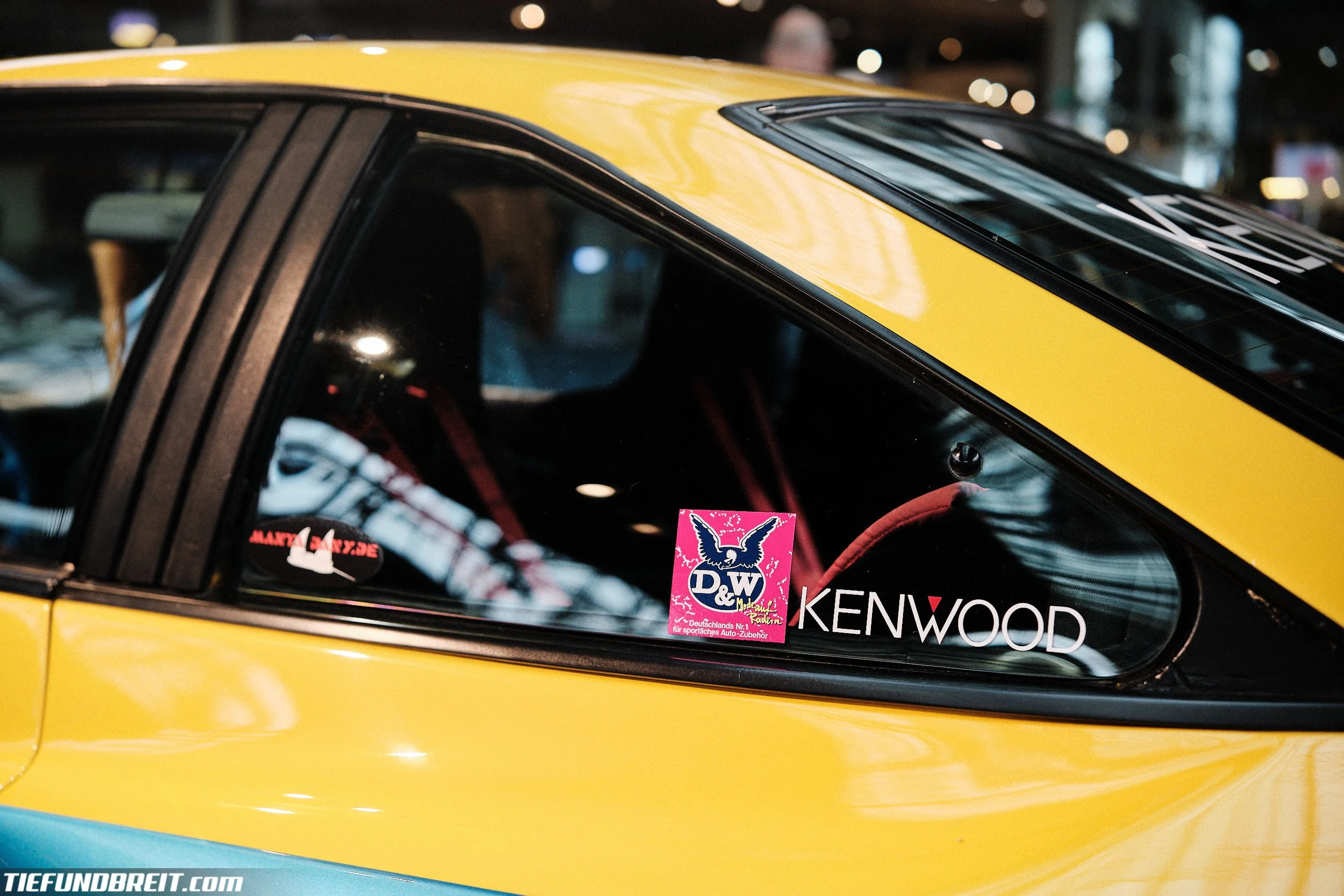
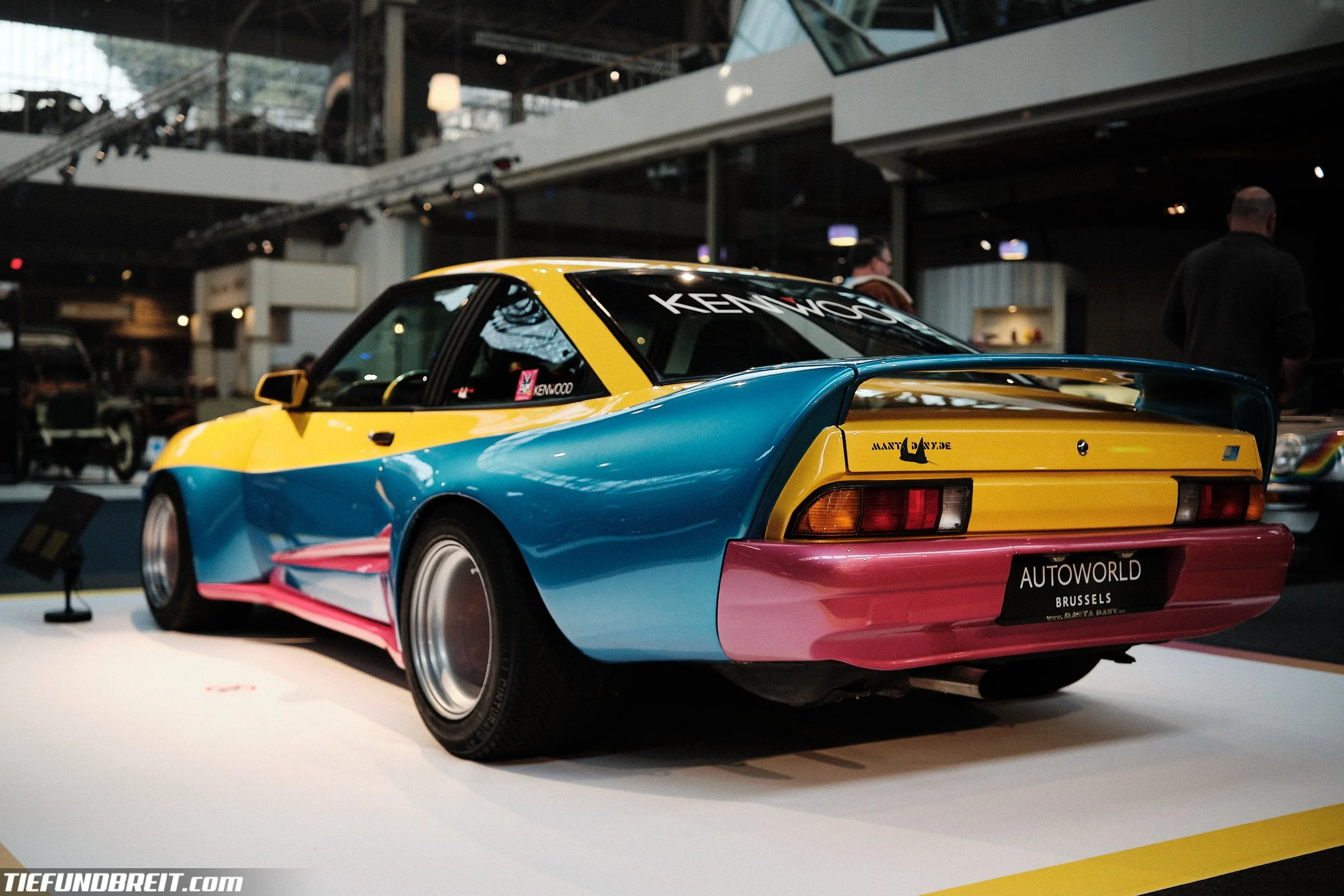
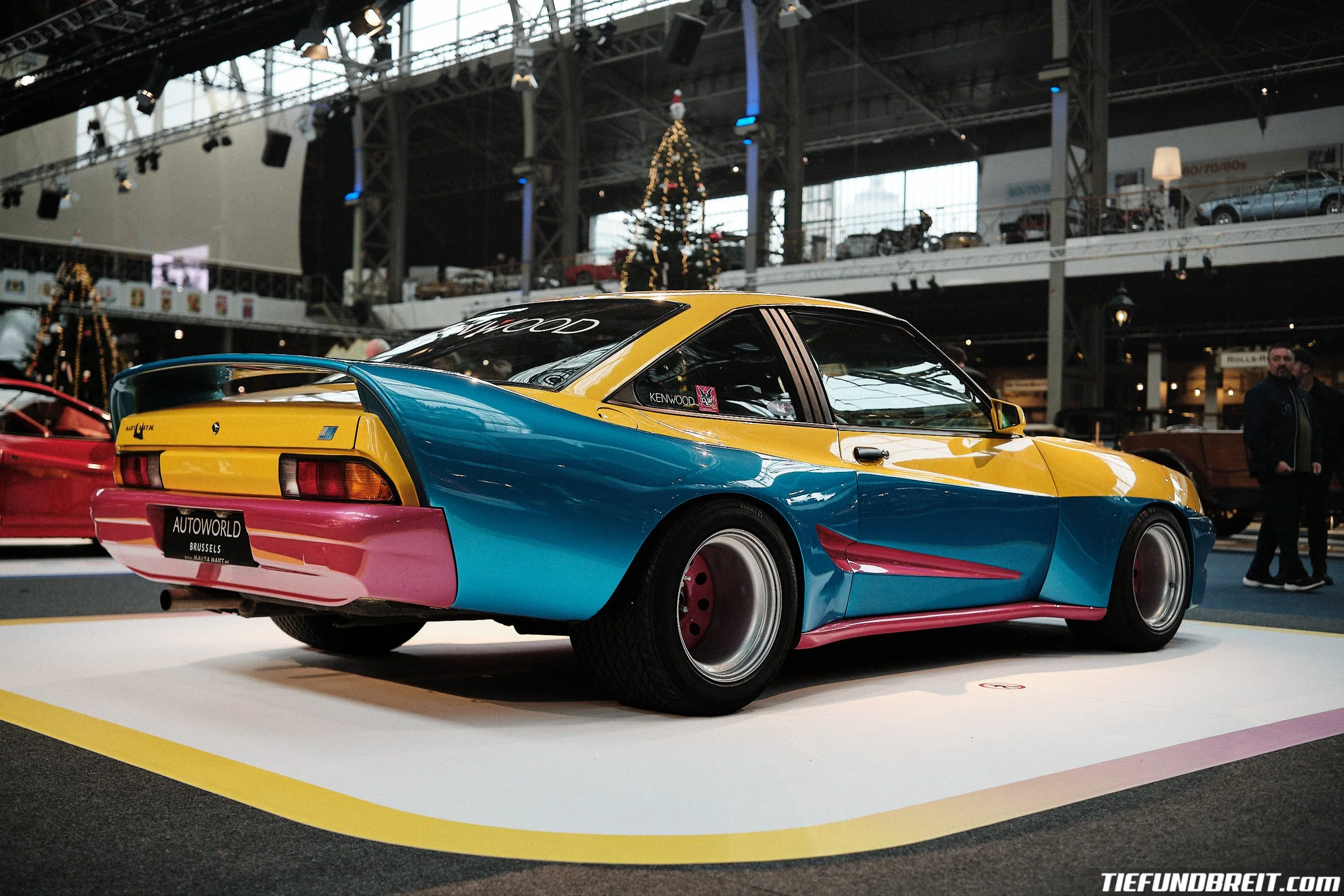
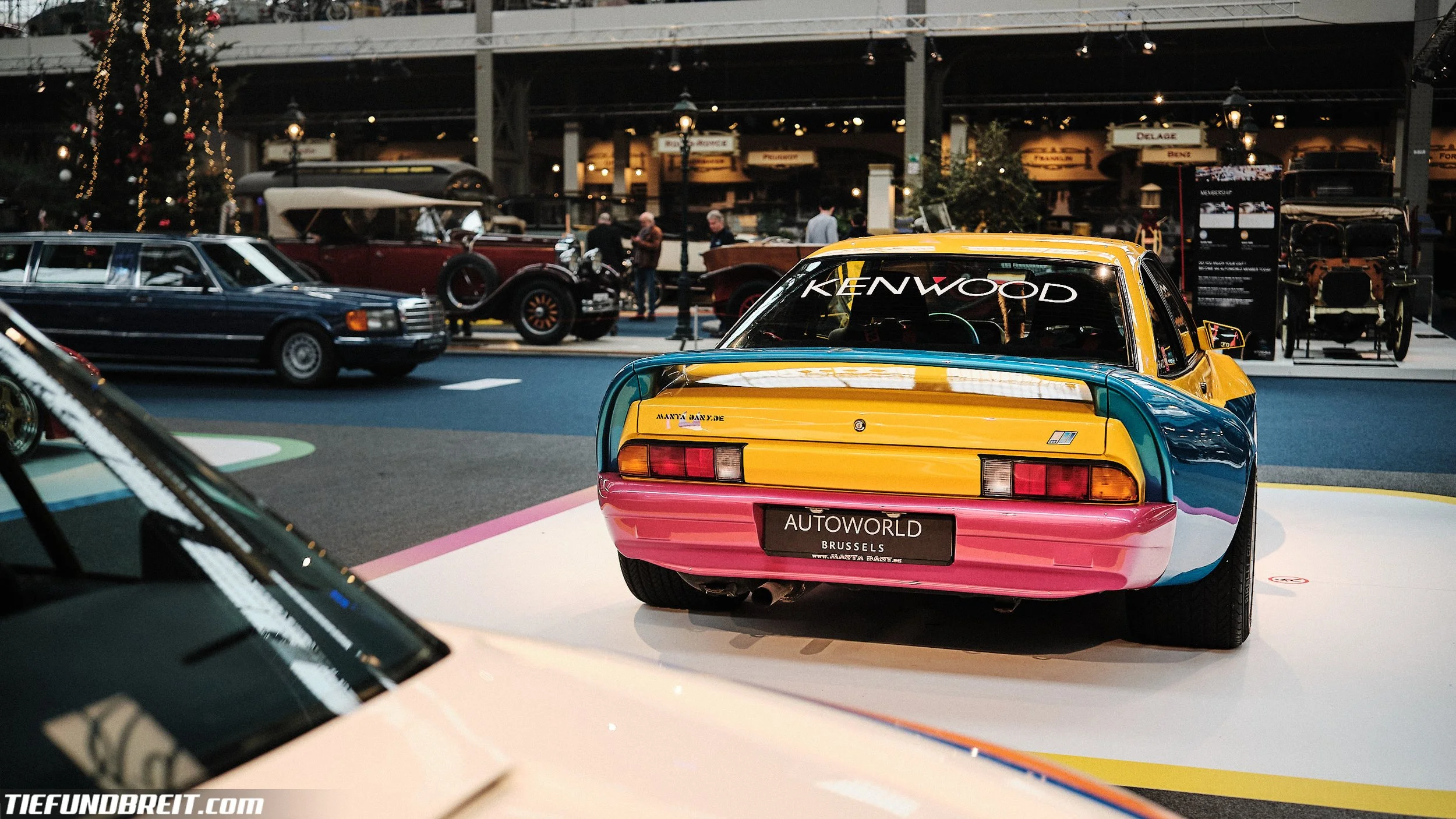
Sitting next to it, you would be hard-pressed to miss the iconic Opel Manta from Manta Manta. This specific car is owned by ‘Manta Dany’, a relatively well-known Opel collector from Bavaria, and has a pretty well-documented history. While the fact sheet in the museum stated it is one of the movie cars, that is not accurate, I am afraid. This car is connected to the movie in a way, but in the end it is a replica of the movie car. The story goes that in the early 90s this specific car was built by Sitter Karosseriebau, a body shop that fitted the Mattig Super Extrem widebody to the car. It was originally painted red. In 1991, the car actually placed first in the judged show and shine contest at the Mega Manta Party to celebrate the film launch of Manta Manta, with about 4000 Mantas in attendance. There is actually footage of this on YouTube.
When he got the car, it was still red, and he always wanted a movie Manta. The car was also already fitted with a 3.0 straight-six making 180hp from an Opel Senator. He freshened up the bodywork, repainted the car, and gave it a once-over; the car was done a few months later. In 2008, he managed to get his hands on a 3.6-liter engine built by Opel tuner Mantzel, pushing 236hp. To make a long story short, that engine is still in the car today. Another fun fact regarding this car is that in 2016 it actually got 3D scanned to produce some 1/18th scale models by BoS Models. The models were limited to 1000 units, and the coolest thing for me personally is that I actually have one of those models sitting in my office.
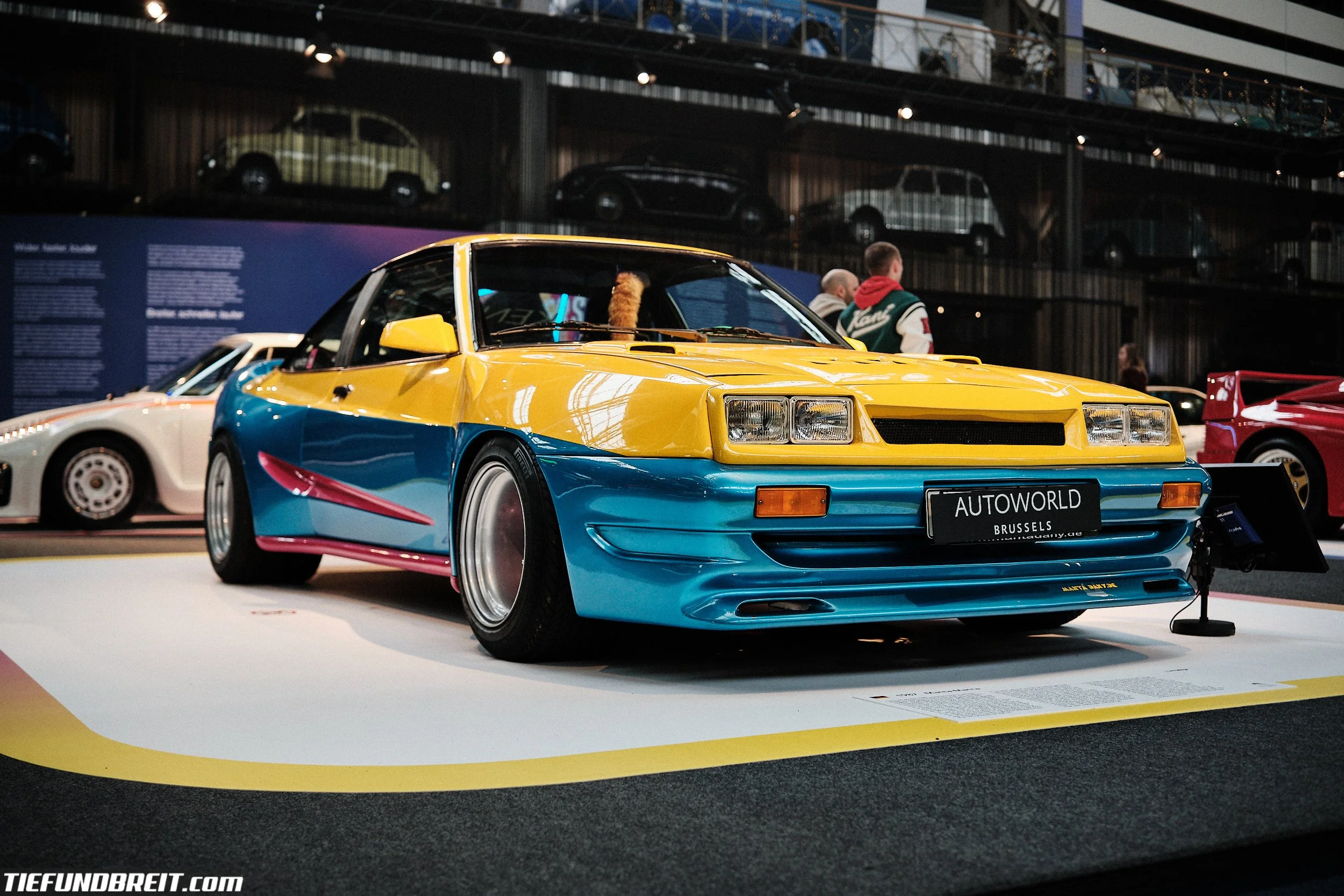
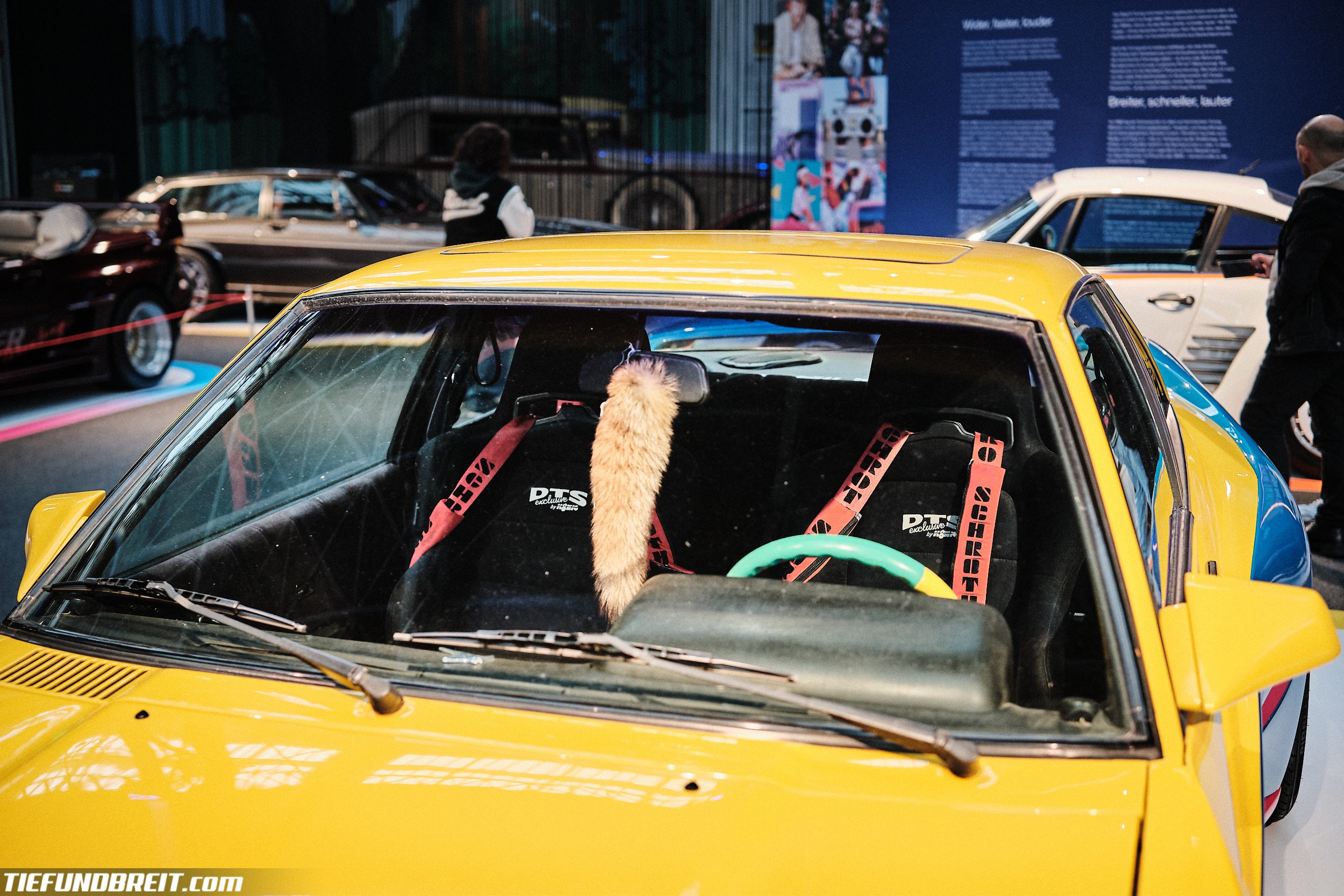
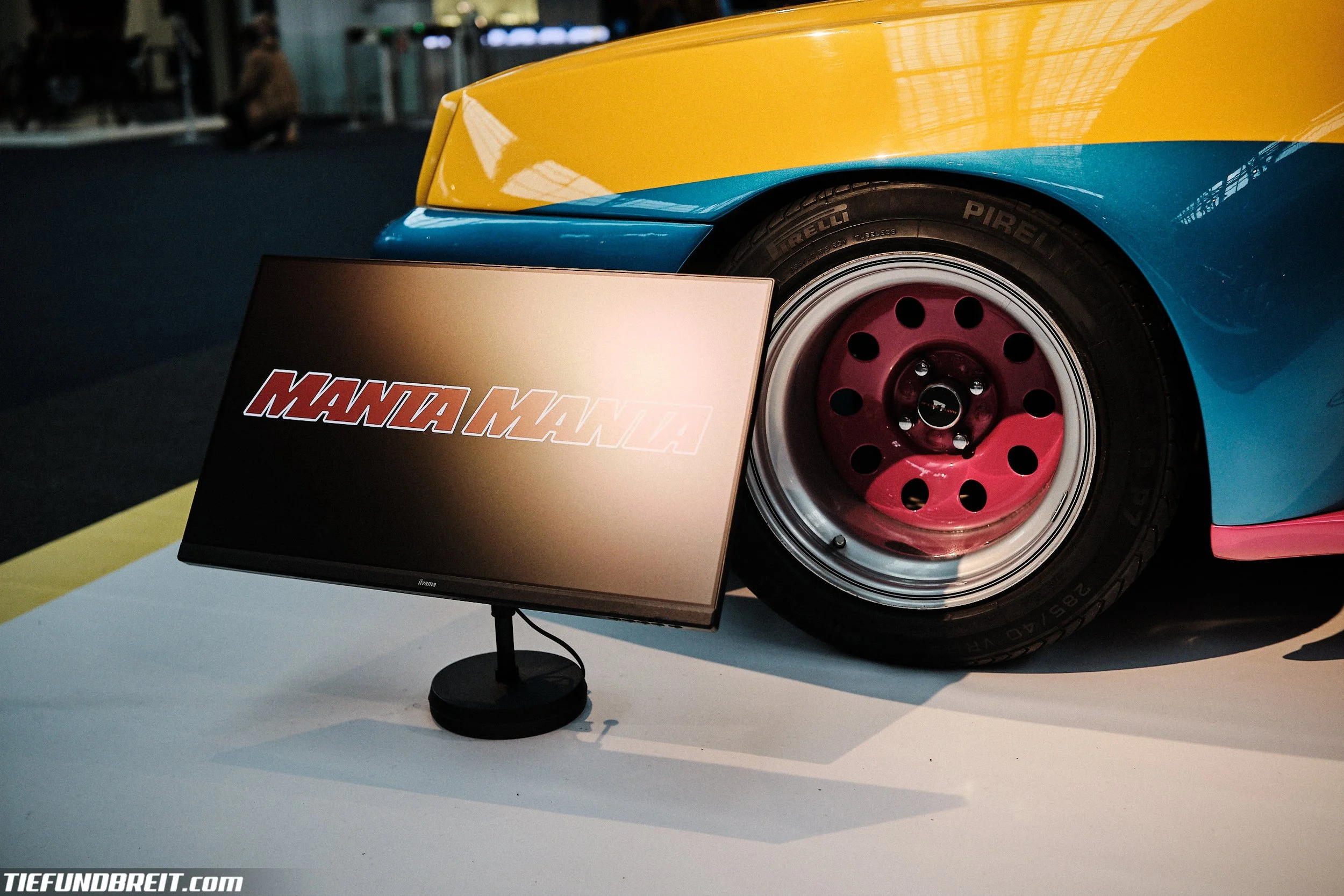
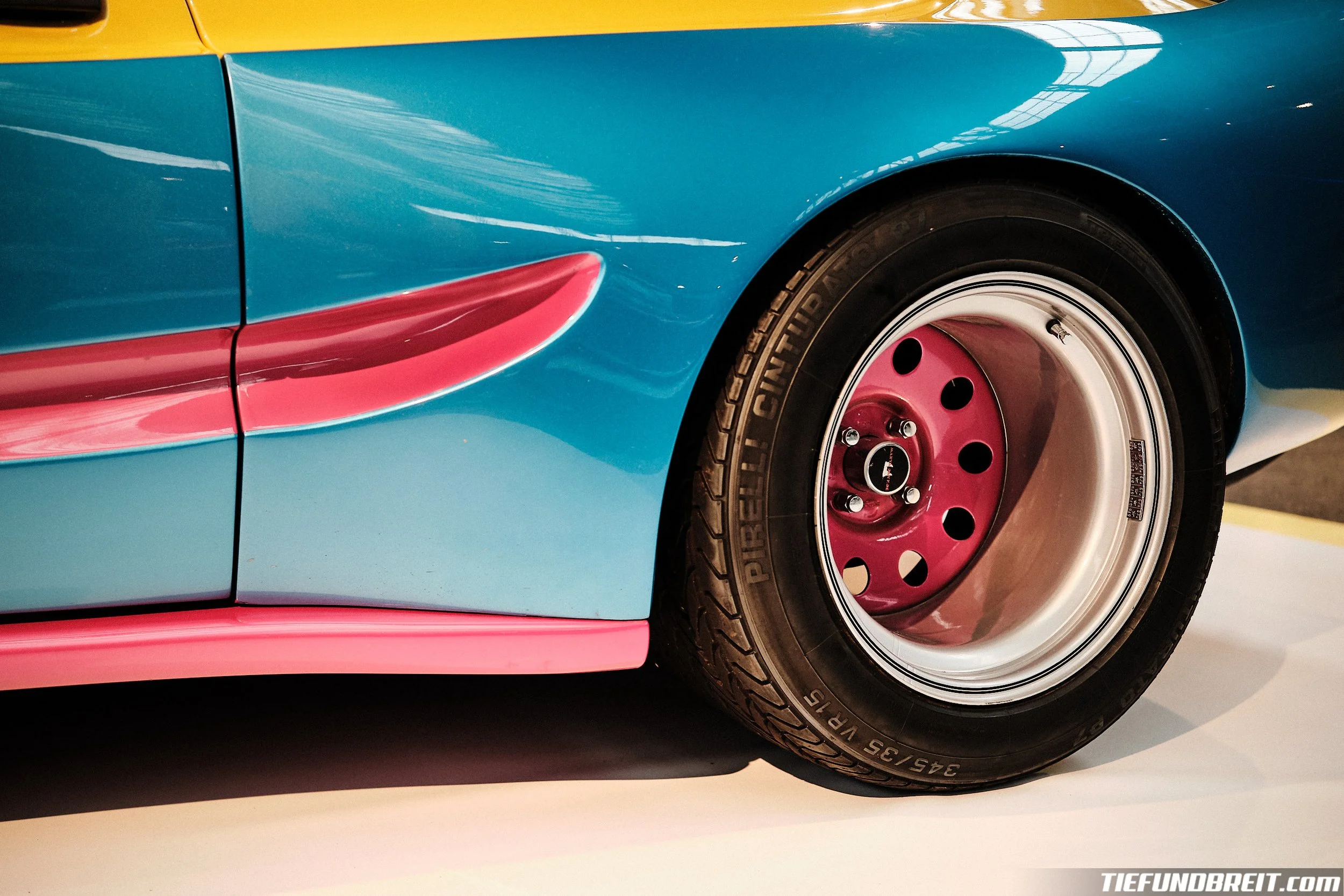
Of course, an exhibition centered around these kinds of cars could not be complete without one famous name: Rieger.
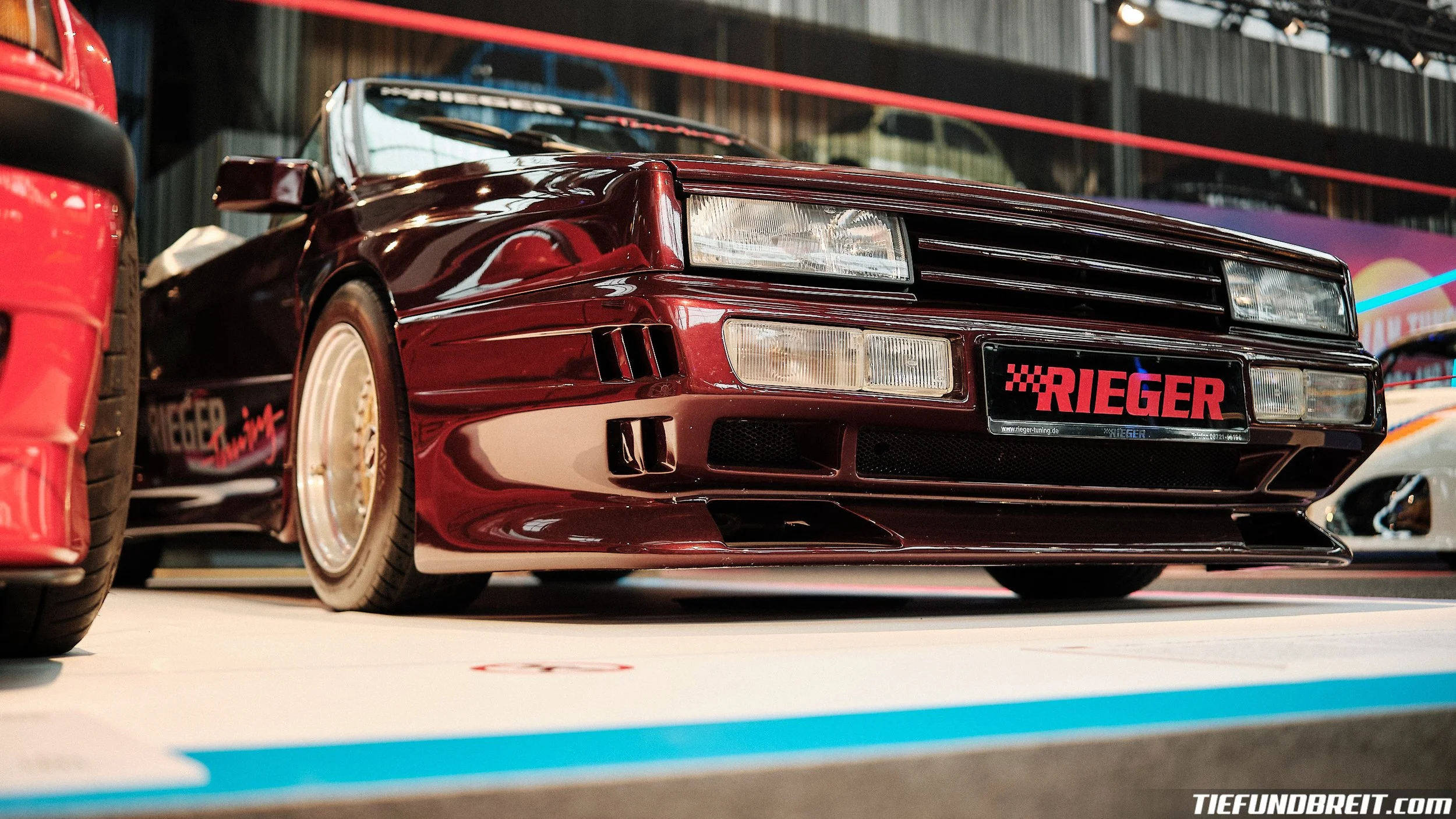
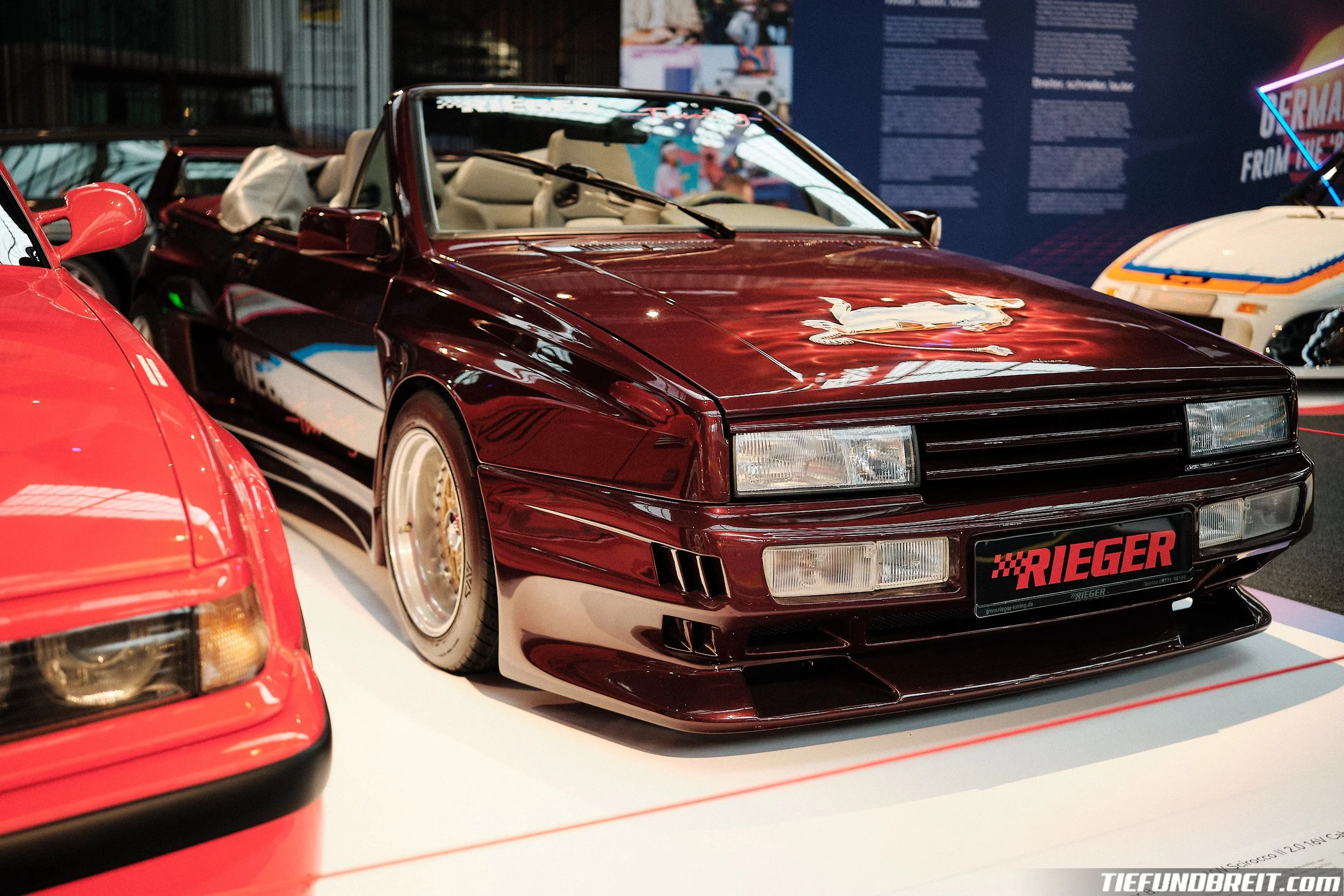
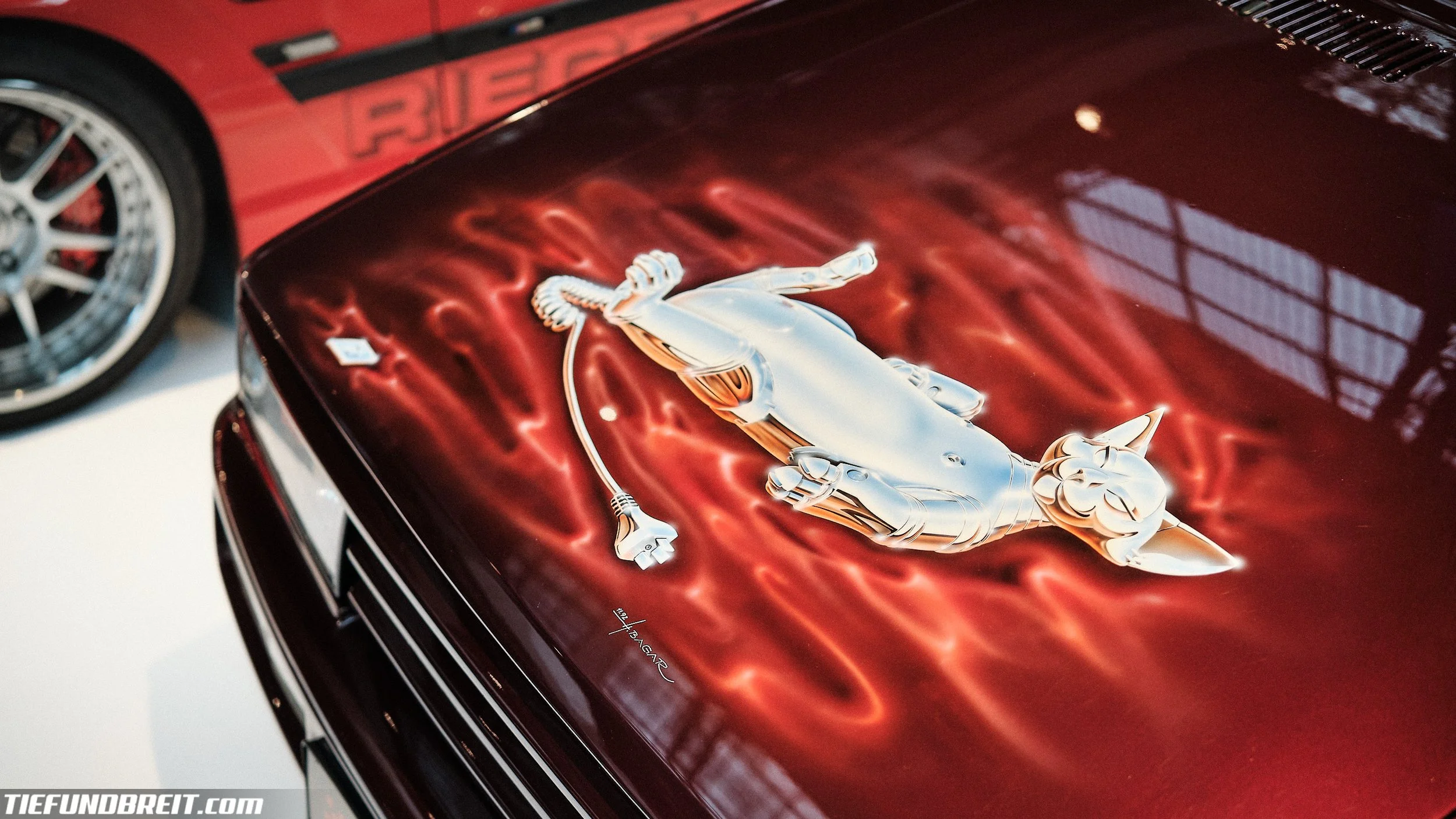
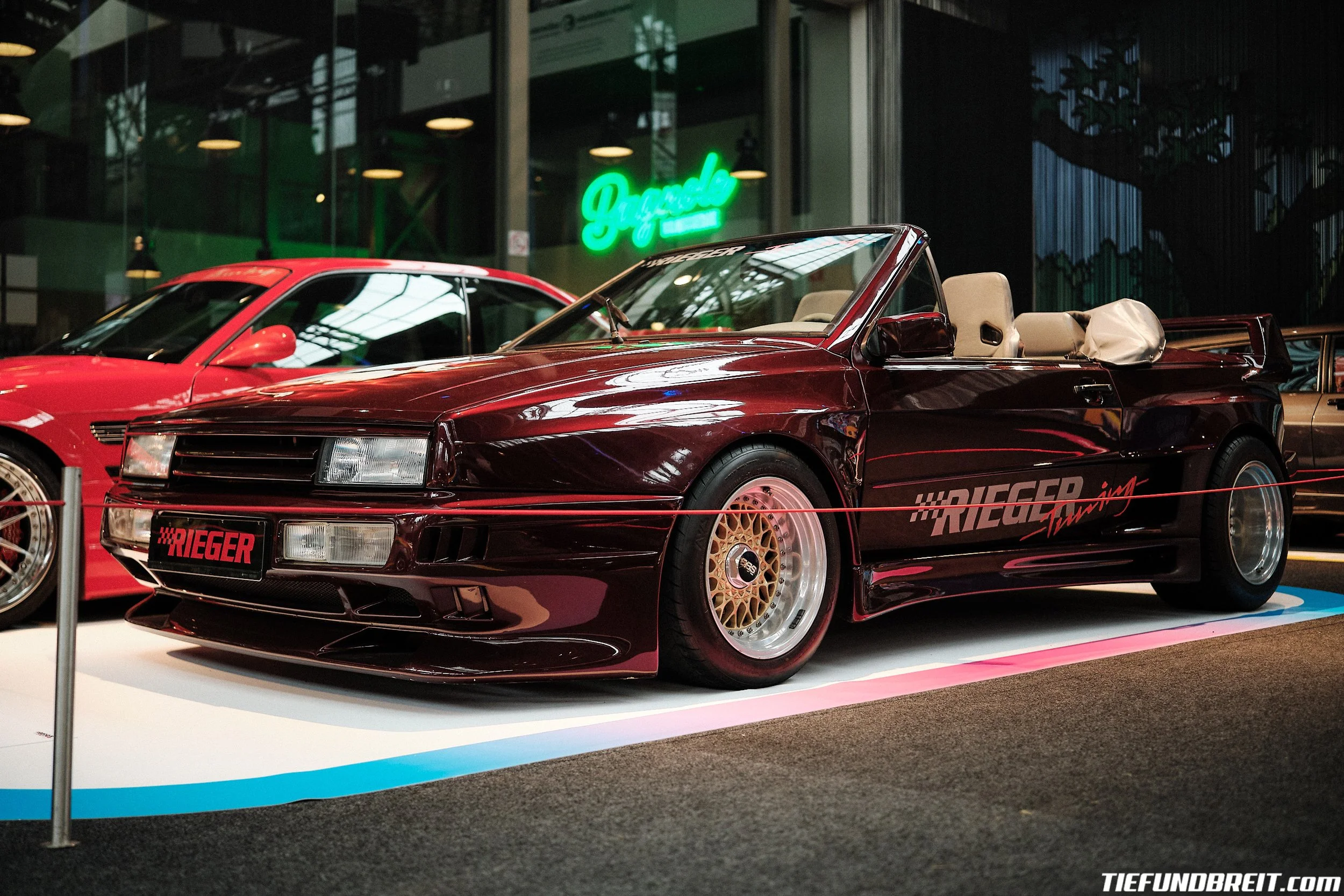
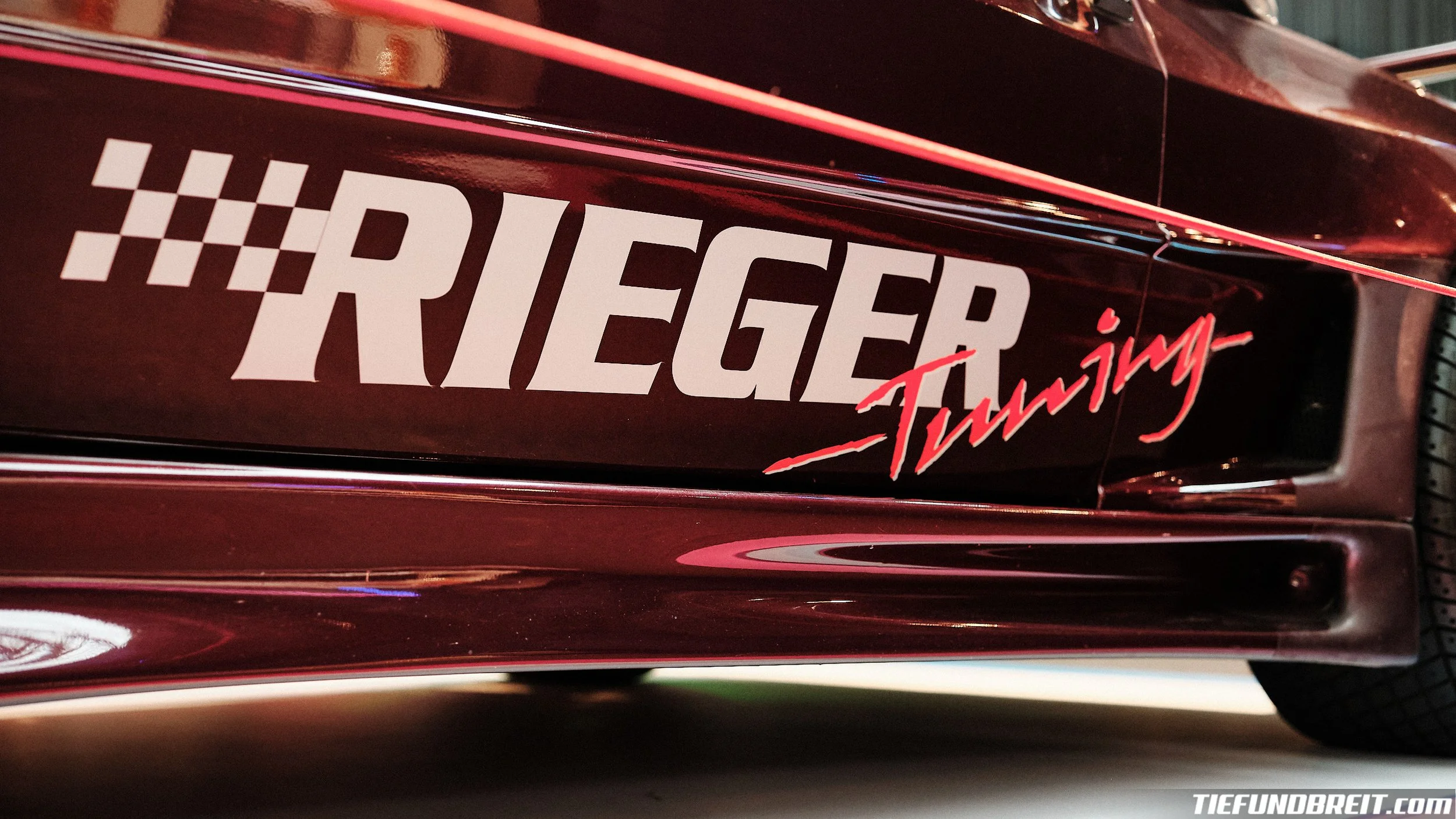
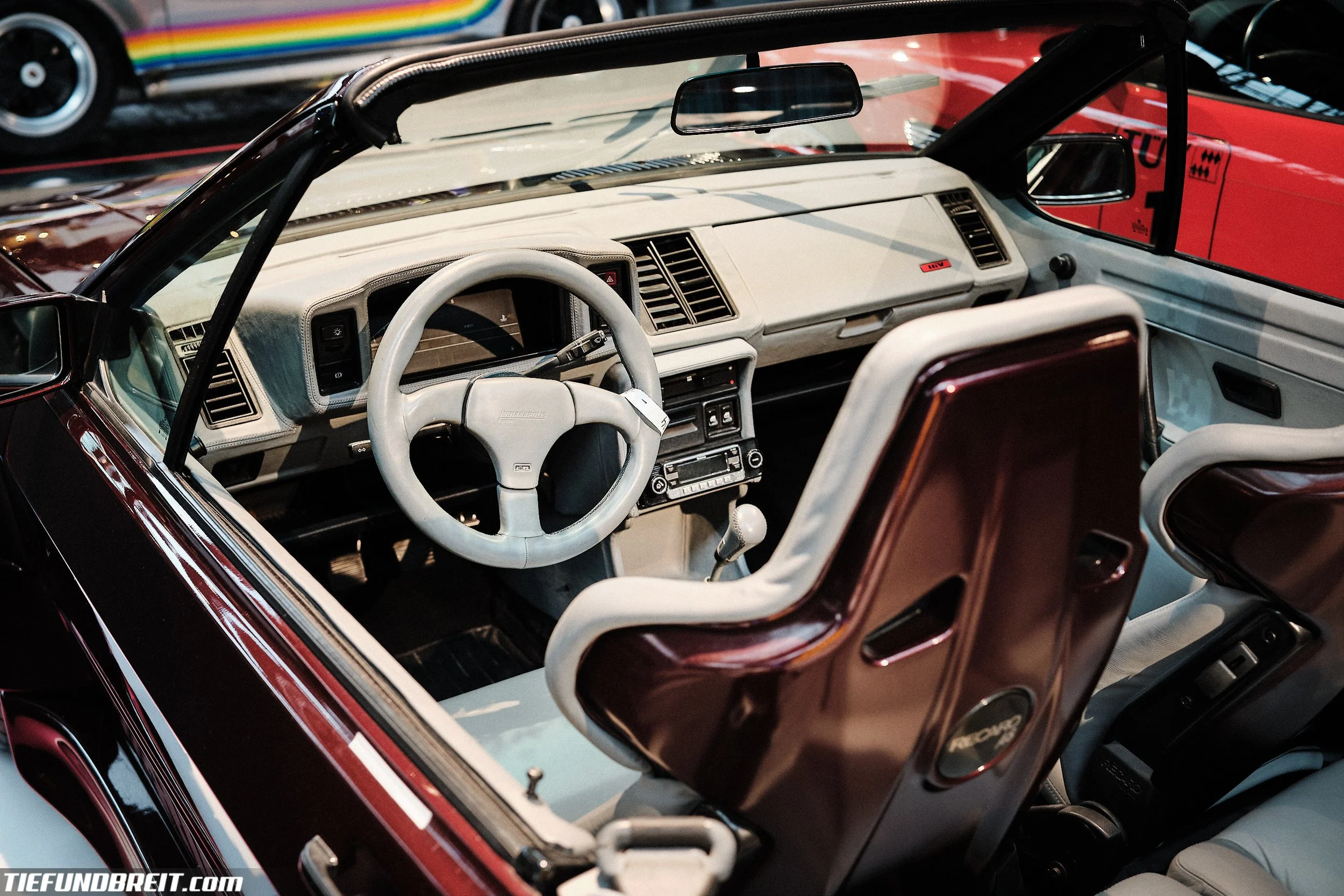
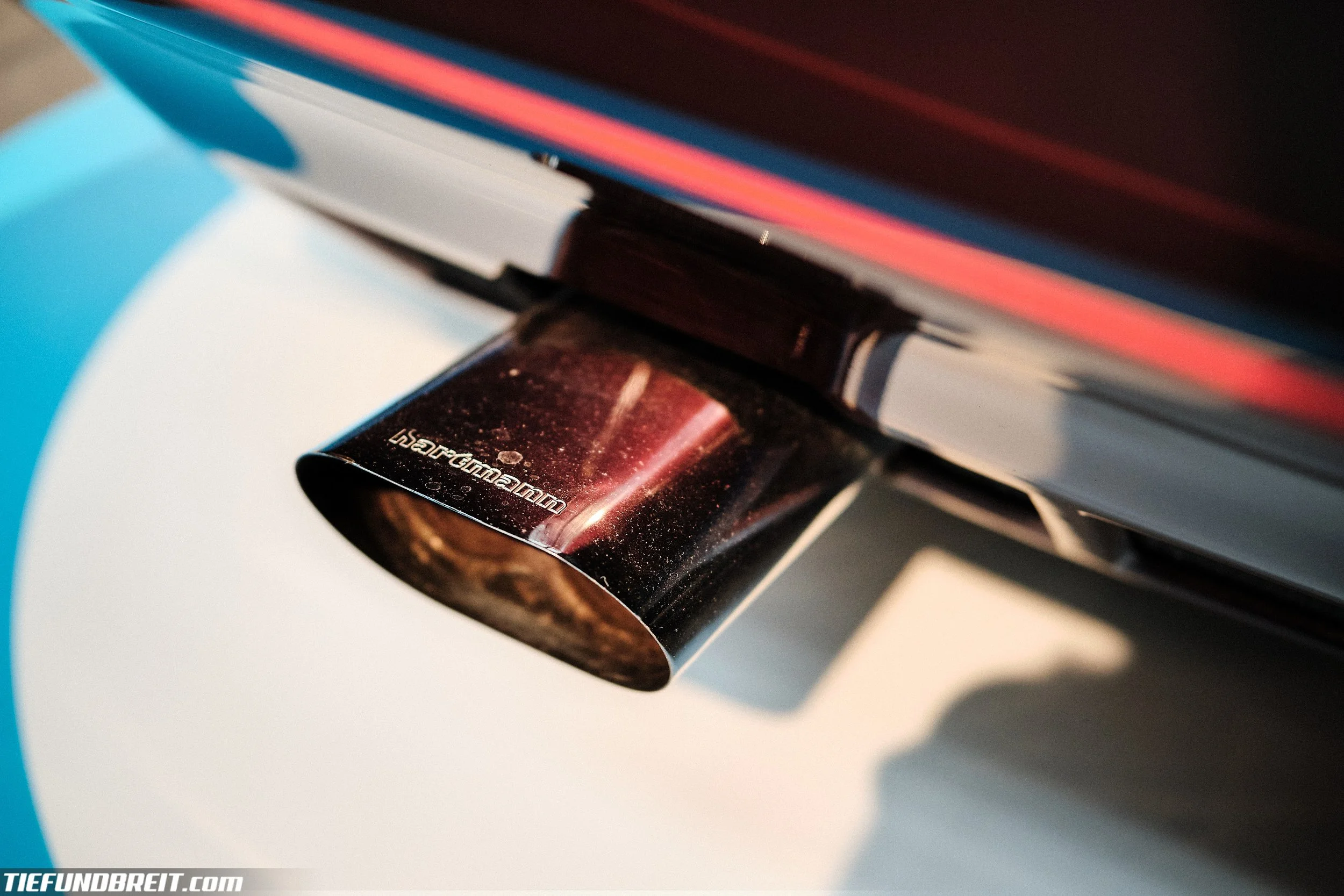
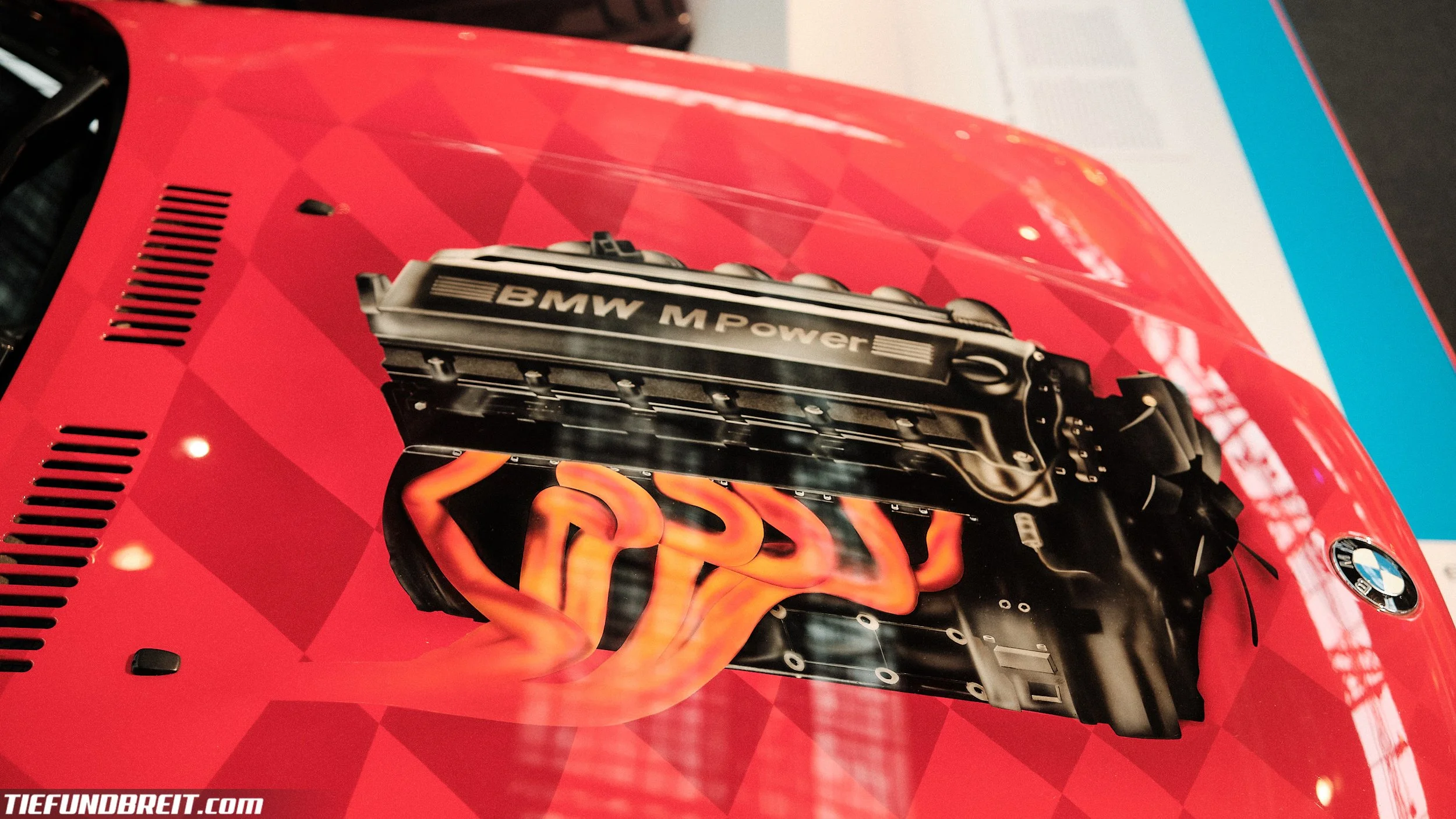
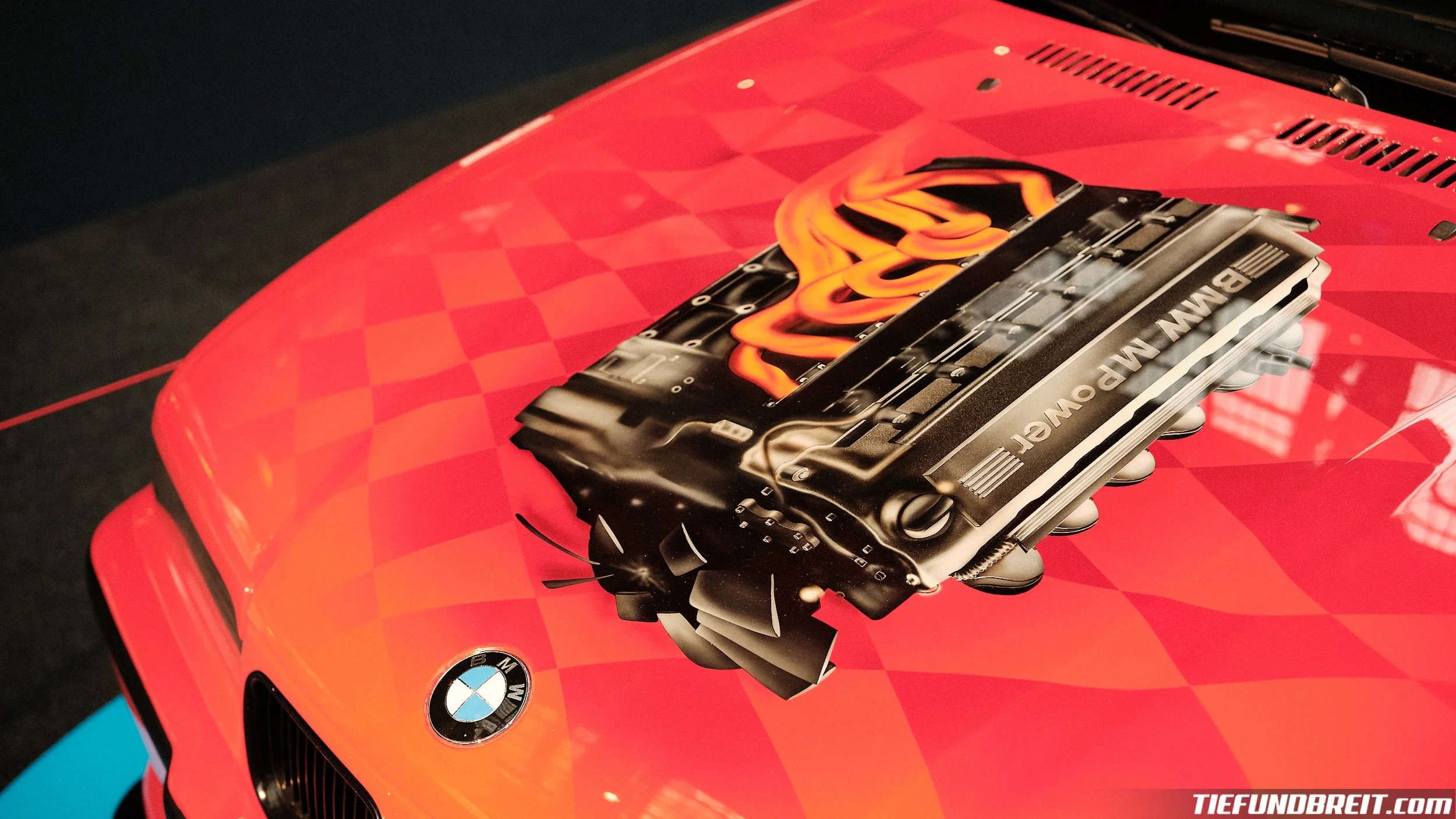
Rieger, or Rieger KFZ-Kunststoffteile, Design und Tuning GmbH in full, was founded in 1987 by Toni Rieger, working out of a garage for the first few years. He started by making VW Golfs as wide as he could and, with growing customer demand, expanded across almost all marques. Shown here at the exhibit was one of the Rieger VW Sciroccos: a Mk2 Scirocco converted into a convertible and fitted with VW Corrado headlights, a rather popular mod among the Rieger Sciroccos. Take note of the very period-correct chrome airbrush on the hood. As outlandish as these widebodies look today, details like this kind of airbrush art firmly cement them as being from an entirely different era.
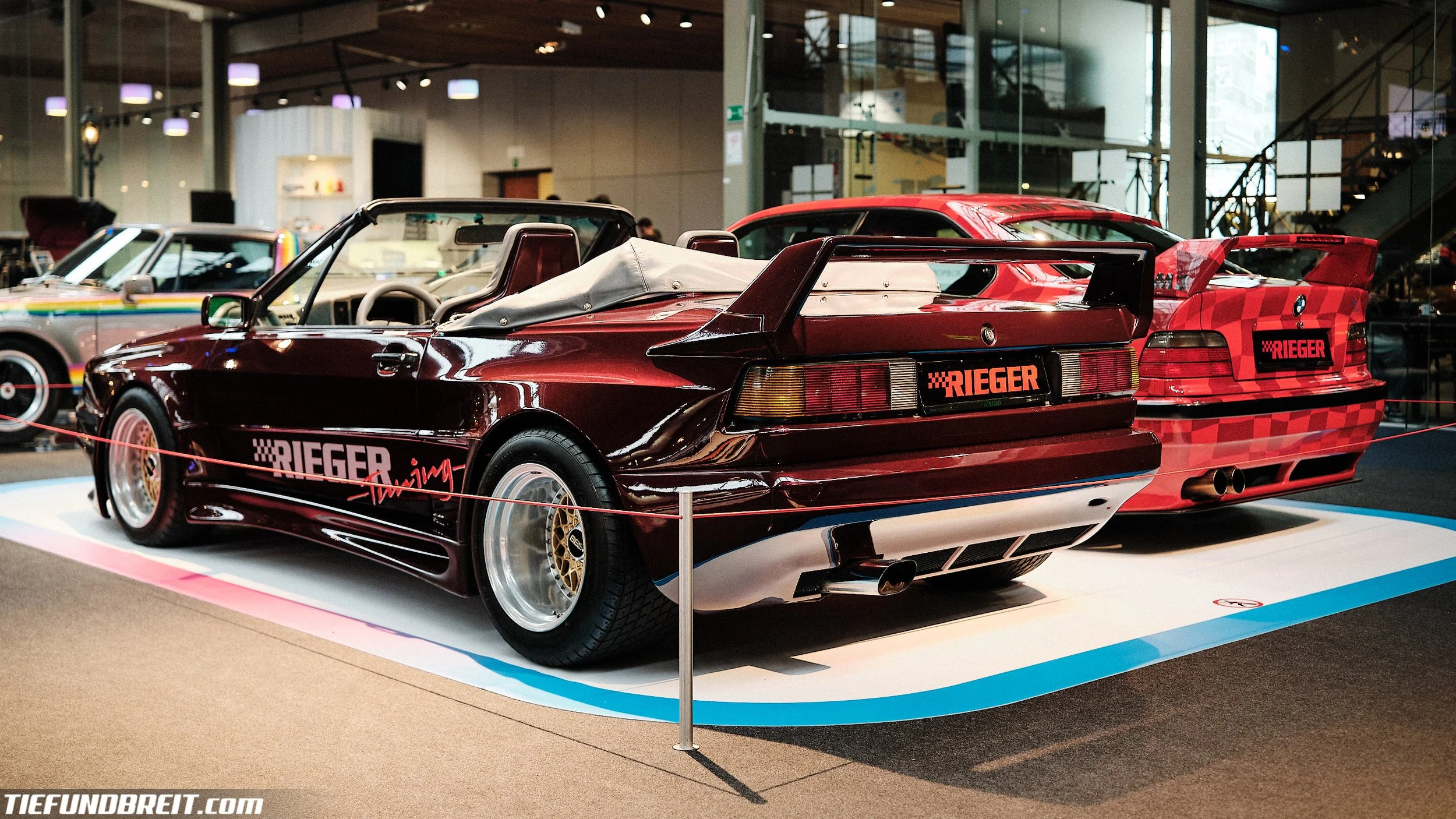

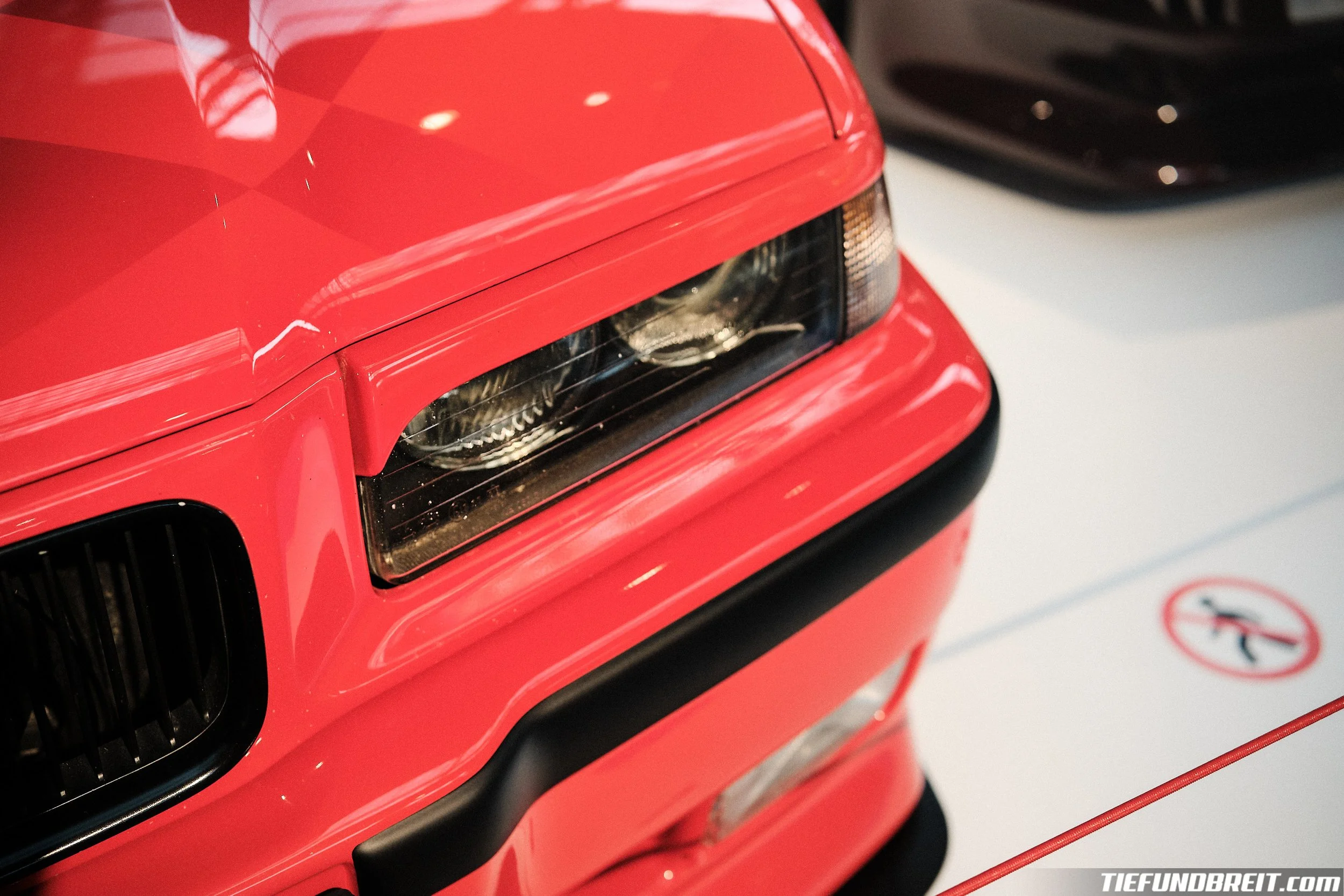
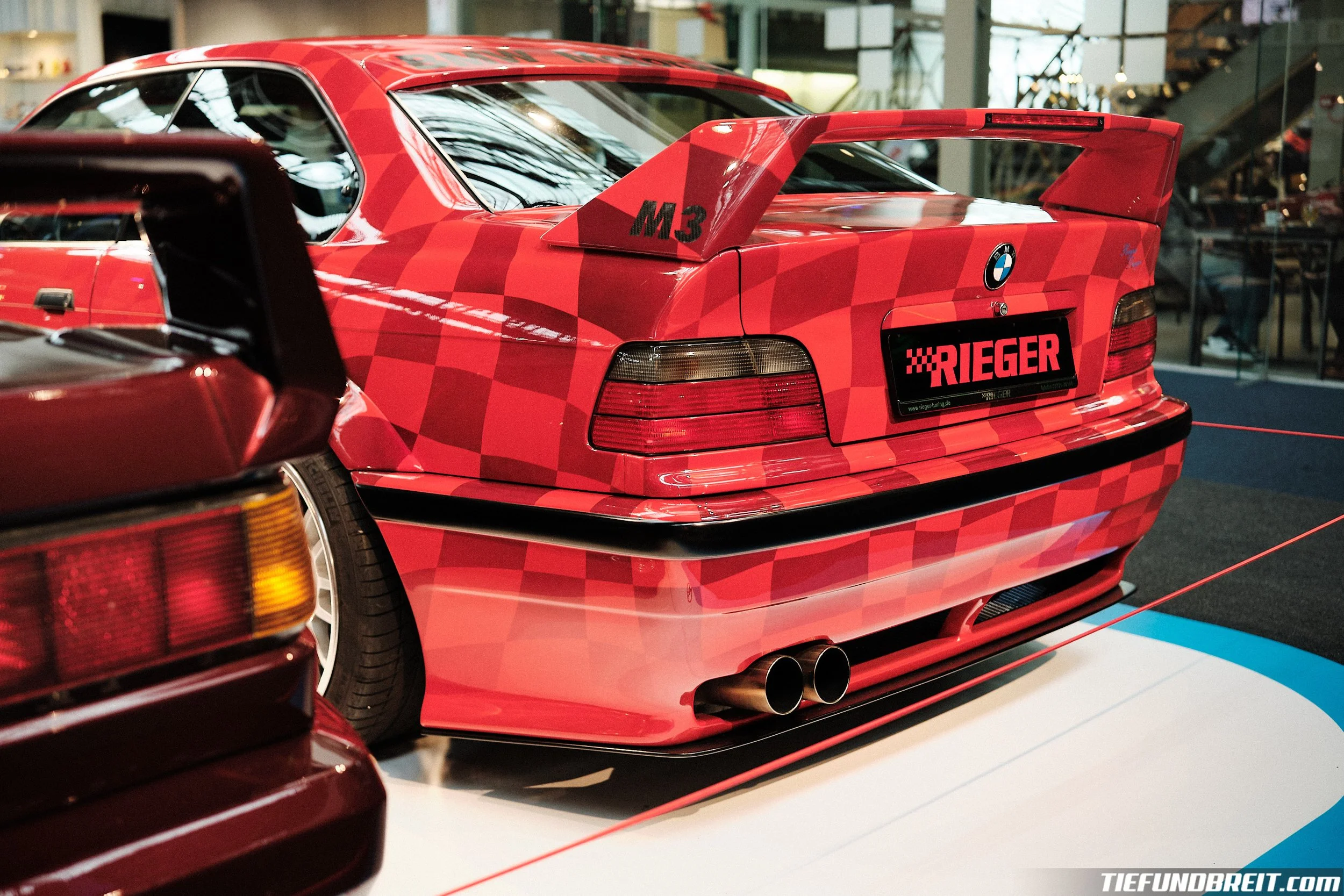
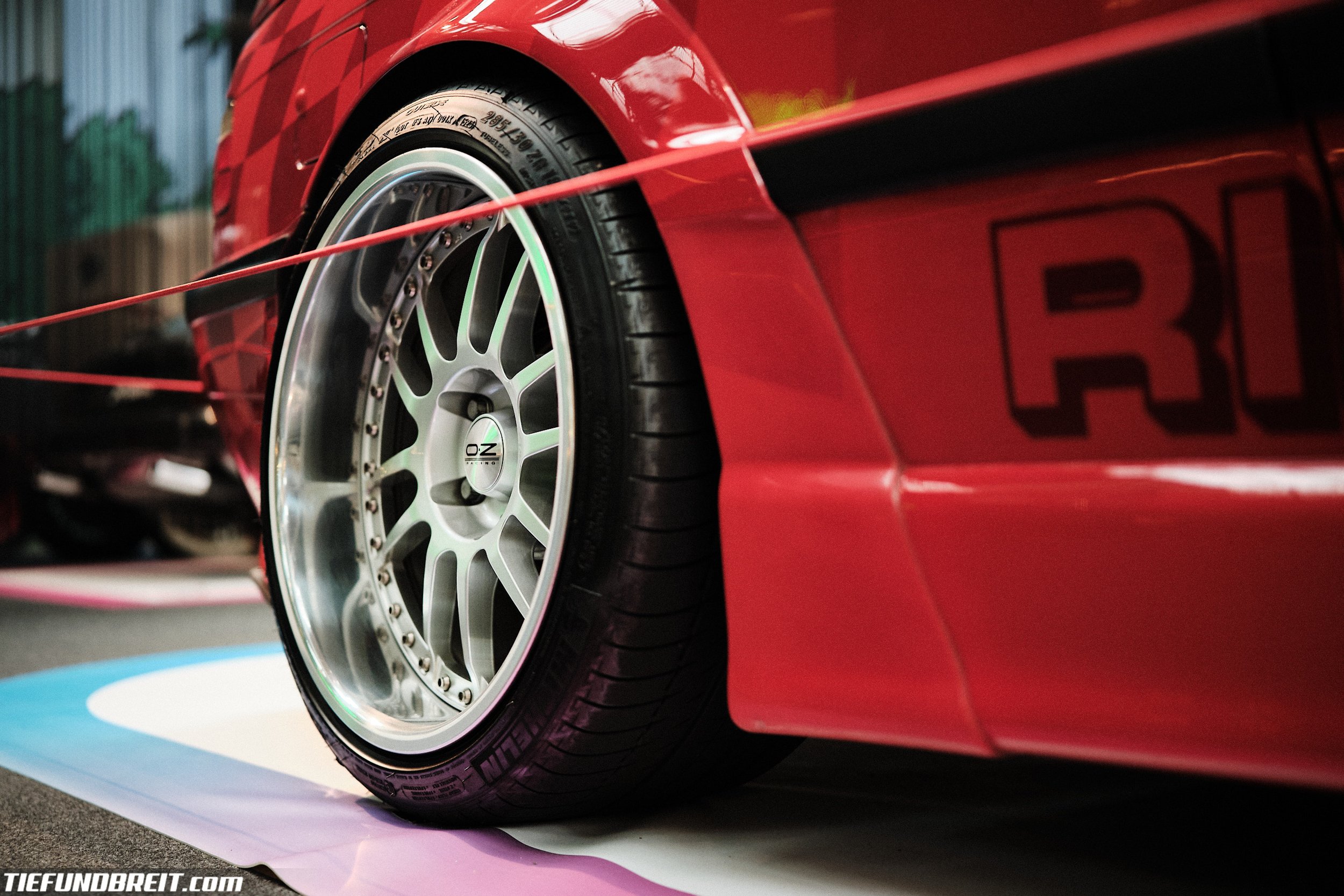
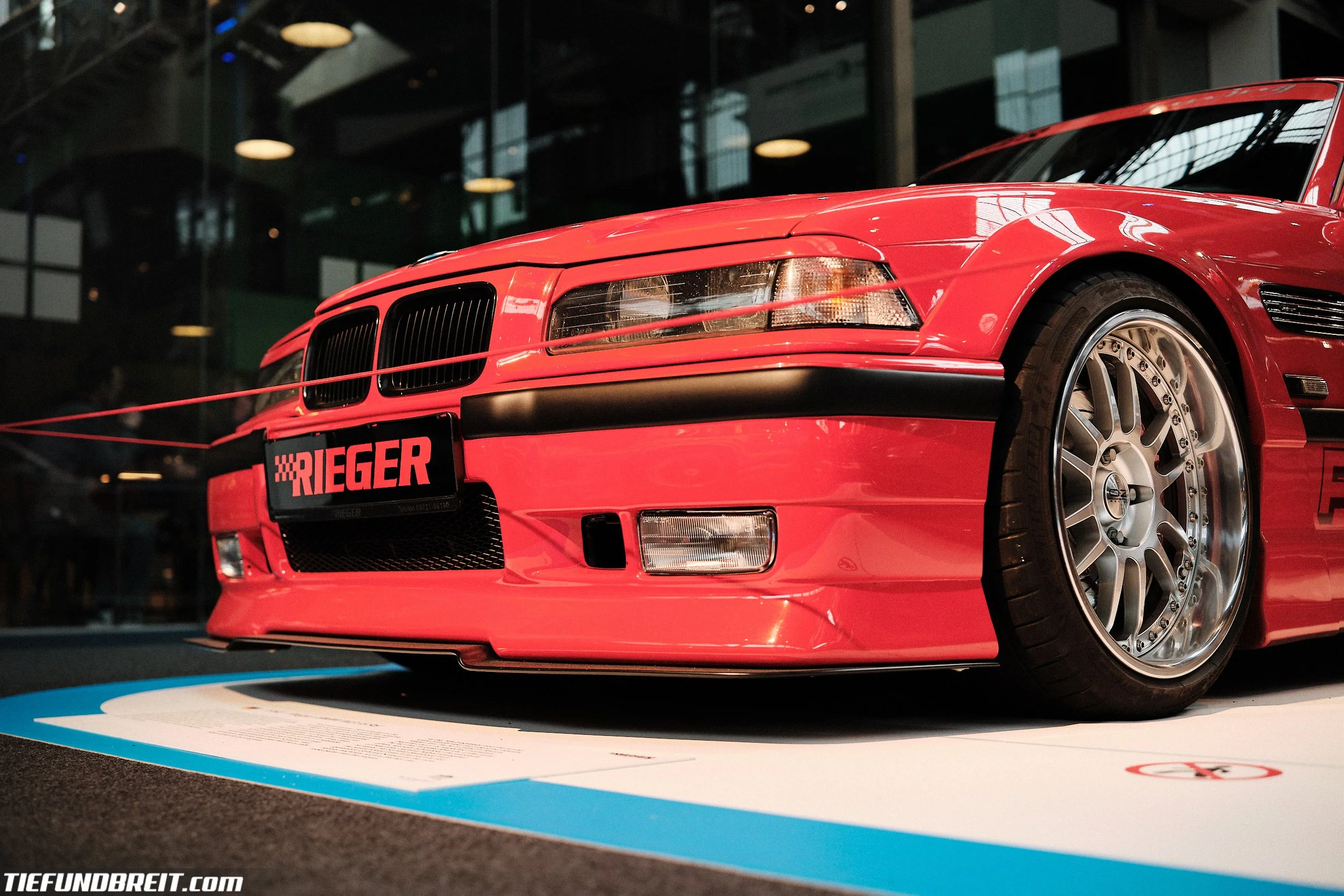
Next to the Scirocco was a Rieger car that was very dear to my heart: the Rieger BMW E36 M3. I remember seeing this very car on double-spread pages in the Rieger catalogues I studied as a kid. The E36 has some modifications that are definitely a sign of the times and are no longer fashionable, such as the hood airbrush or the chrome grilles on the fender, but it is still a wonderful time capsule. In my opinion, the bodykit actually suits the E36’s lines very well.
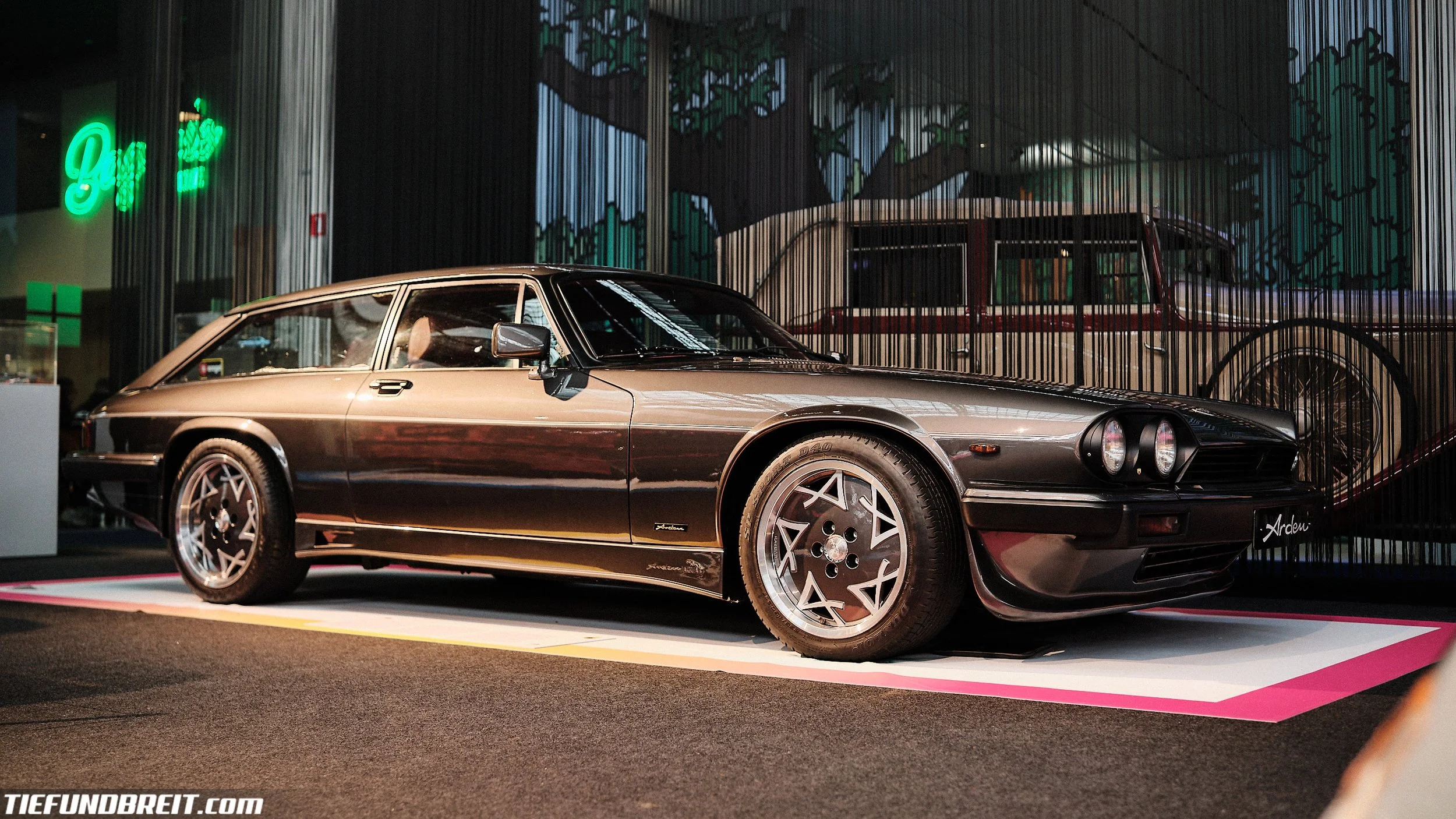
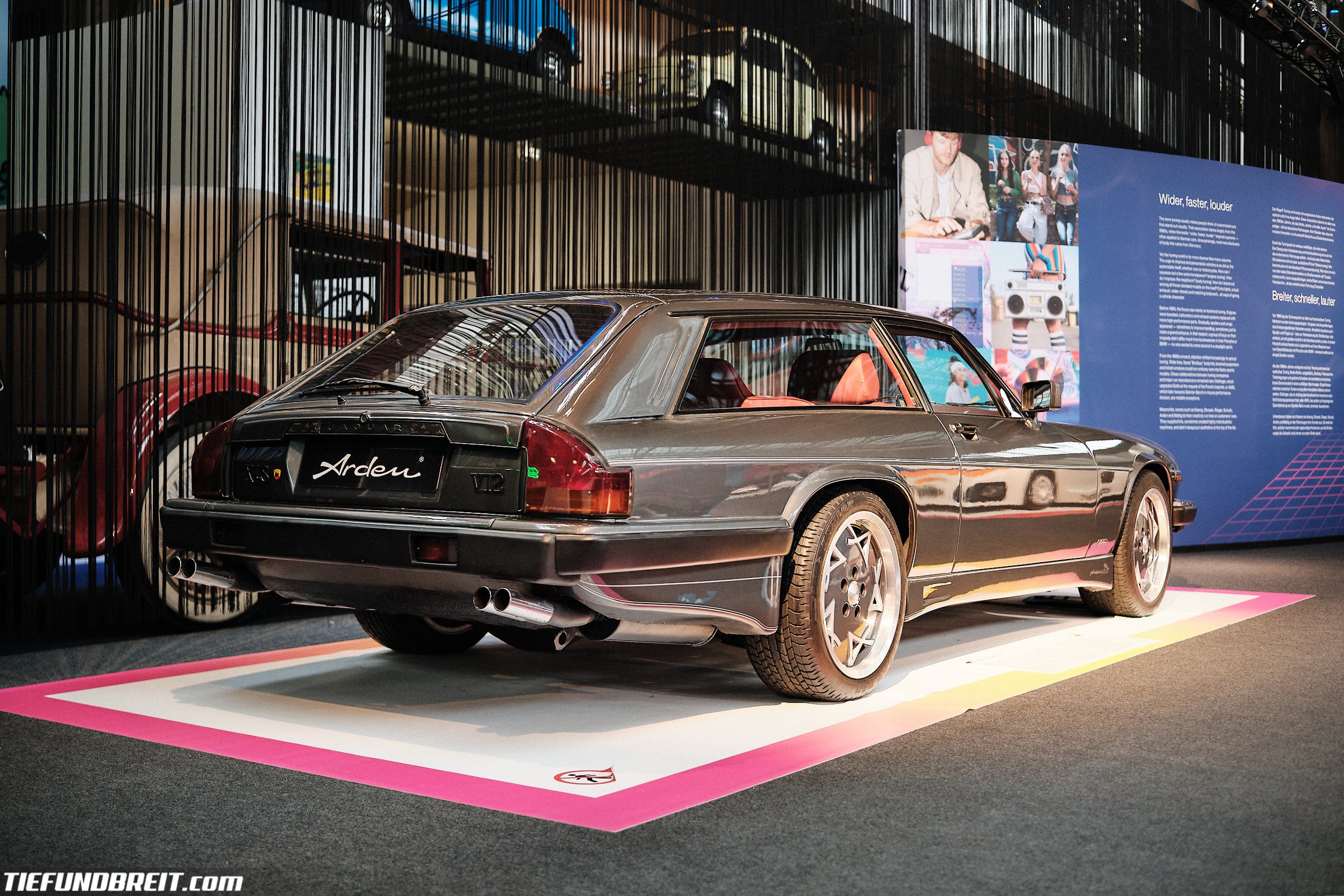
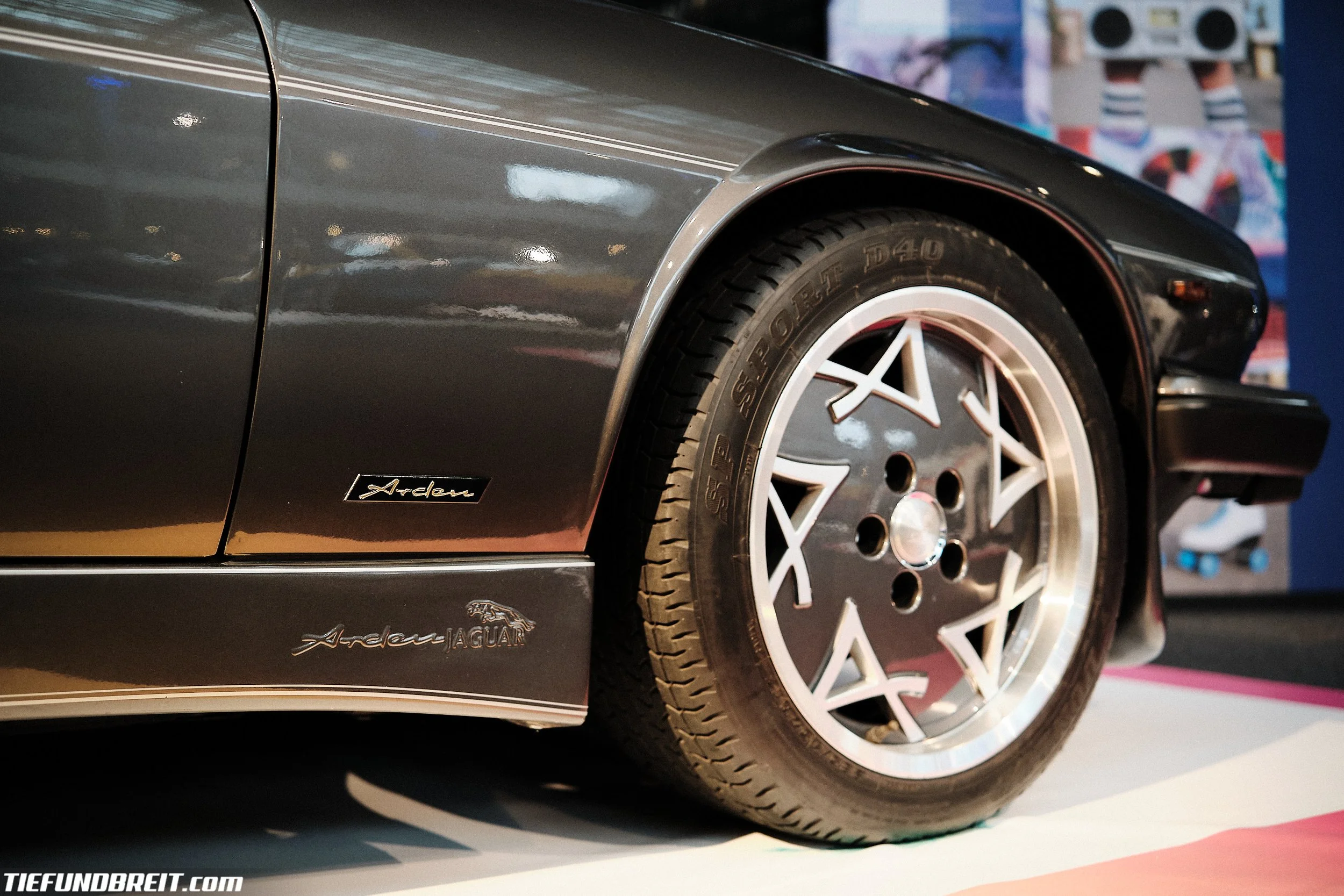
Tucked away behind the two Rieger cars was a, for this exhibit, rather unassuming car: a Jaguar XJS turned into a shooting brake by Arden. Founded in 1972, Arden soon found their calling in modifying British cars like Jaguars. The first modified XJs hit the road in the 80s, and after a convertible conversion they called the AJ2, the tuner turned their eyes toward building a shooting brake. These AJ3 cars were powered by a slightly modified naturally aspirated V12 lump, making 320hp from 5.3 liters. Only three examples were built, and the price tag was just as exclusive: one of these cost nearly three times as much as a standard V12 Jaguar XJS.
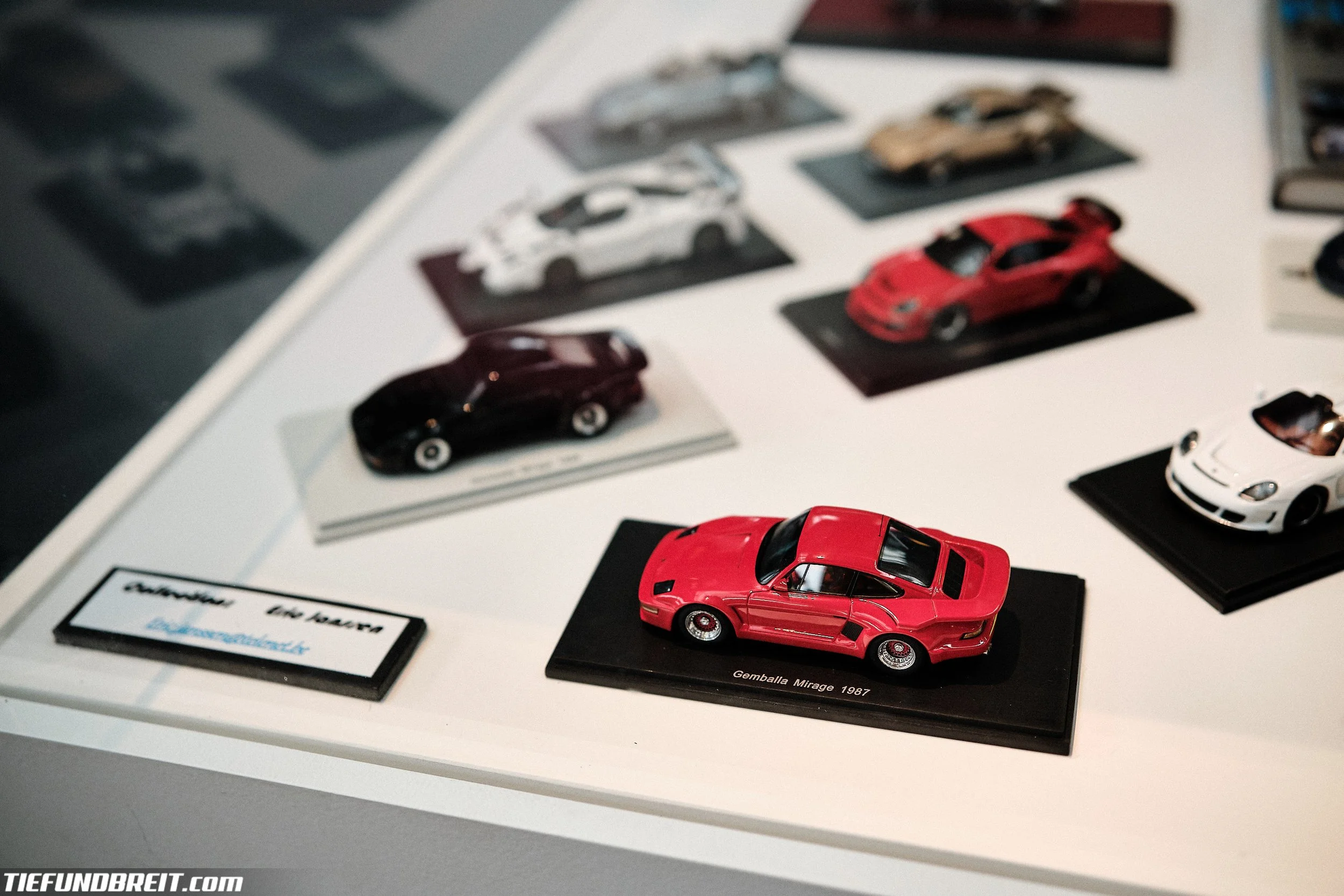
Sprinkled in between all these certainly impressive real cars was a neat display of tuner scale models matching the vibe of the real cars.
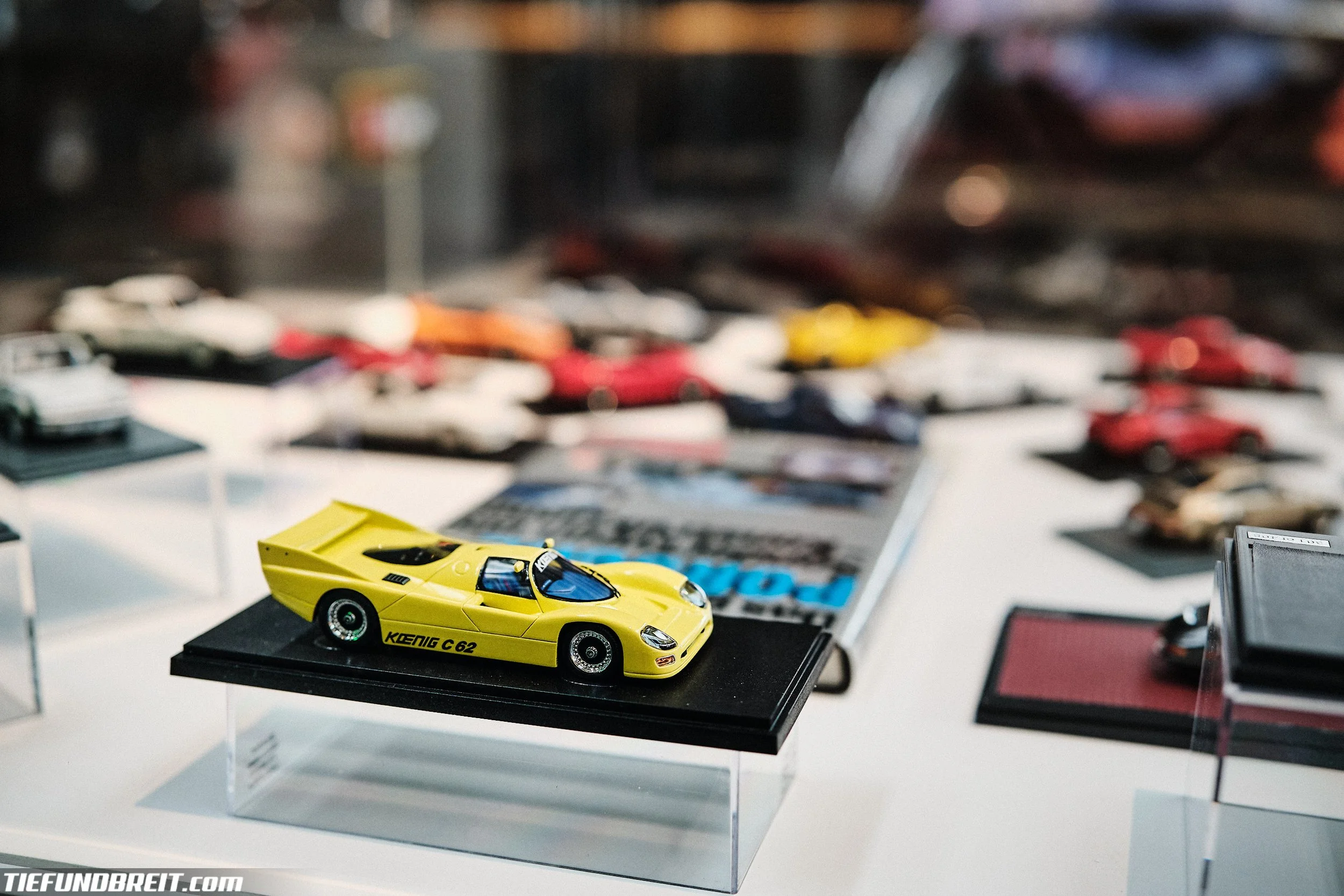
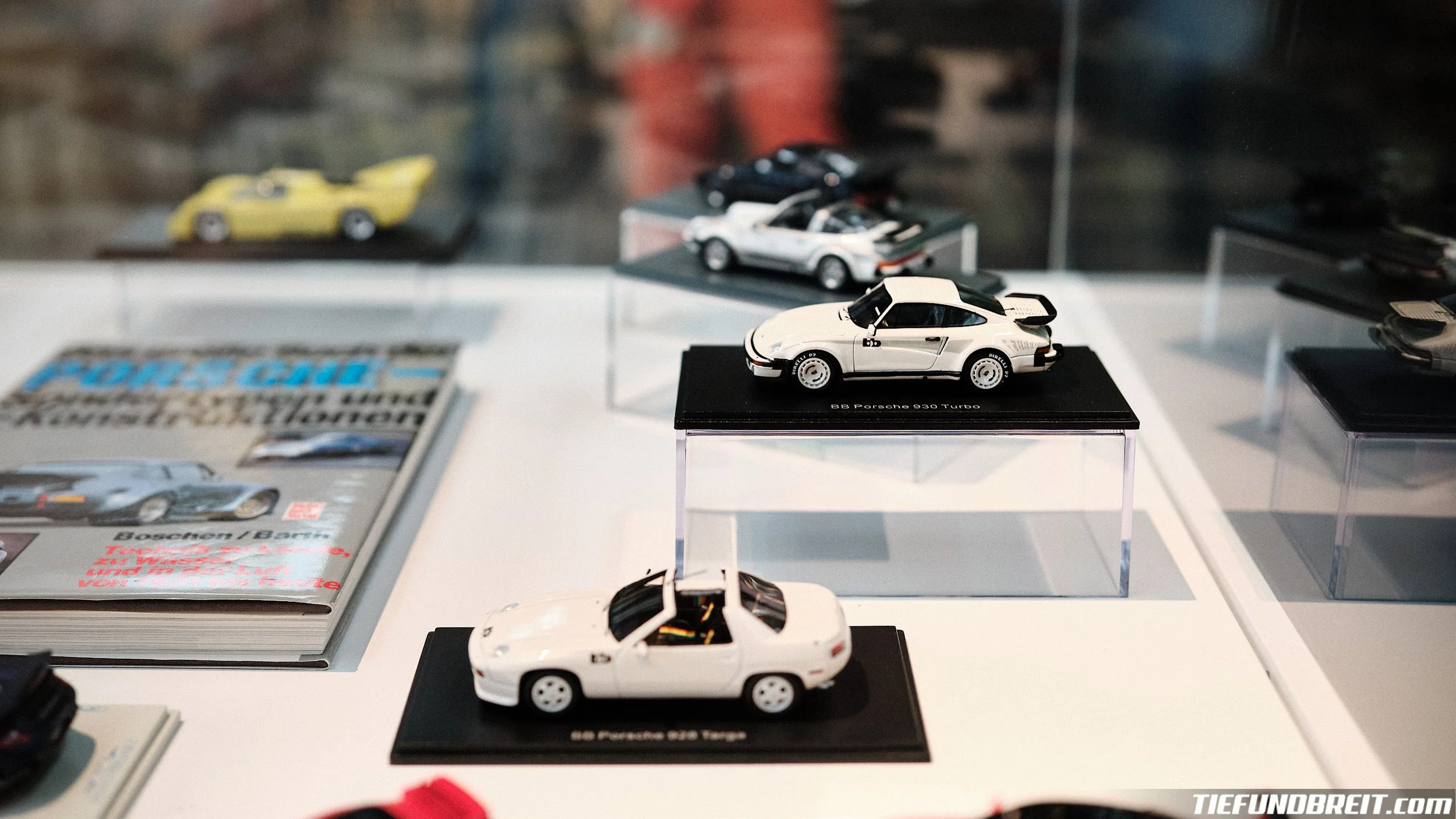
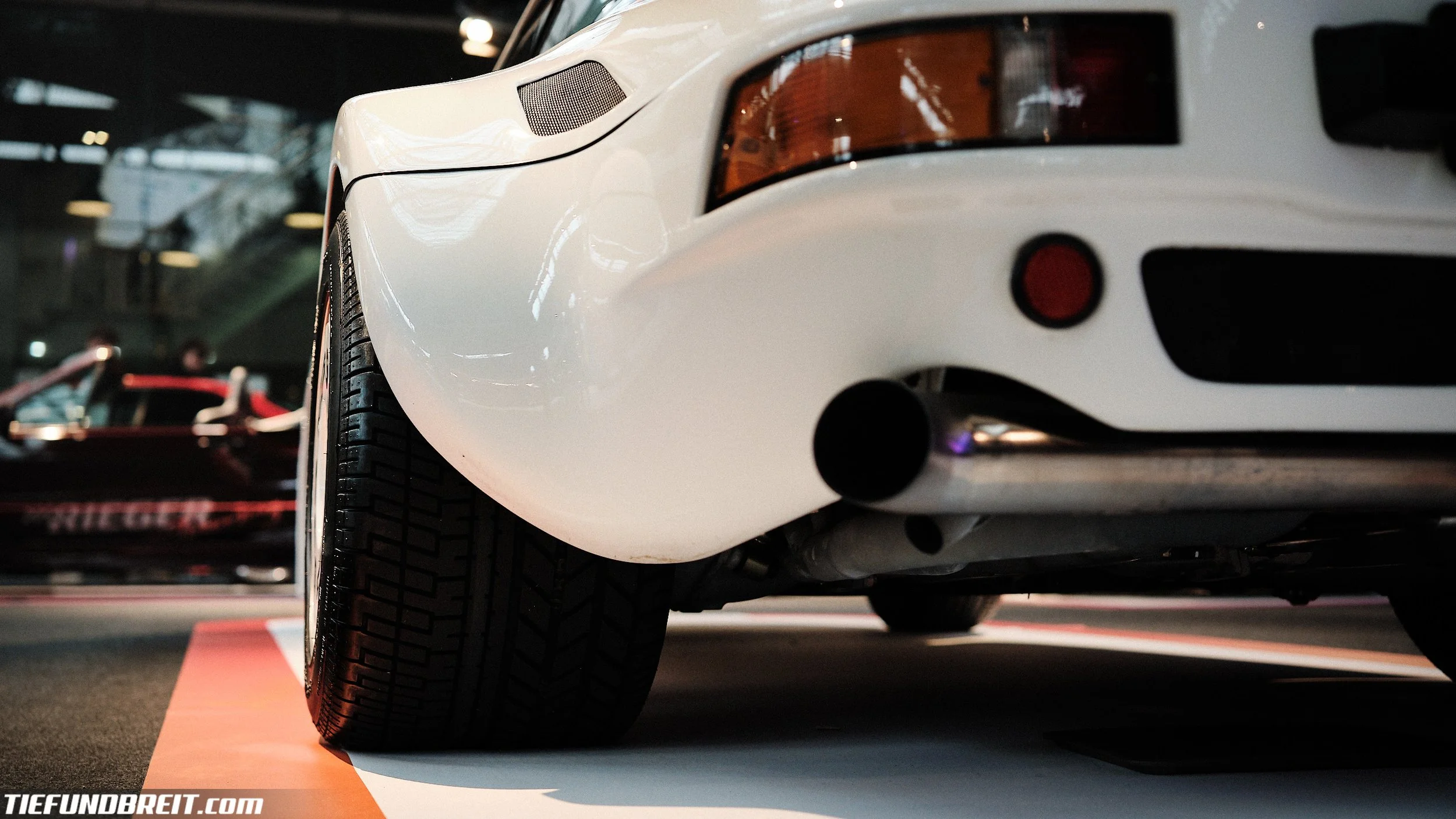
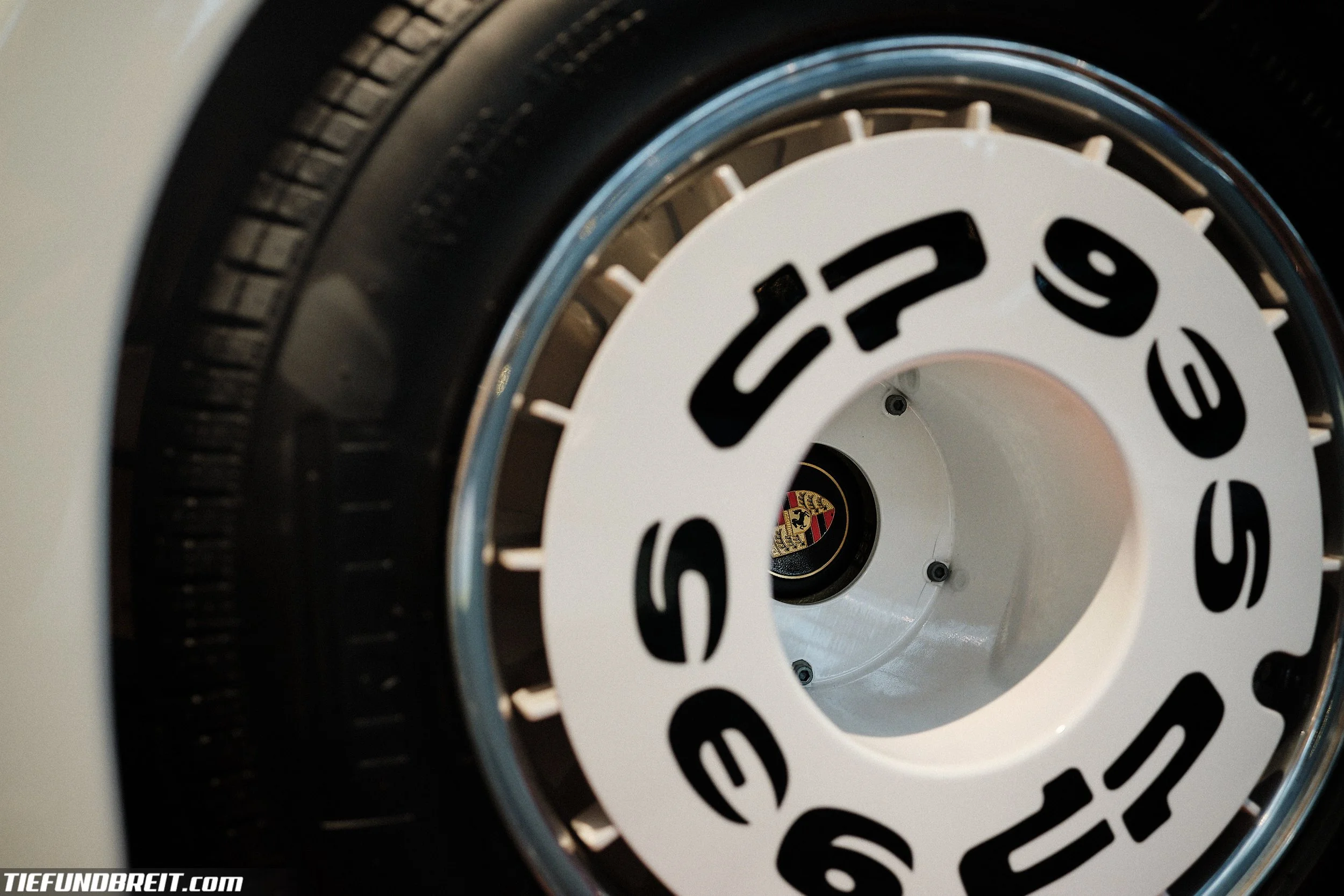
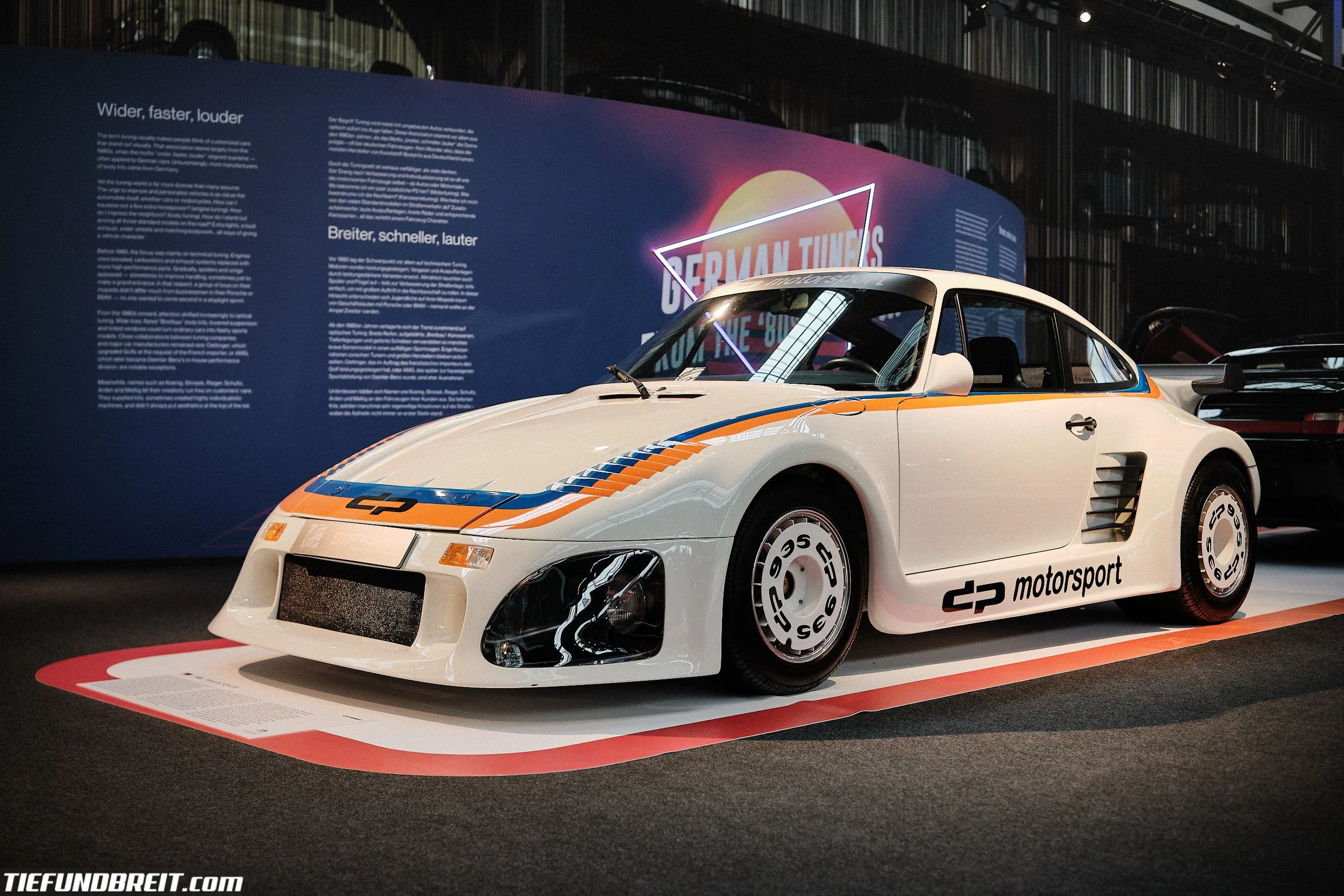
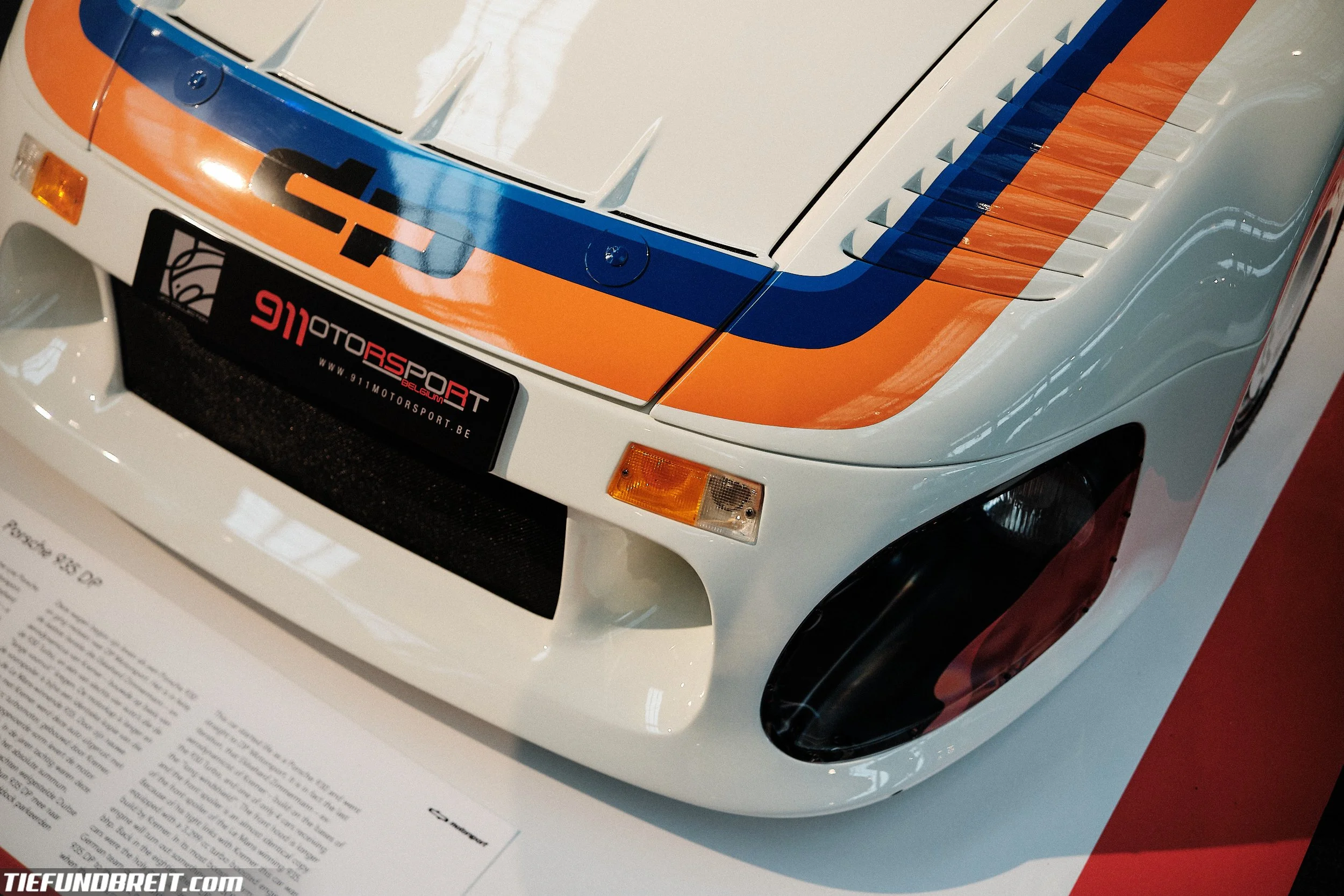
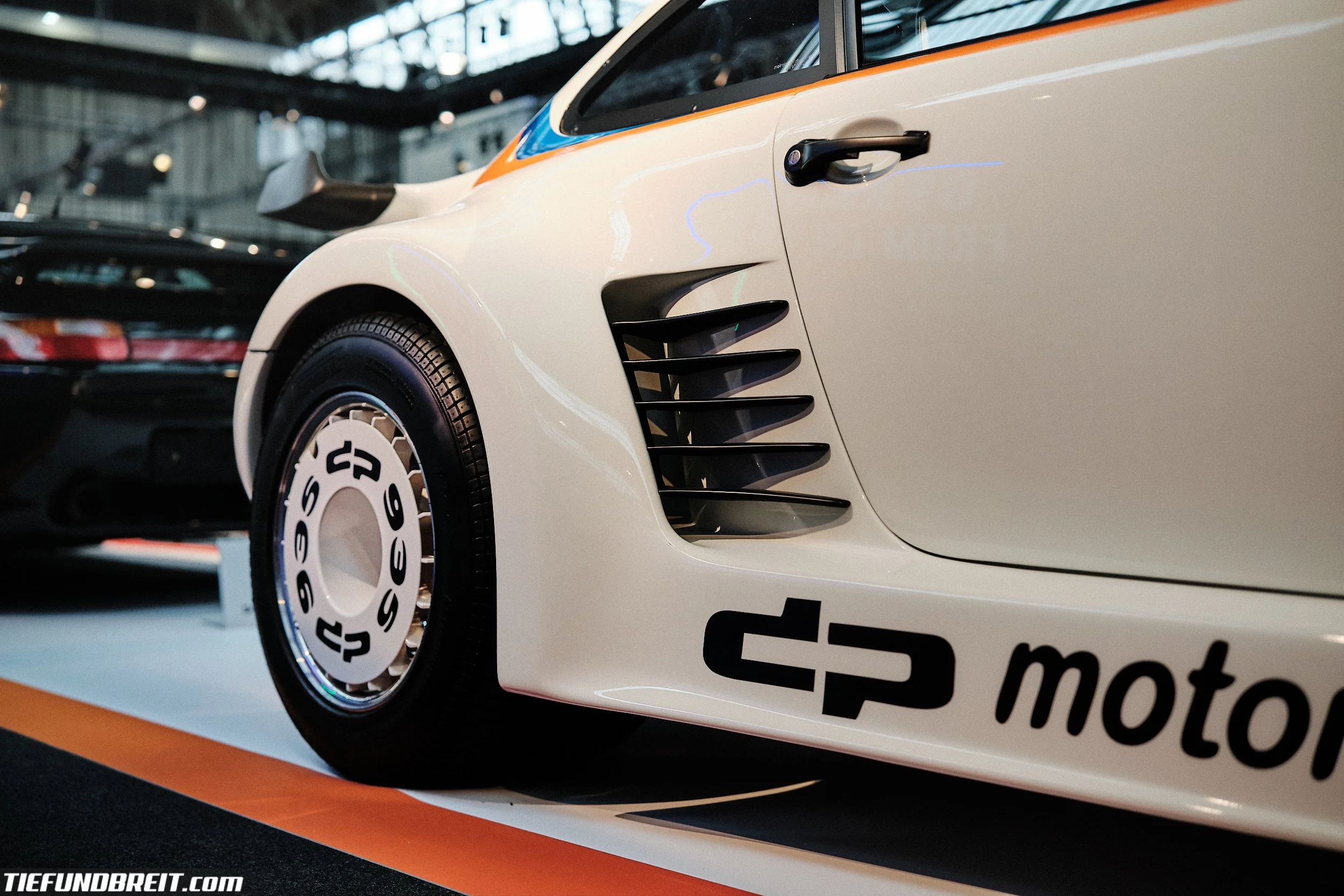
A white Porsche came straight from a legend in the Porsche world: dp Motorsport. To anyone familiar with 80s motorsports, dp Motorsport should ring a bell. They partnered up with Kremer Racing to supply the fibreglass aeroparts for the Kremer Porsche 935s that absolutely dominated various racing series in the late 70s and early 80s. This example here is called the Porsche 935 dp, and it is wearing aero that closely resembles the 935s that raced and won at Le Mans. It features a 3.3-liter turbo capable of around 600 to 650hp. Today, this is still a serious machine; back in the 80s, this was practically a rocket ship on wheels.
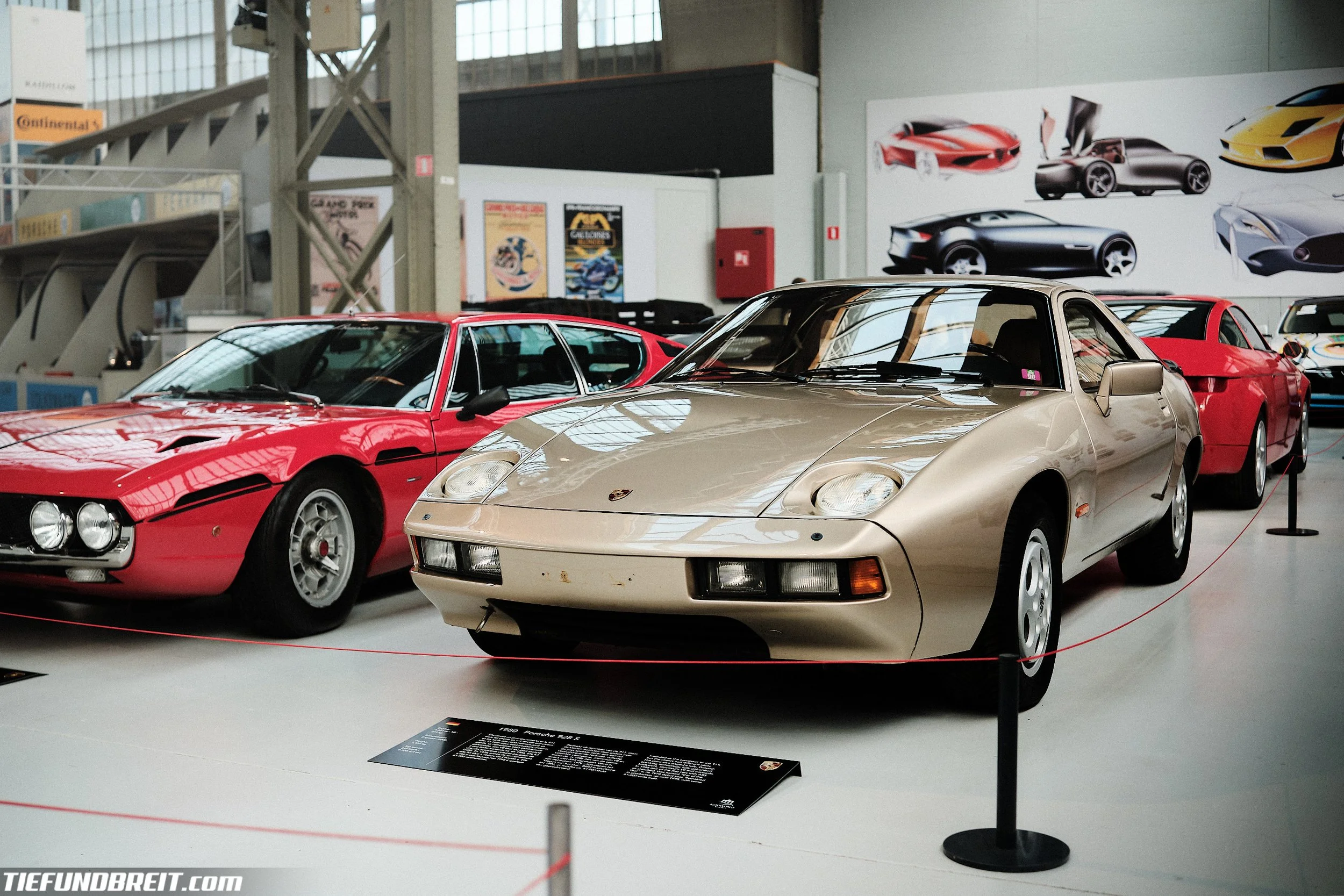
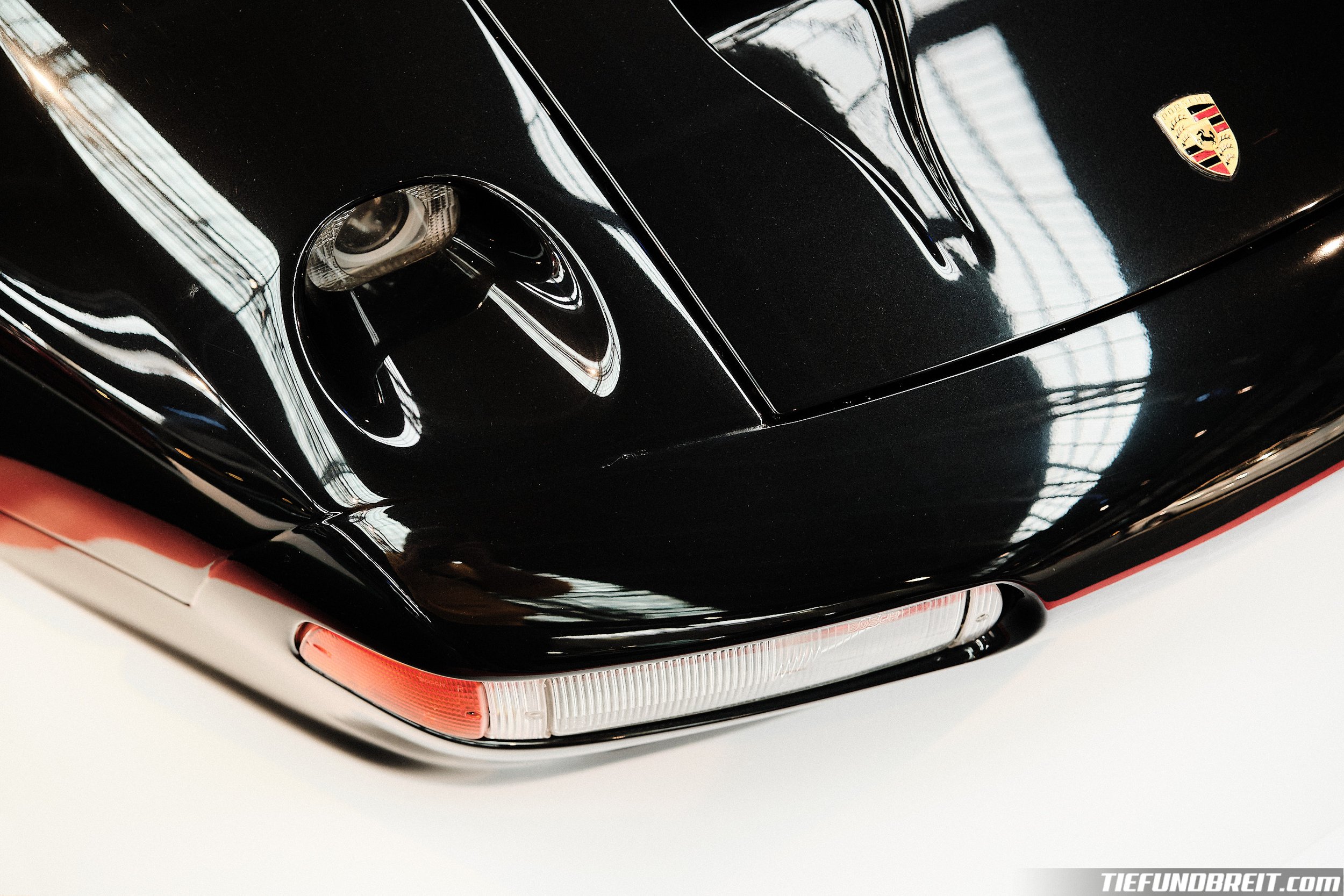
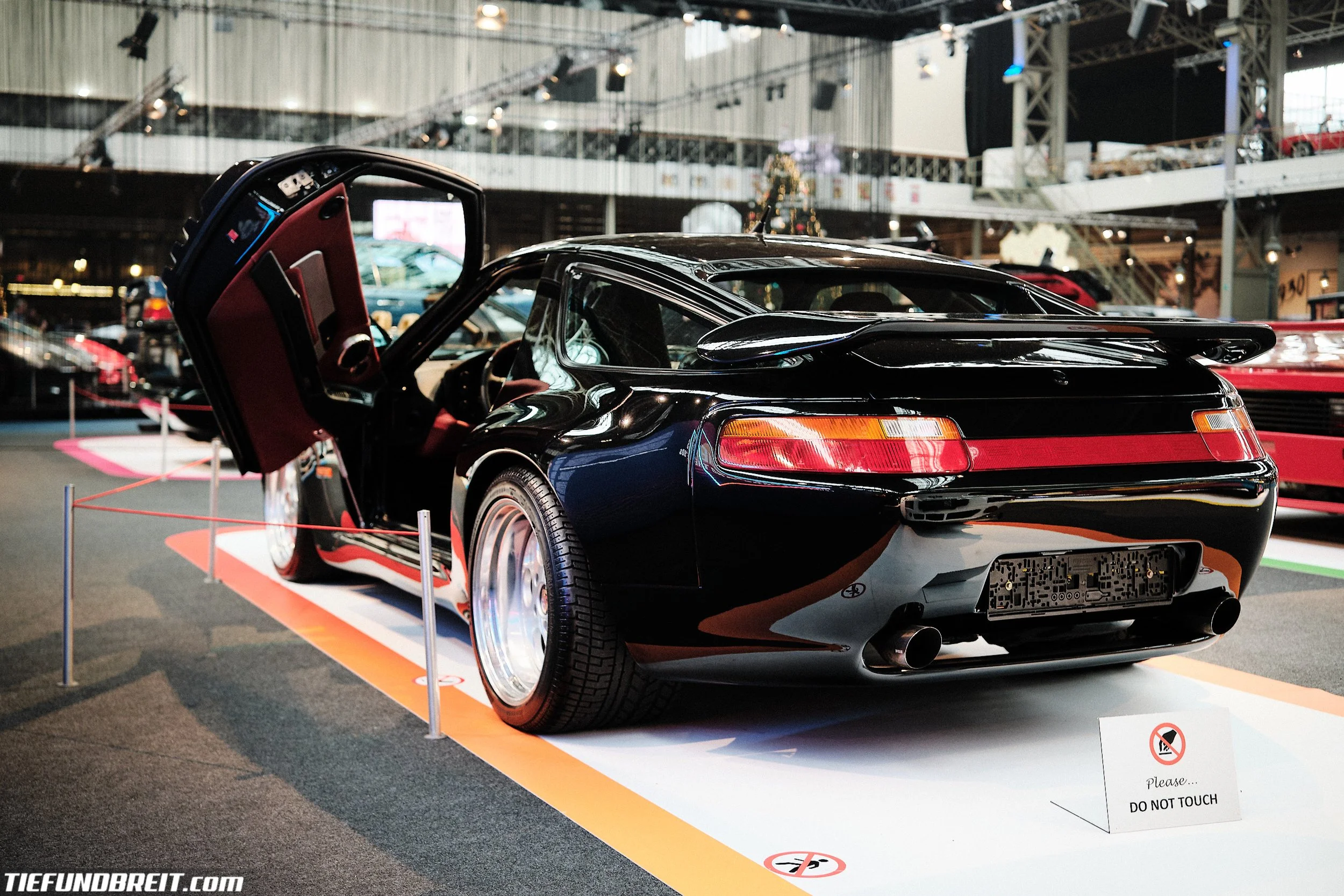
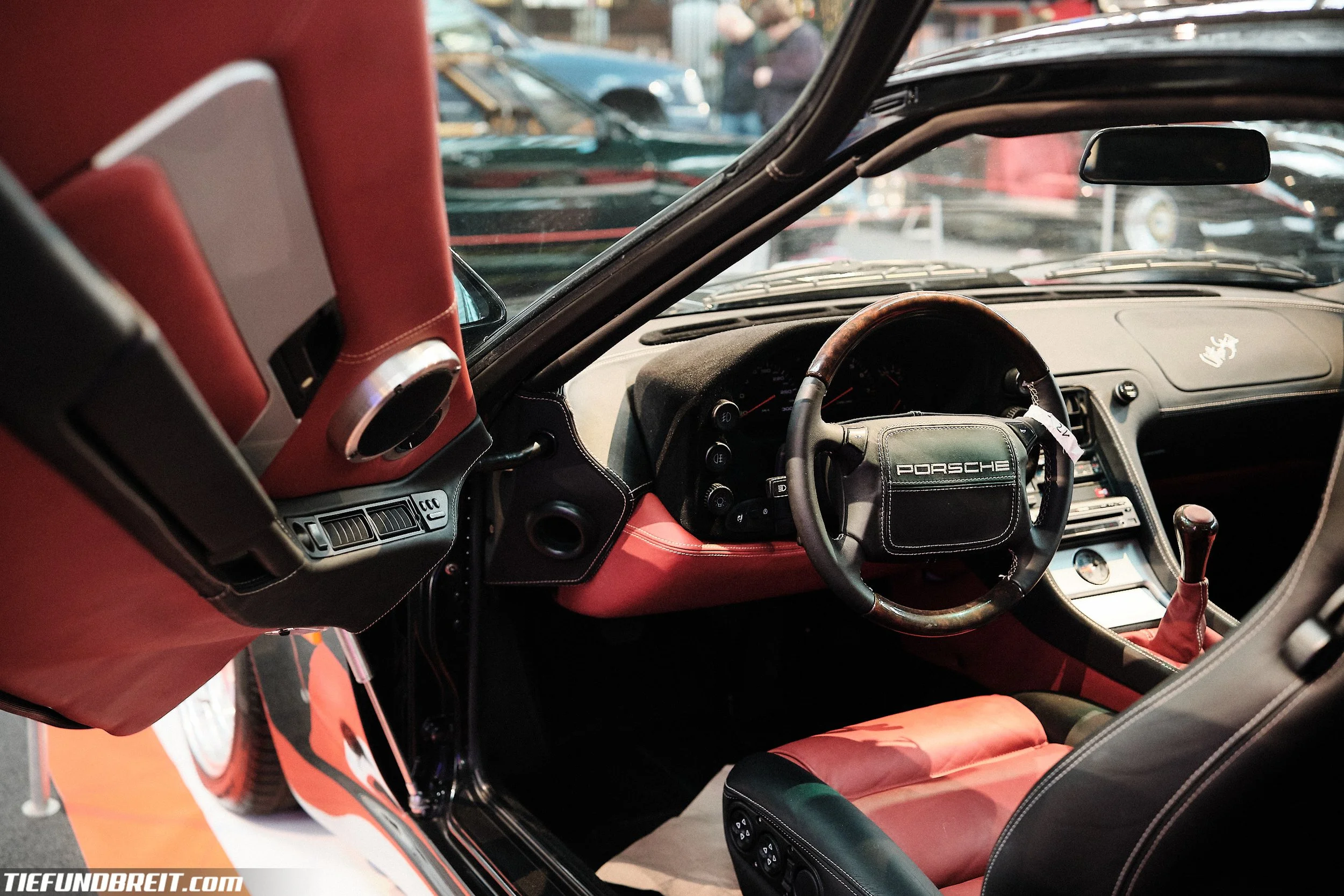
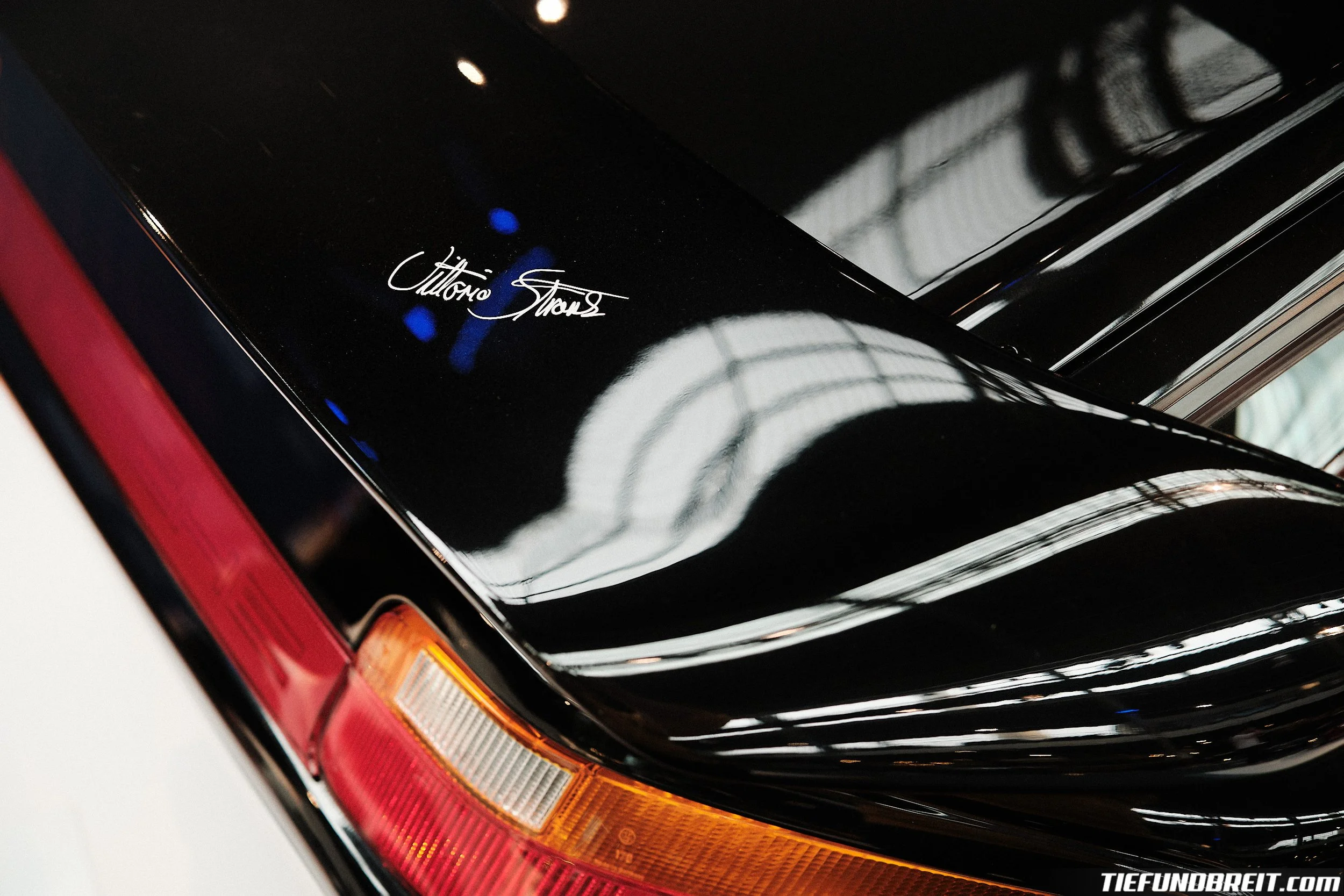
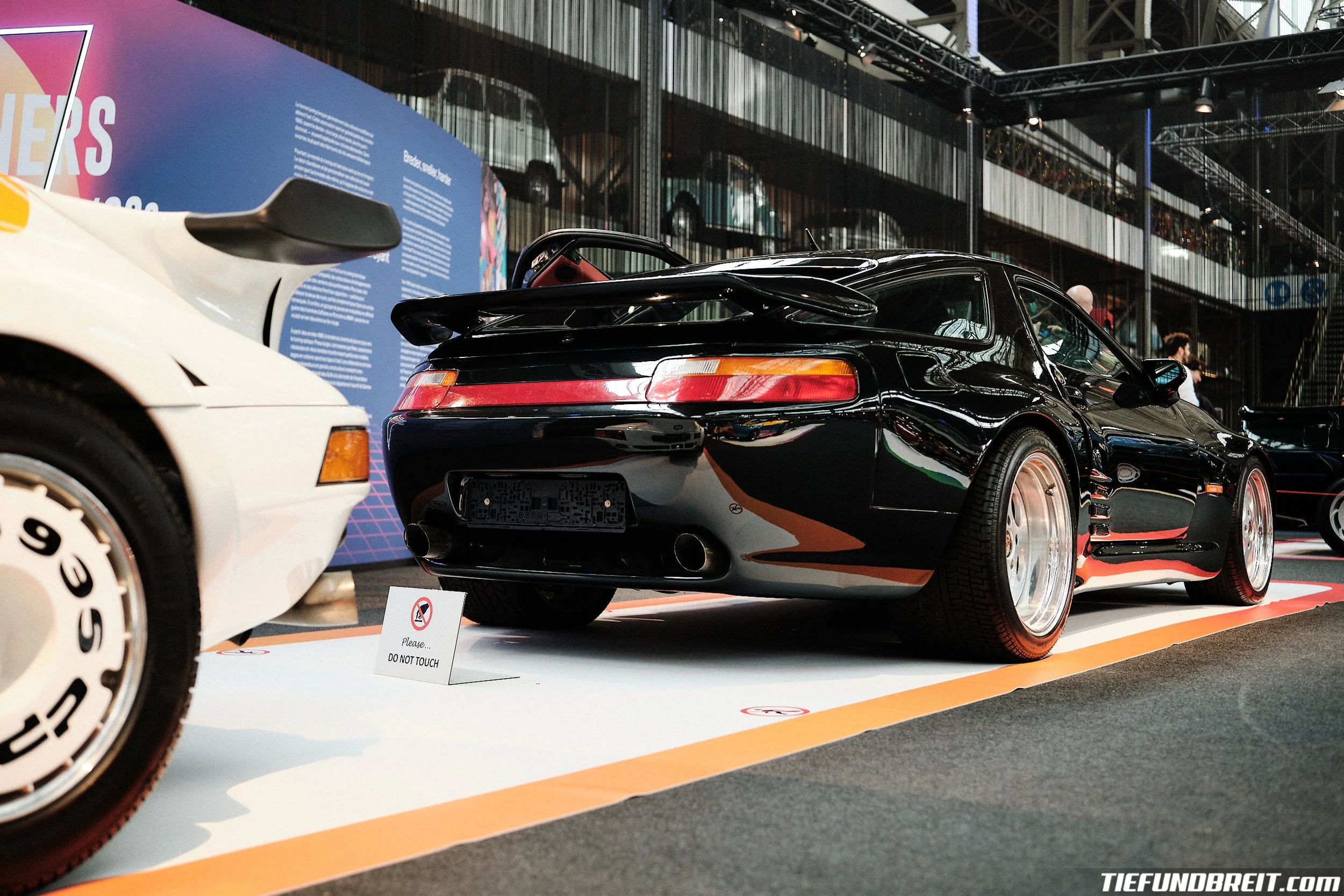
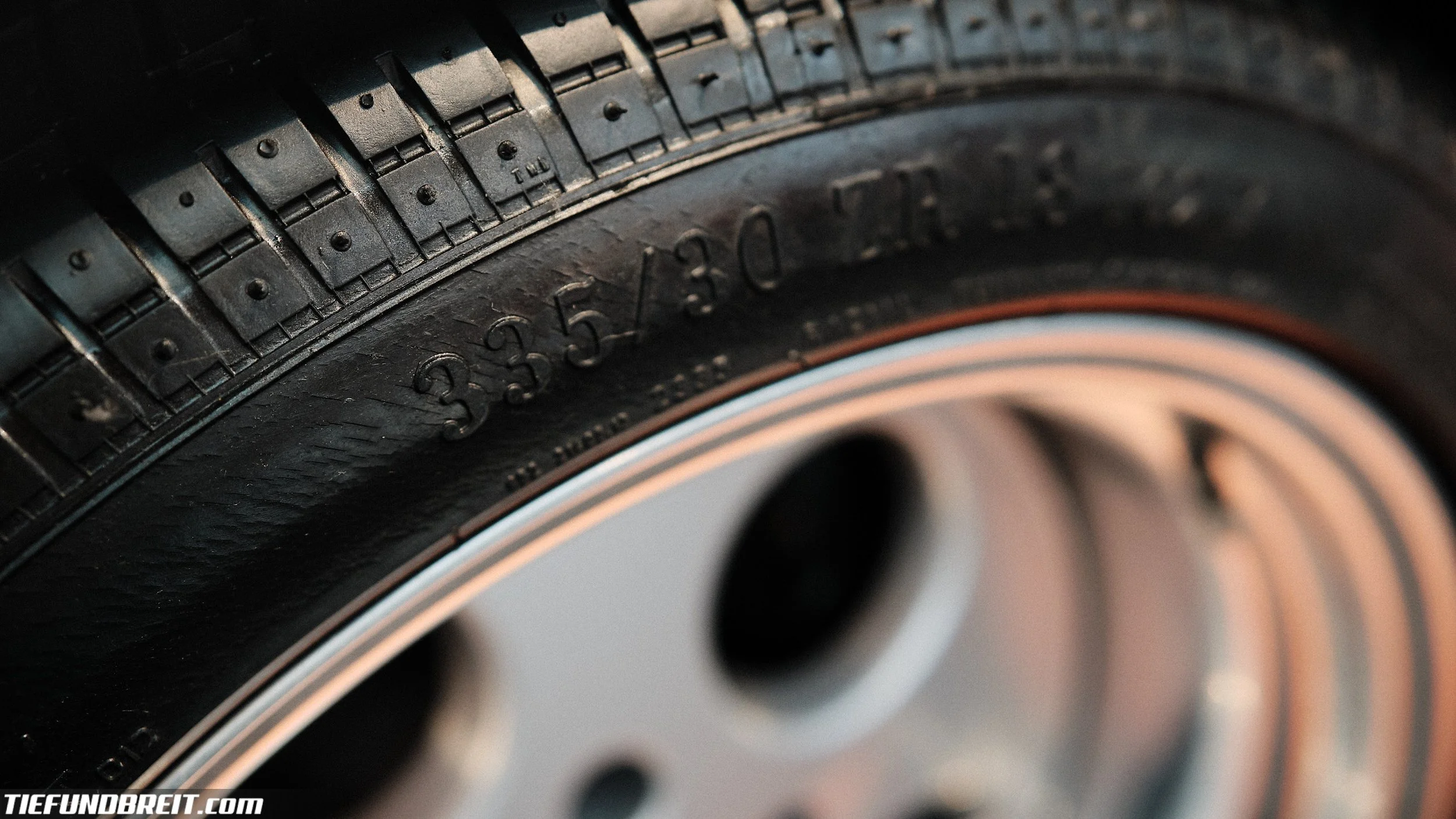
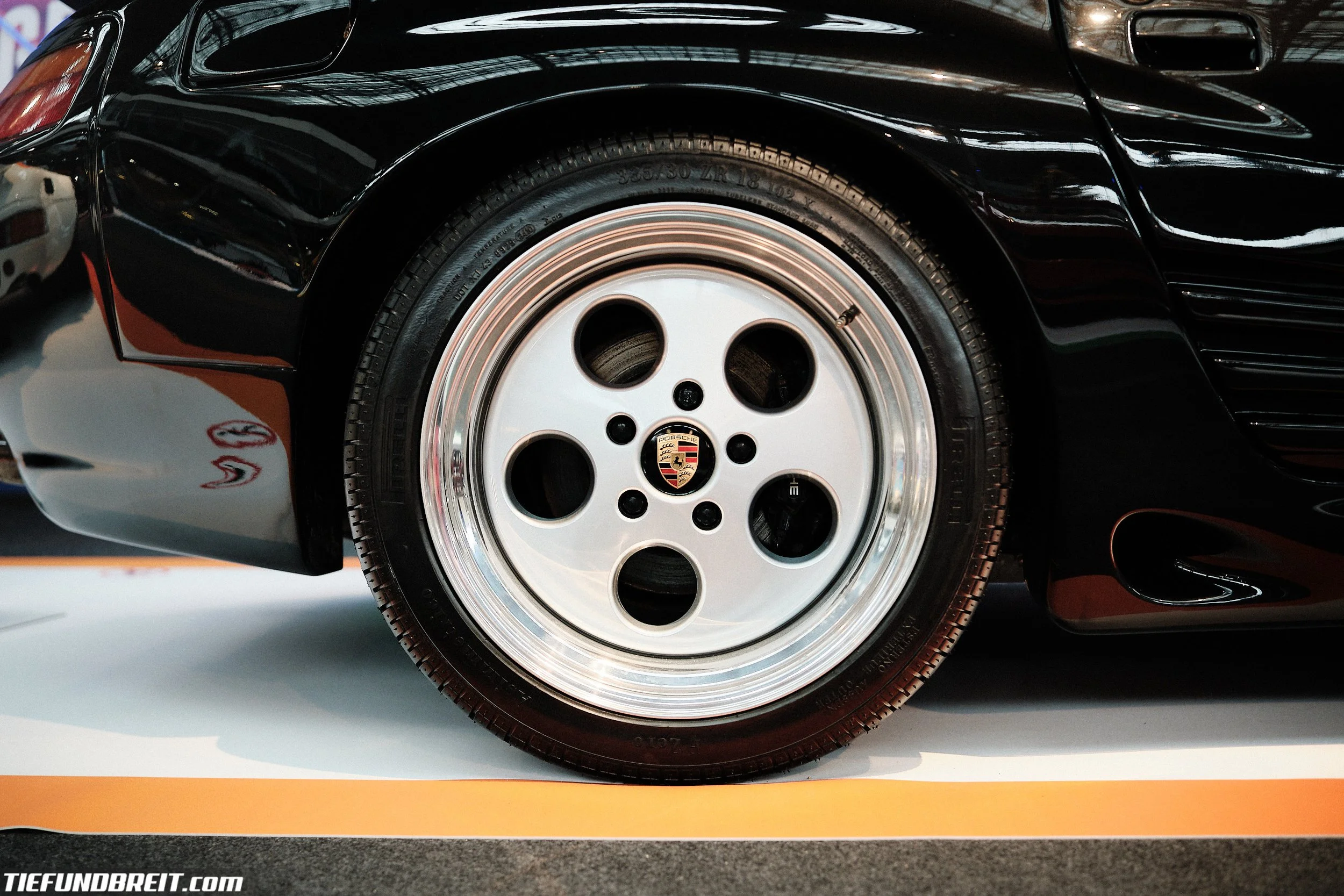
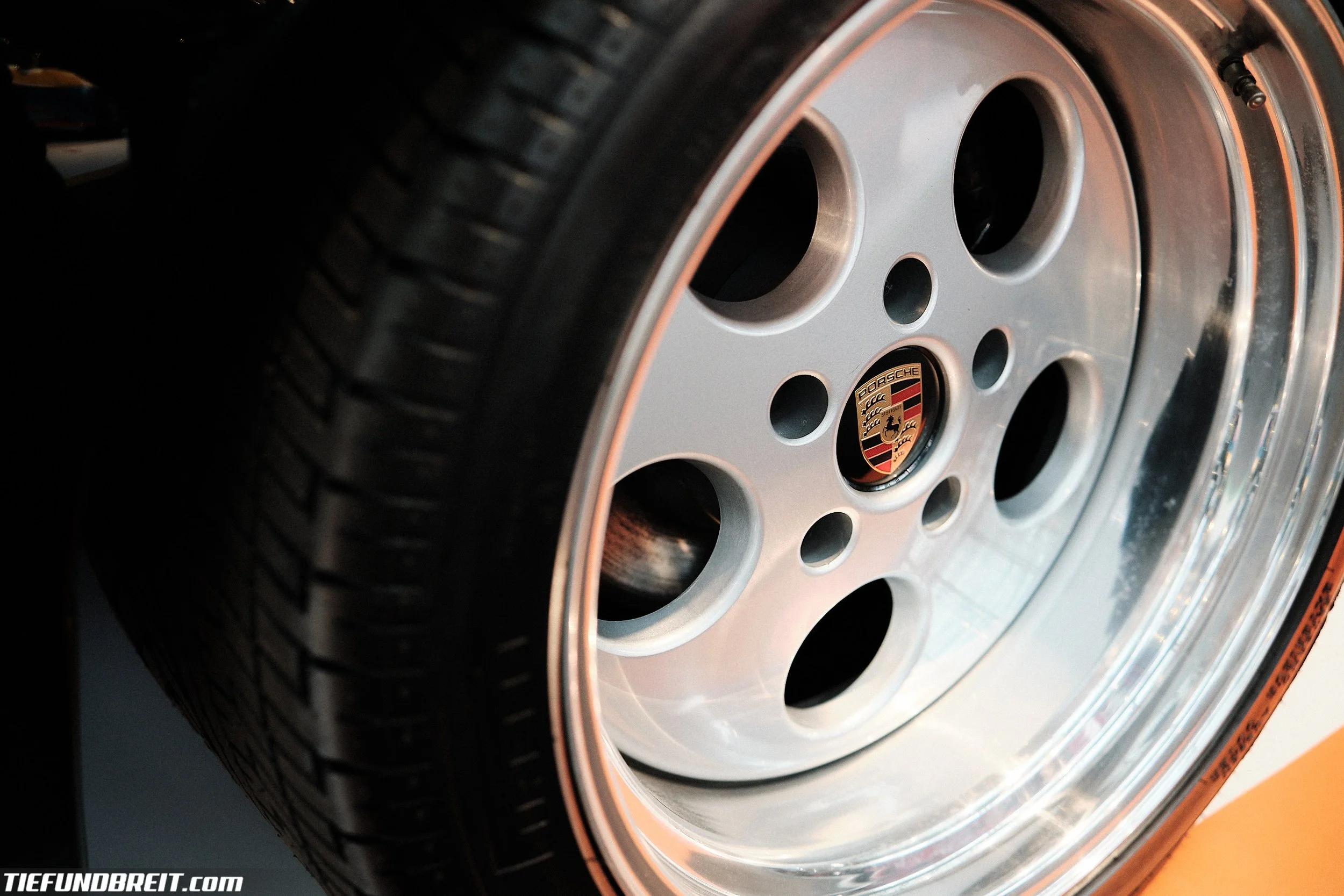
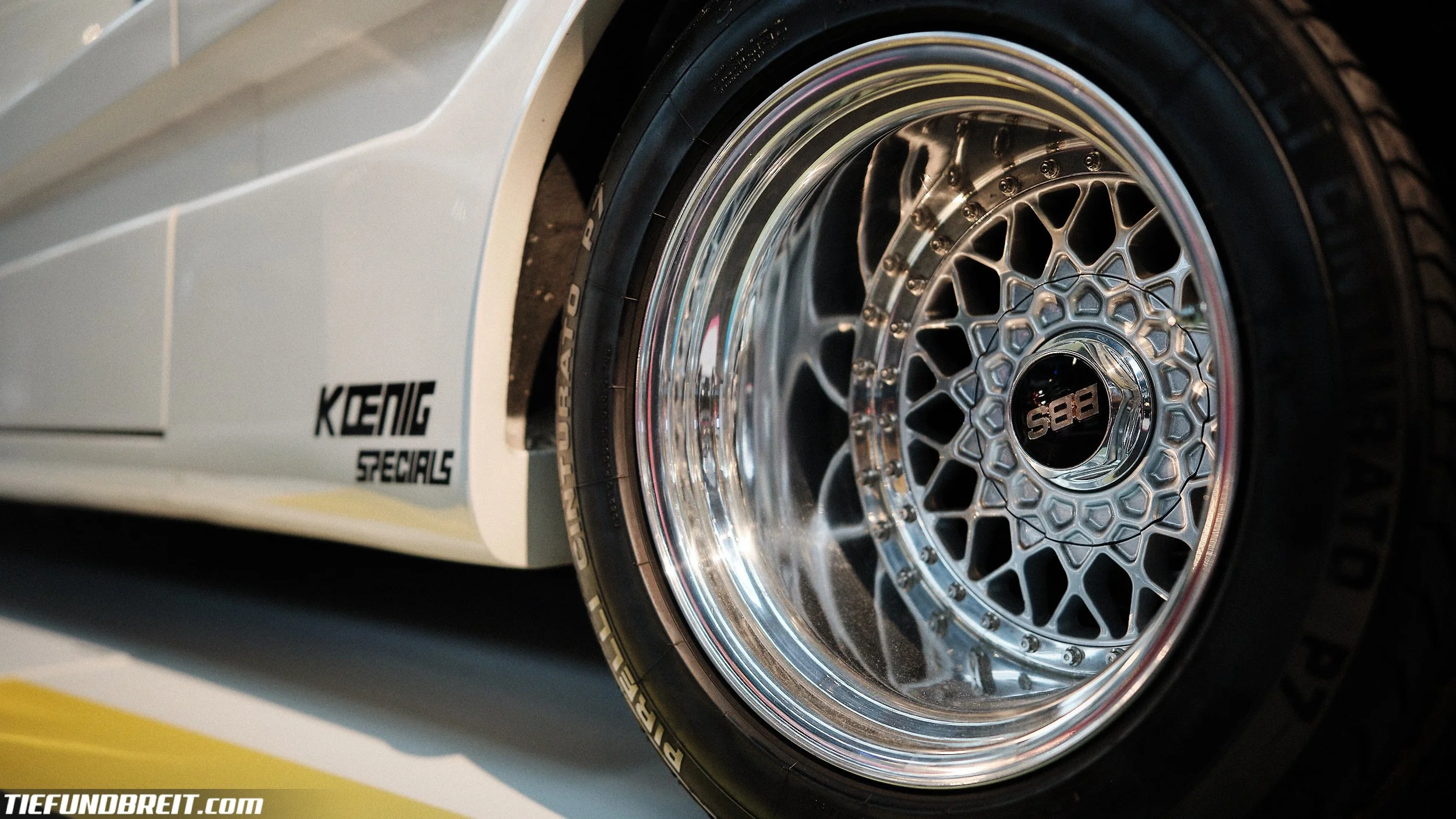
Let’s stay with Porsche for a moment. In the 70s, Porsche tried to replace the 911 with the V8-powered, front-engined 928. In the end, the car was produced for 18 years parallel to the 911, and this, of course, also meant it was not safe from the tuner treatment. Many 928s ended up going under the knife at Strosek Design, the company of Vittorio Strosek. This is a late-model 928 wearing the typical late Strosek bodykit: smooth and wide fenders, tiny round headlights instead of pop-ups, and their own Strosek wheels. Vittorio Strosek was also the chief designer for Koenig Specials and helped Koenig to international fame through his wild designs.
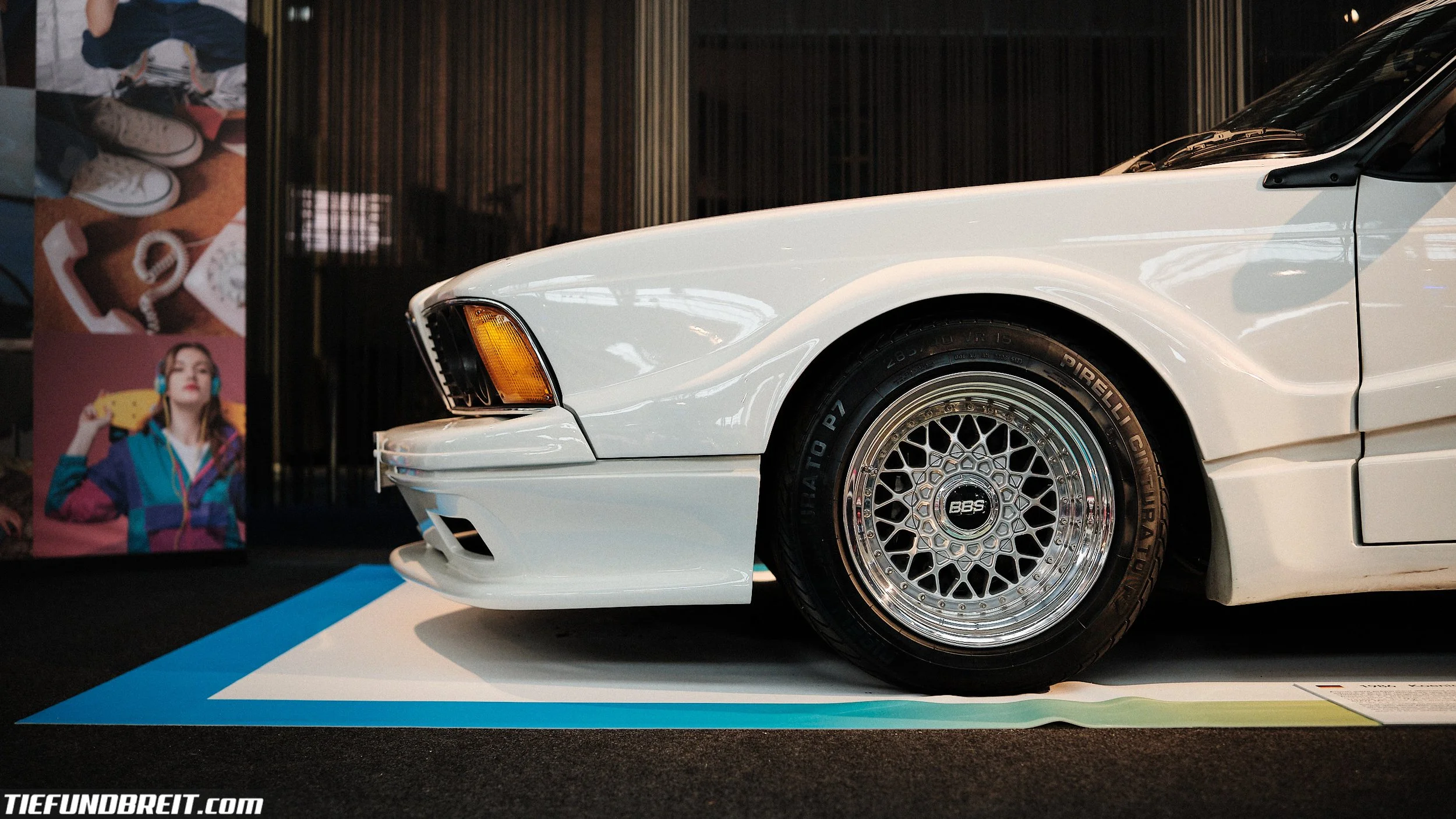
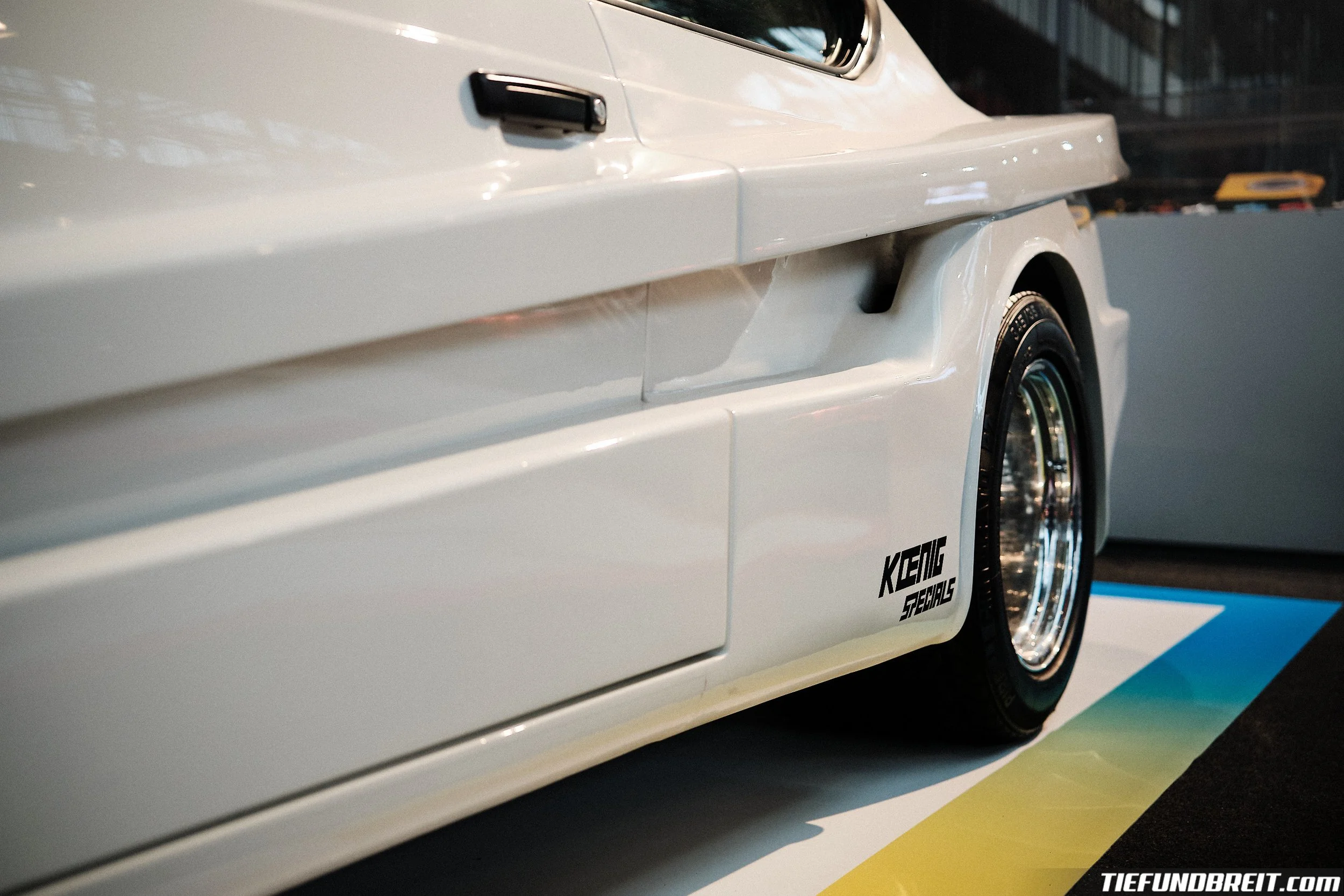
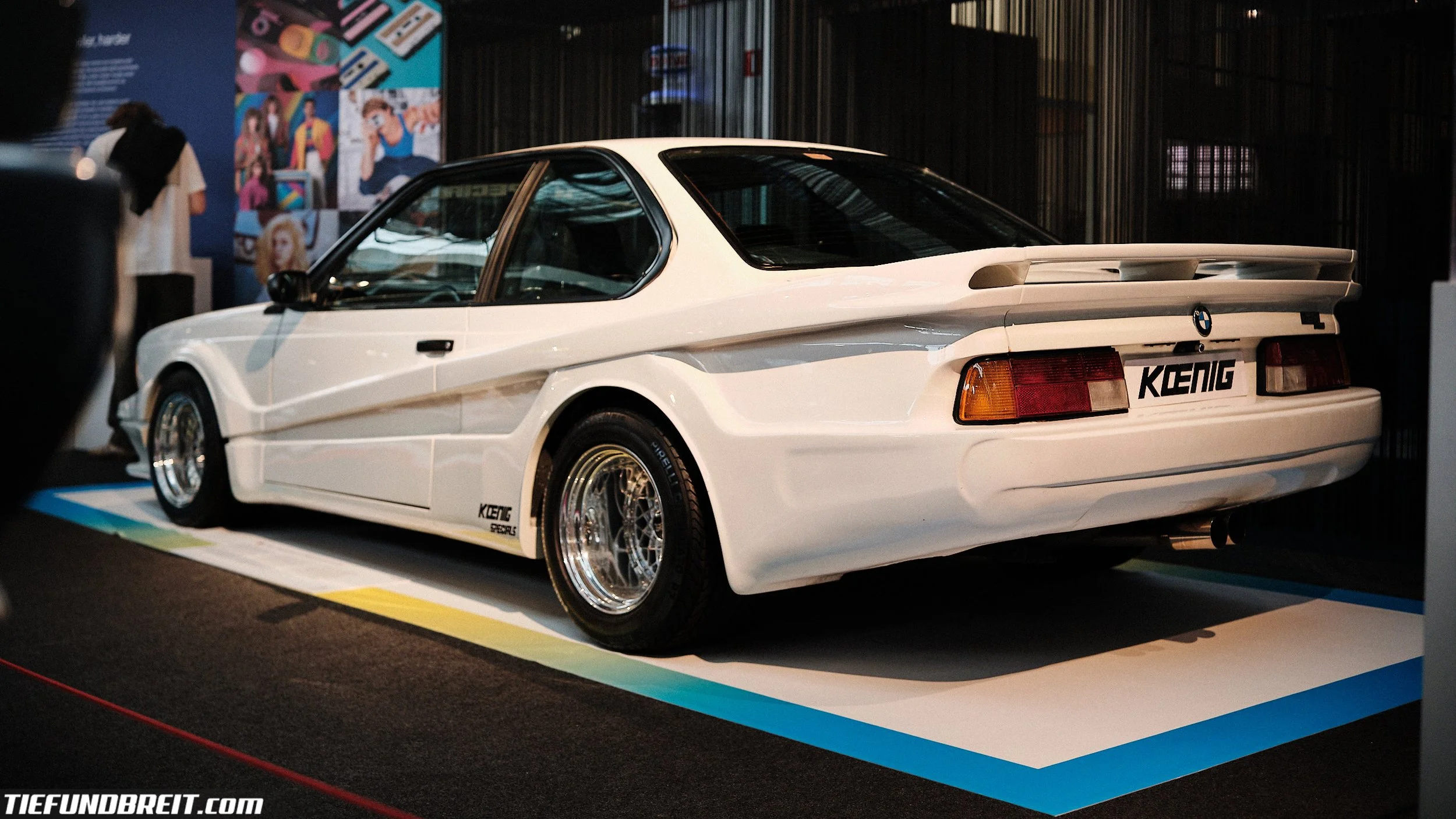
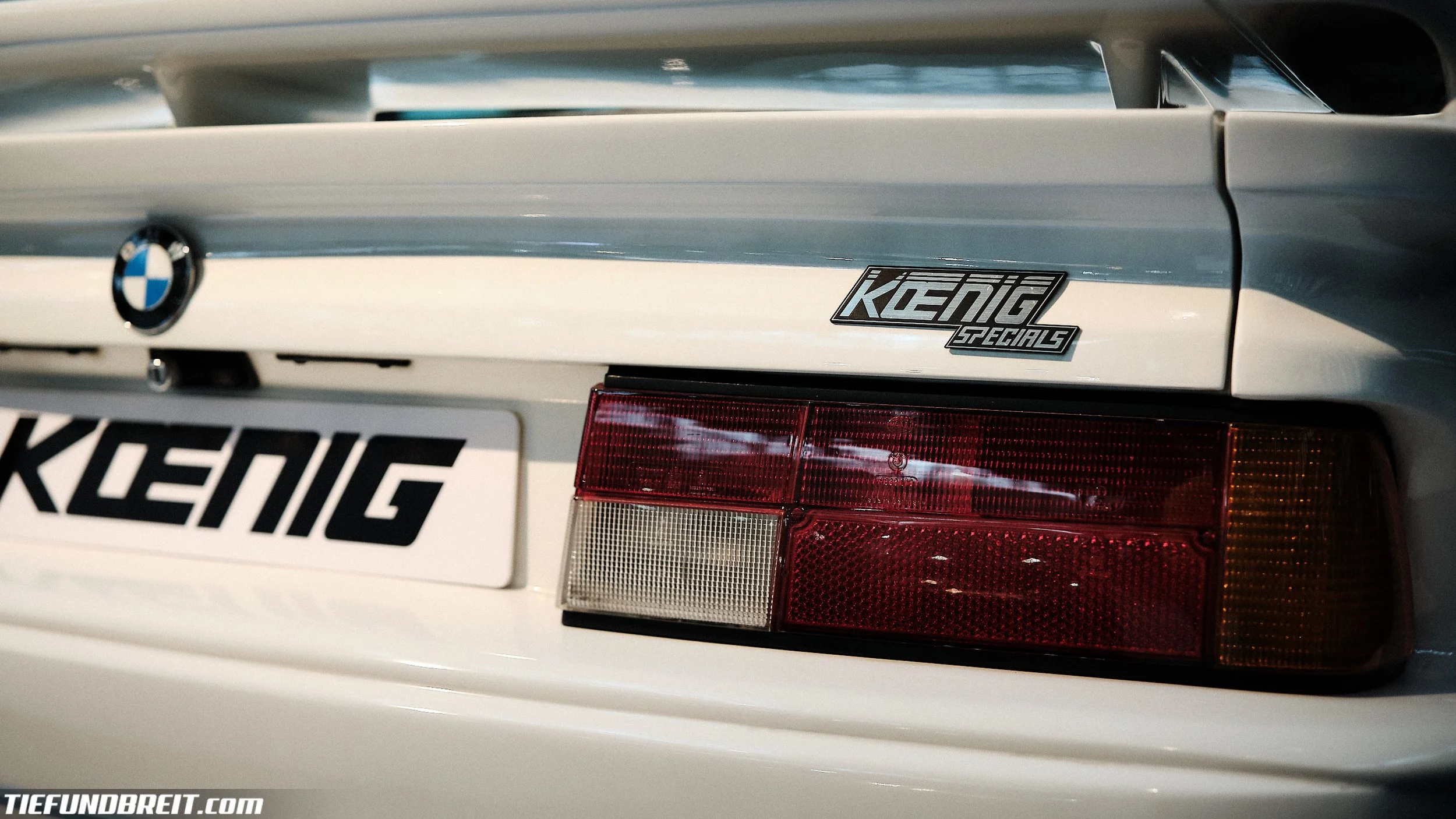
A Koenig car obviously had to be included in the exhibit, and it was a great one. Usually people remember Koenig for the wild Ferraris or Mercedes they modified, but they also touched other brands, like this white BMW 635, one of only two Koenig 635s ever made. This car had a presence like cocaine on wheels.
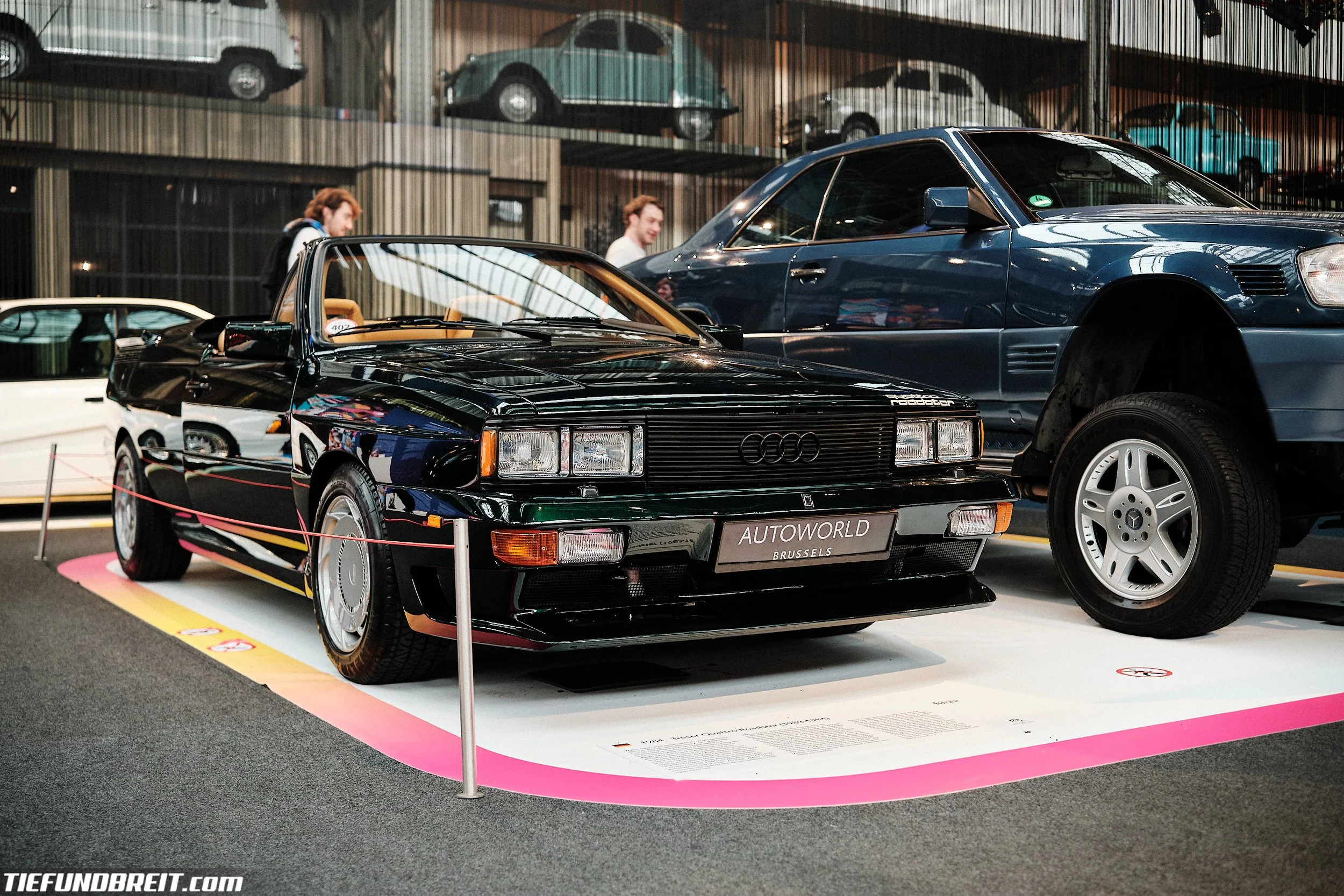
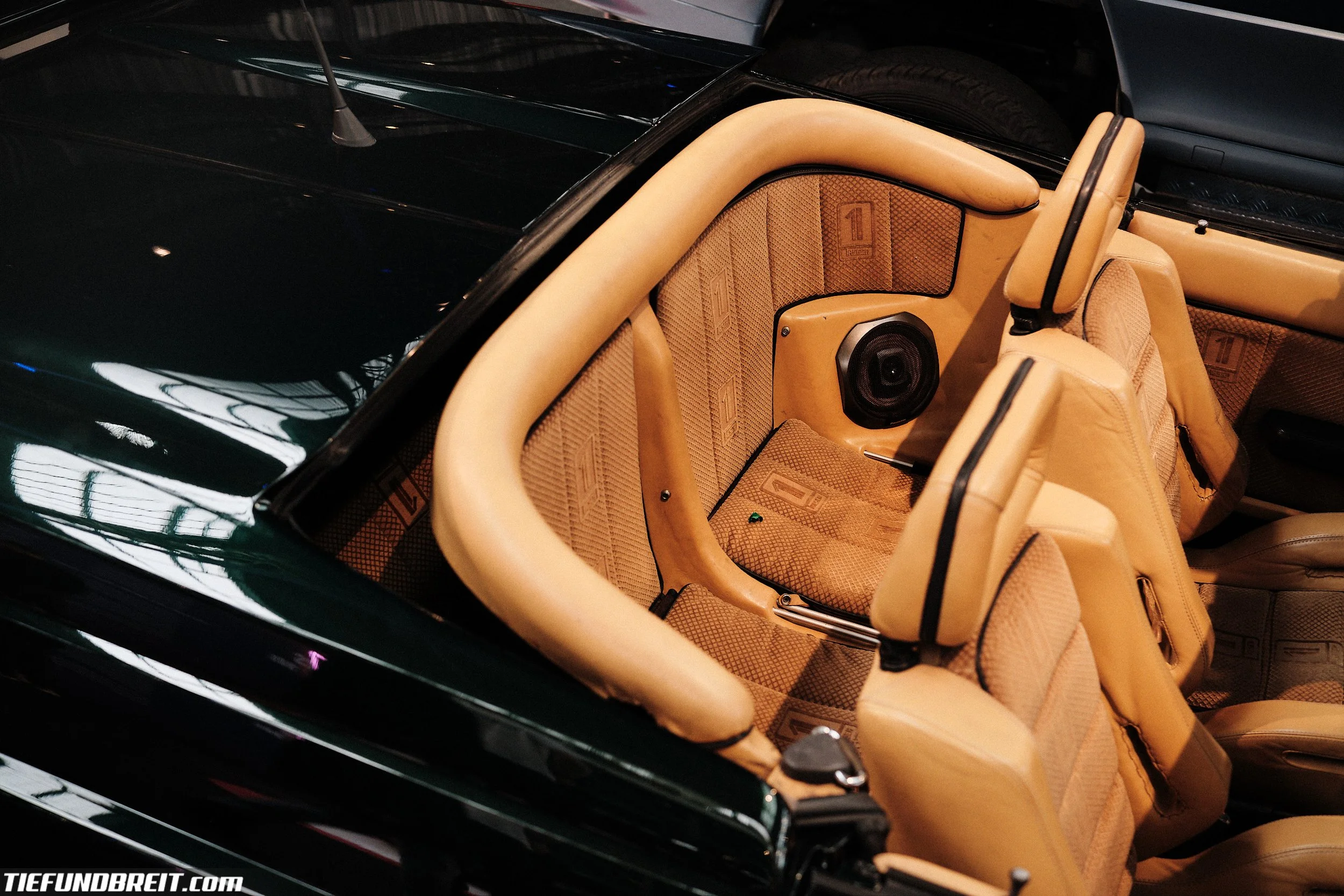
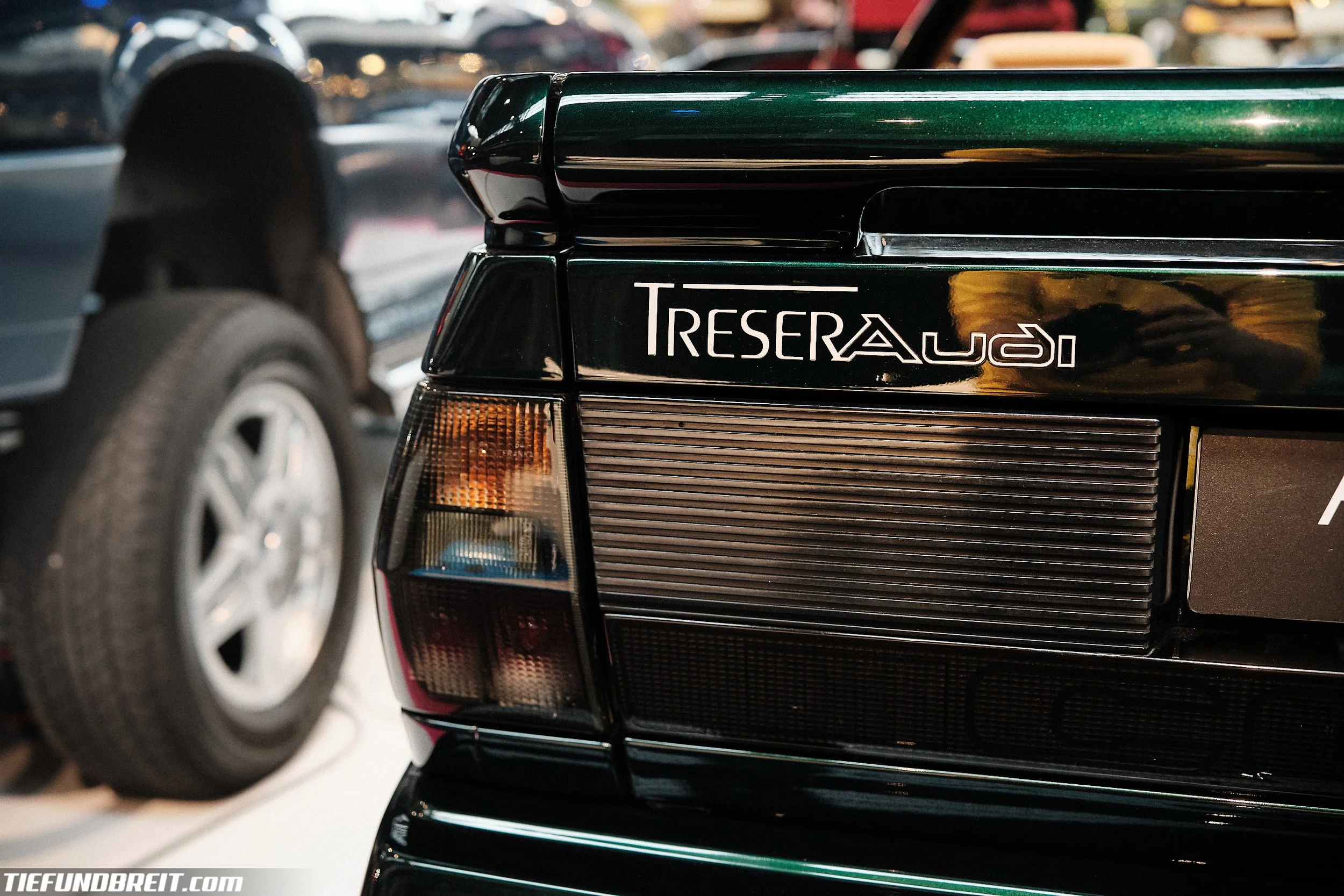
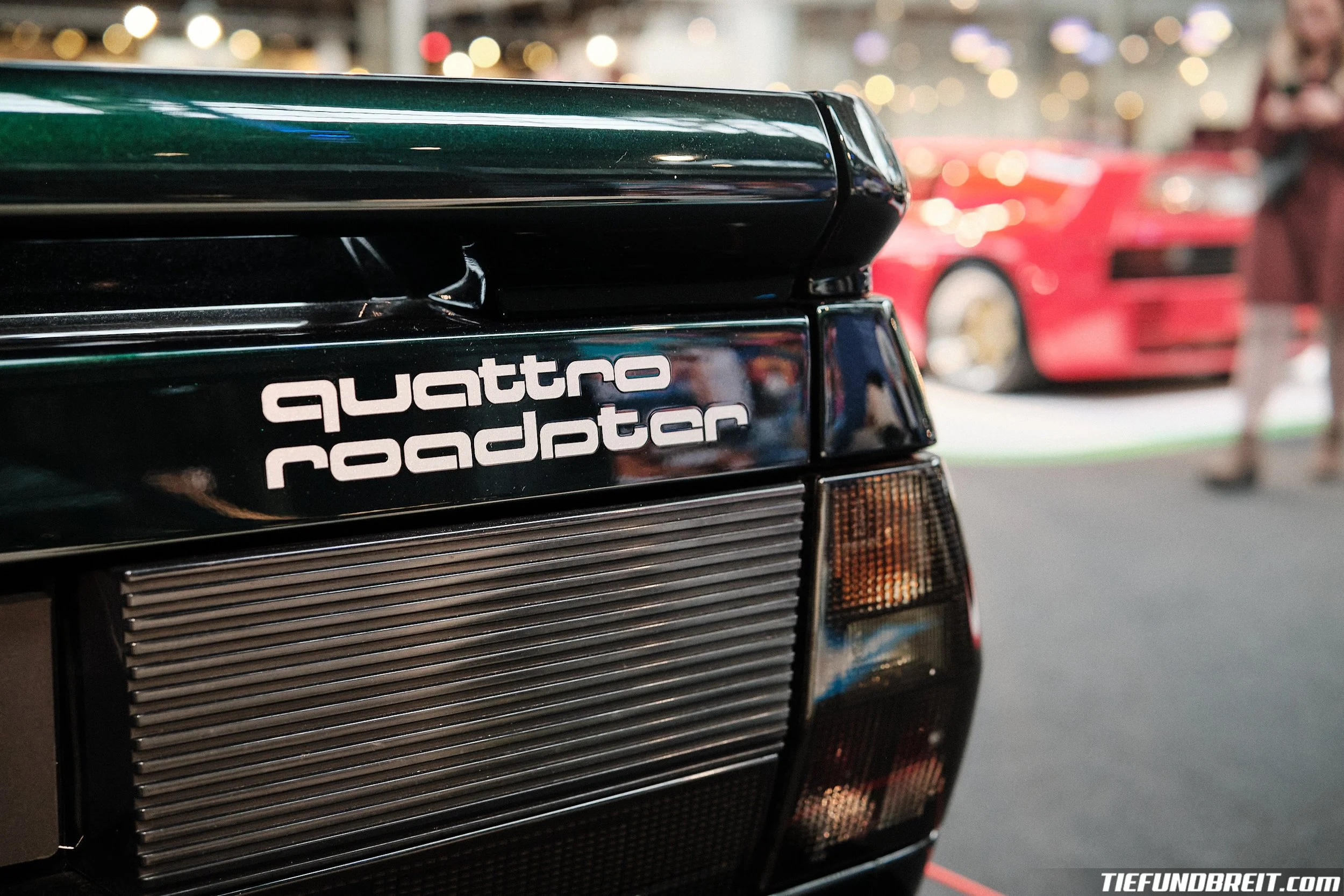
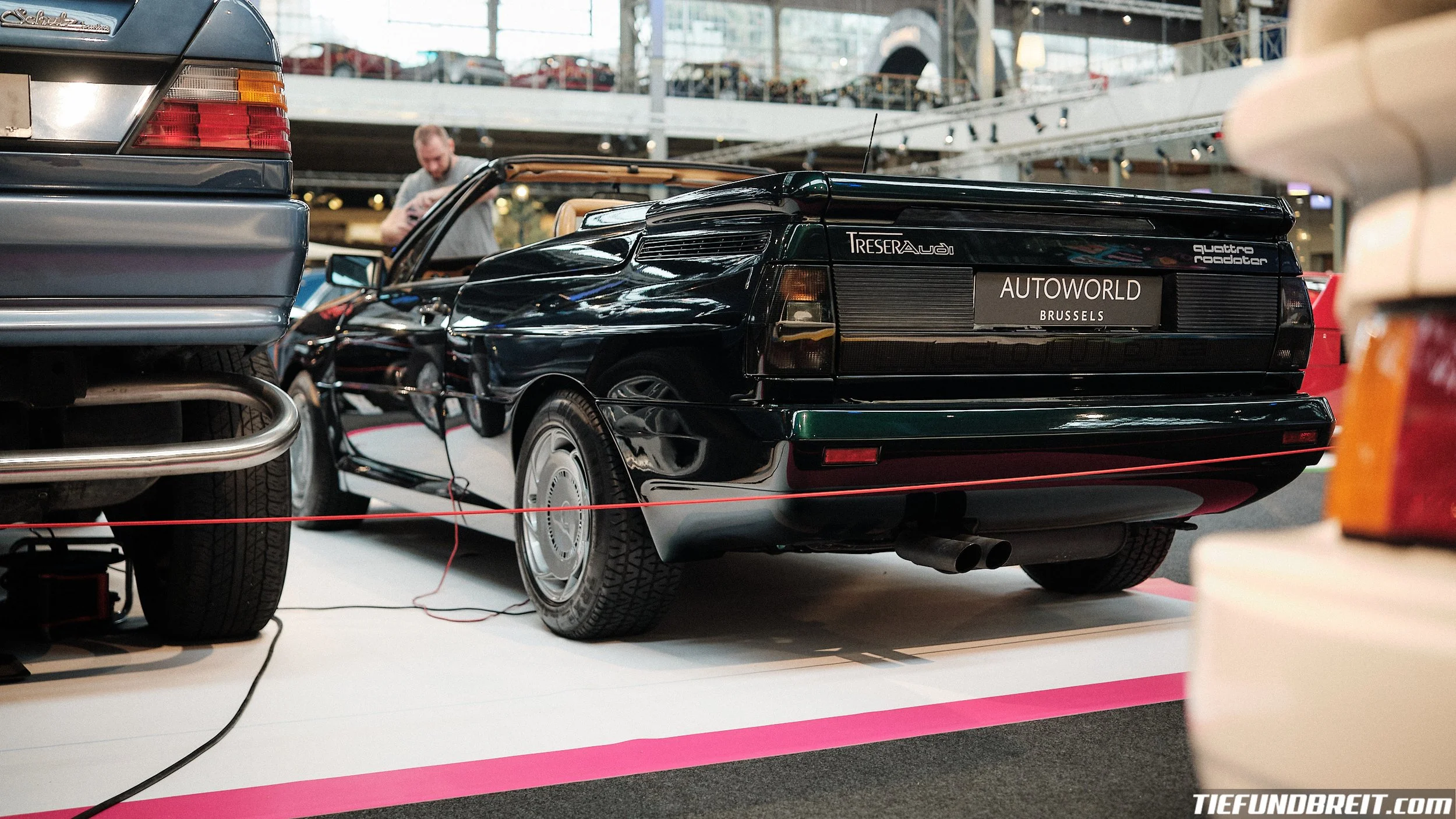
The original Audi Quattro is a cool car, and like many cars in the 80s, there were people who wanted it as a convertible. Luckily, a certain tuner called Treser entered the stage at the right time. Looking almost subtle next to some of the other cars in the room, this Audi still sports a pretty wild bodykit. The roof was actually a folding hardtop that would vanish entirely beneath the rear lid when opened.
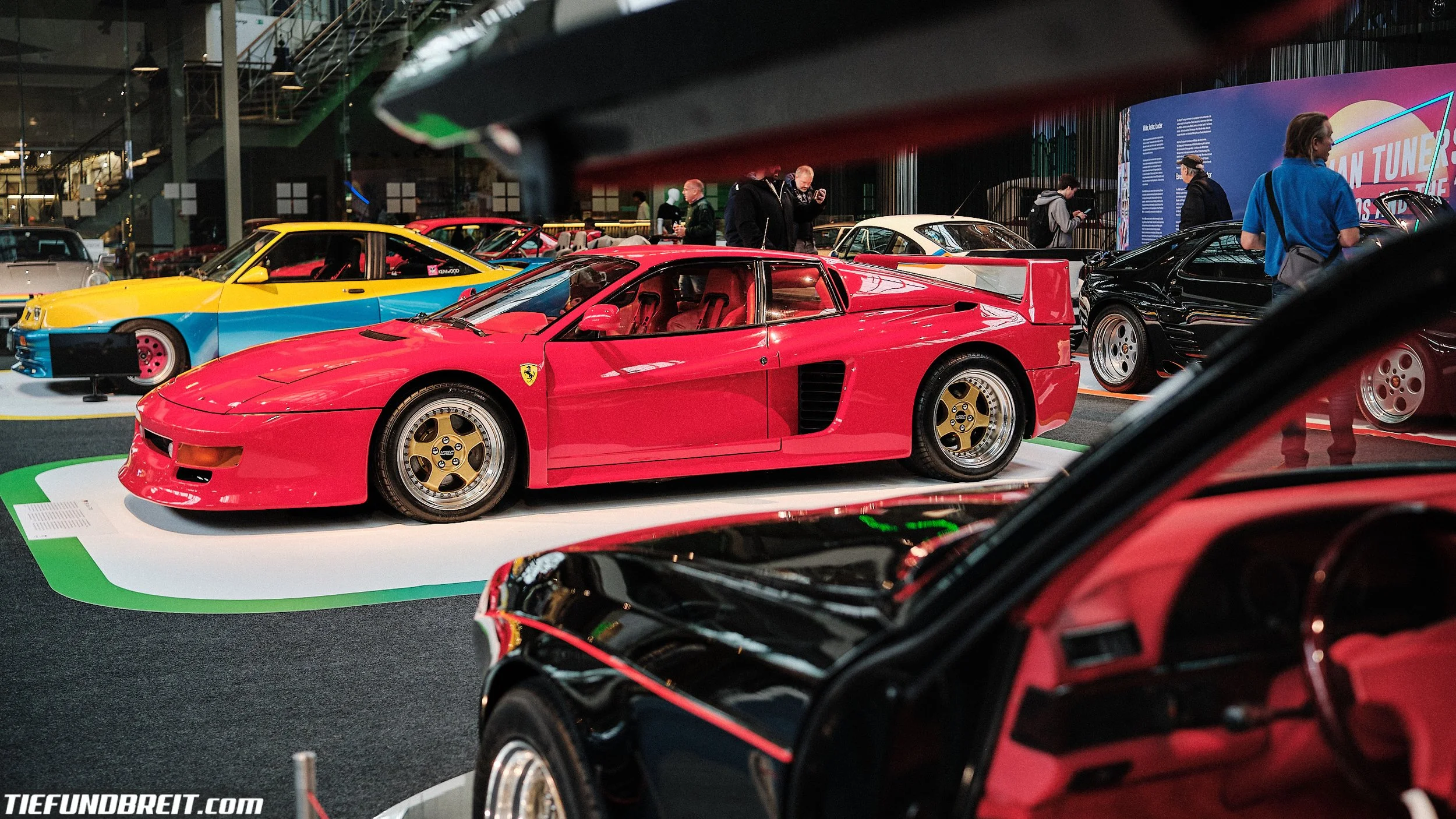
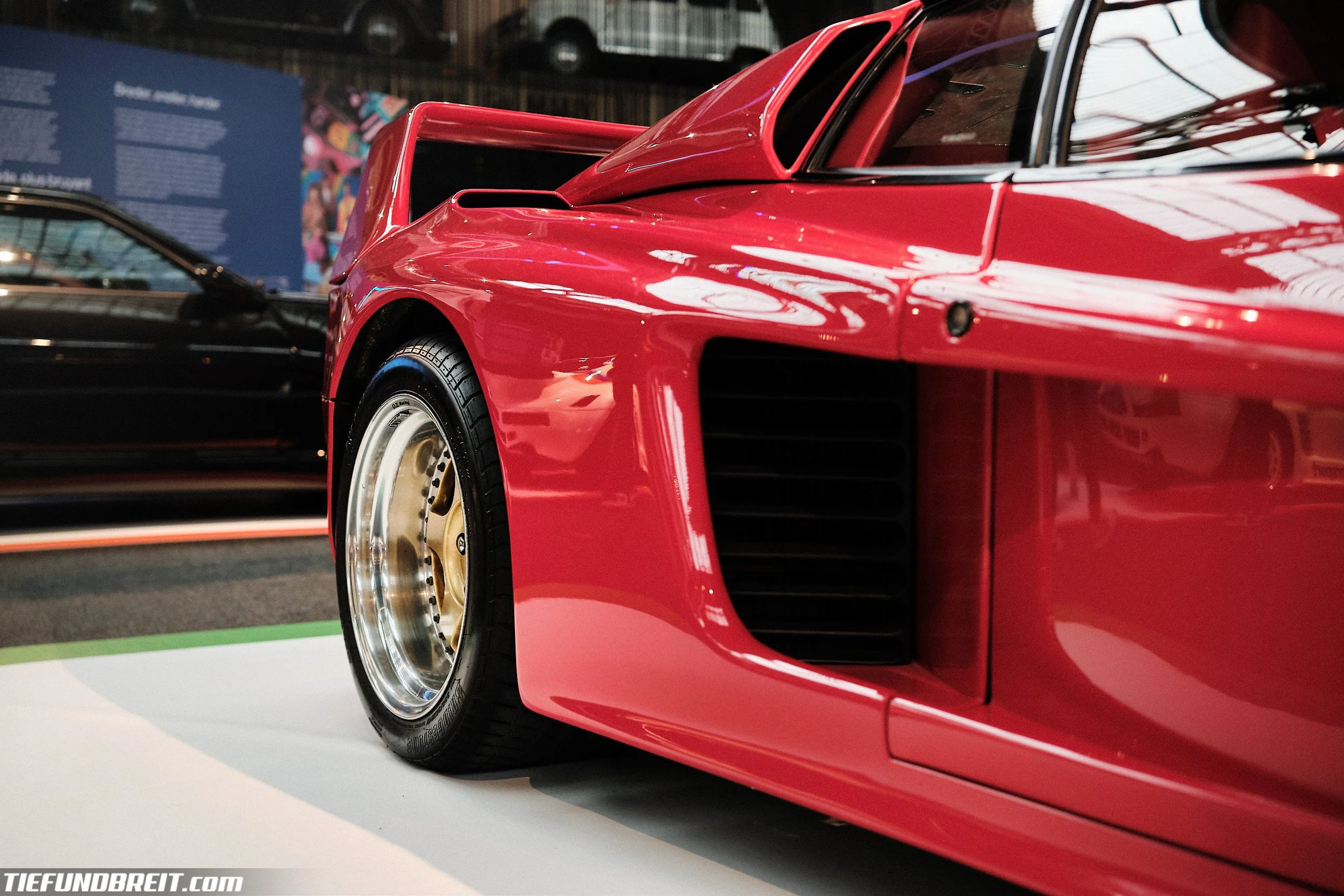
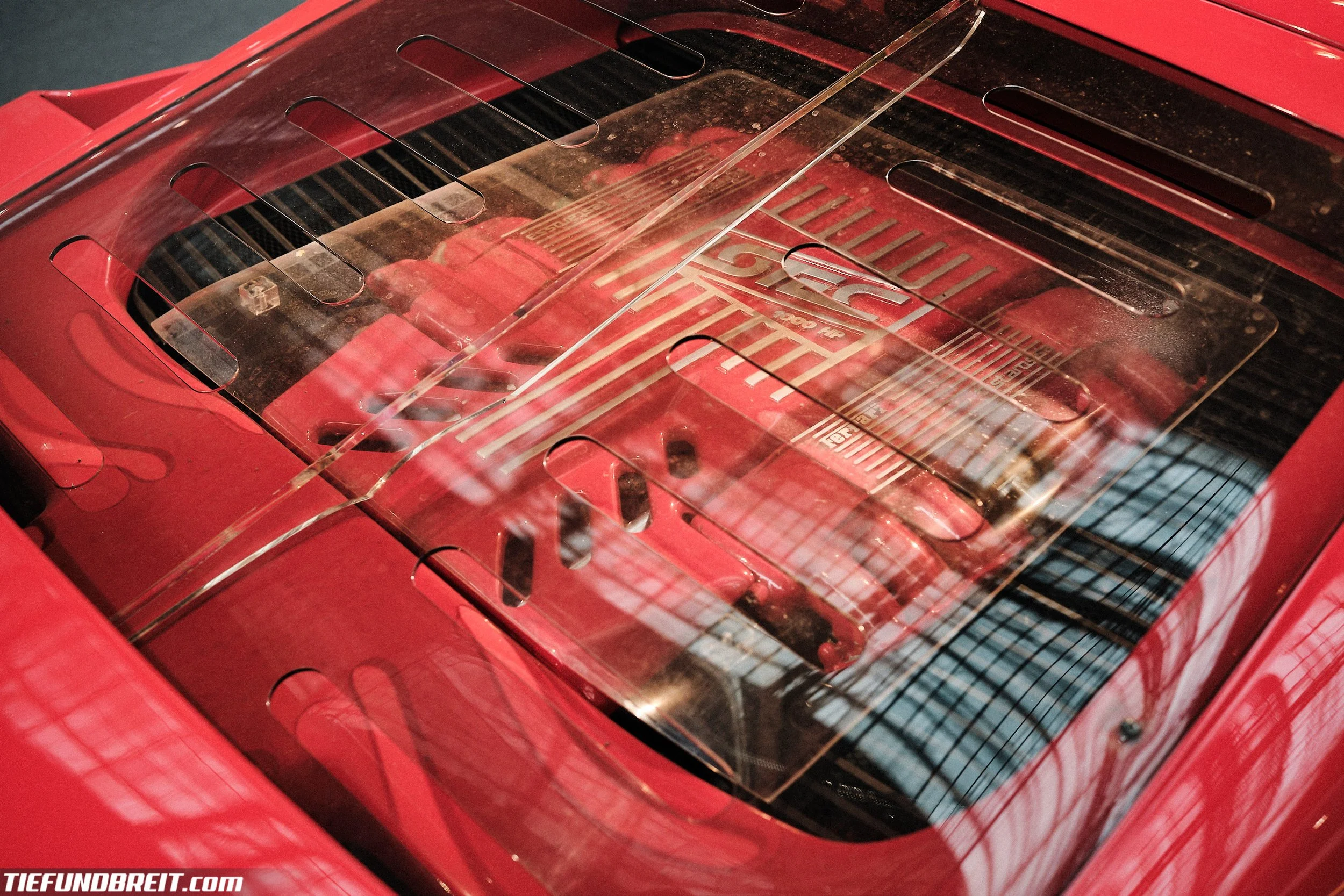
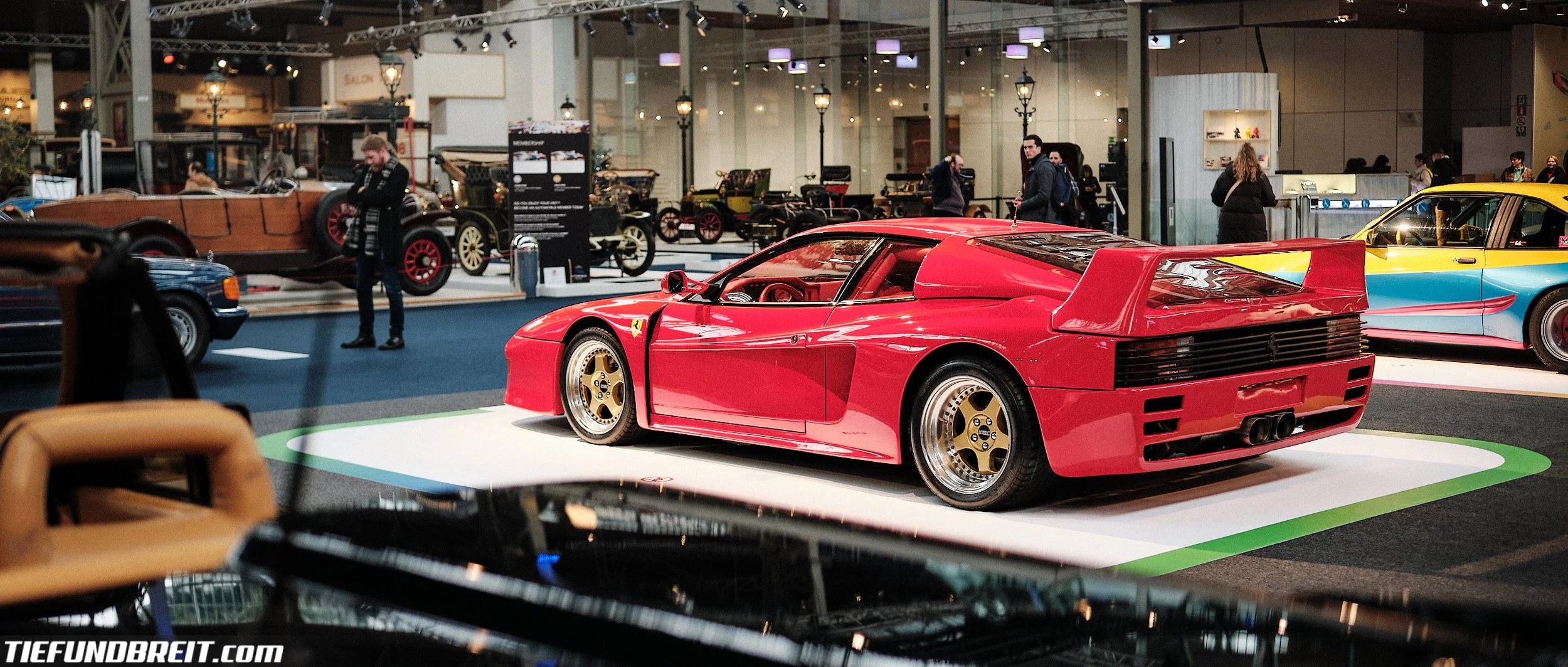
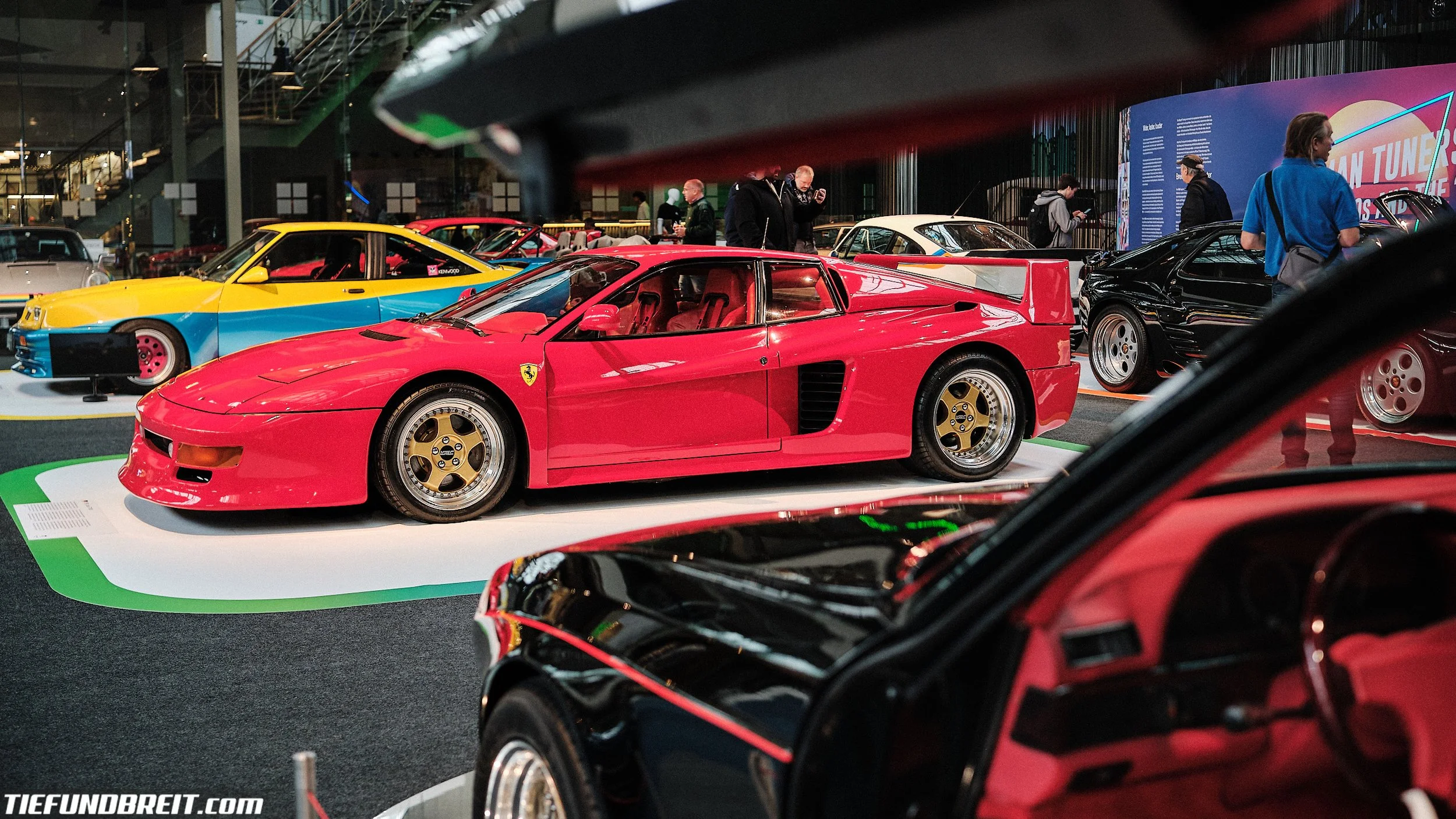
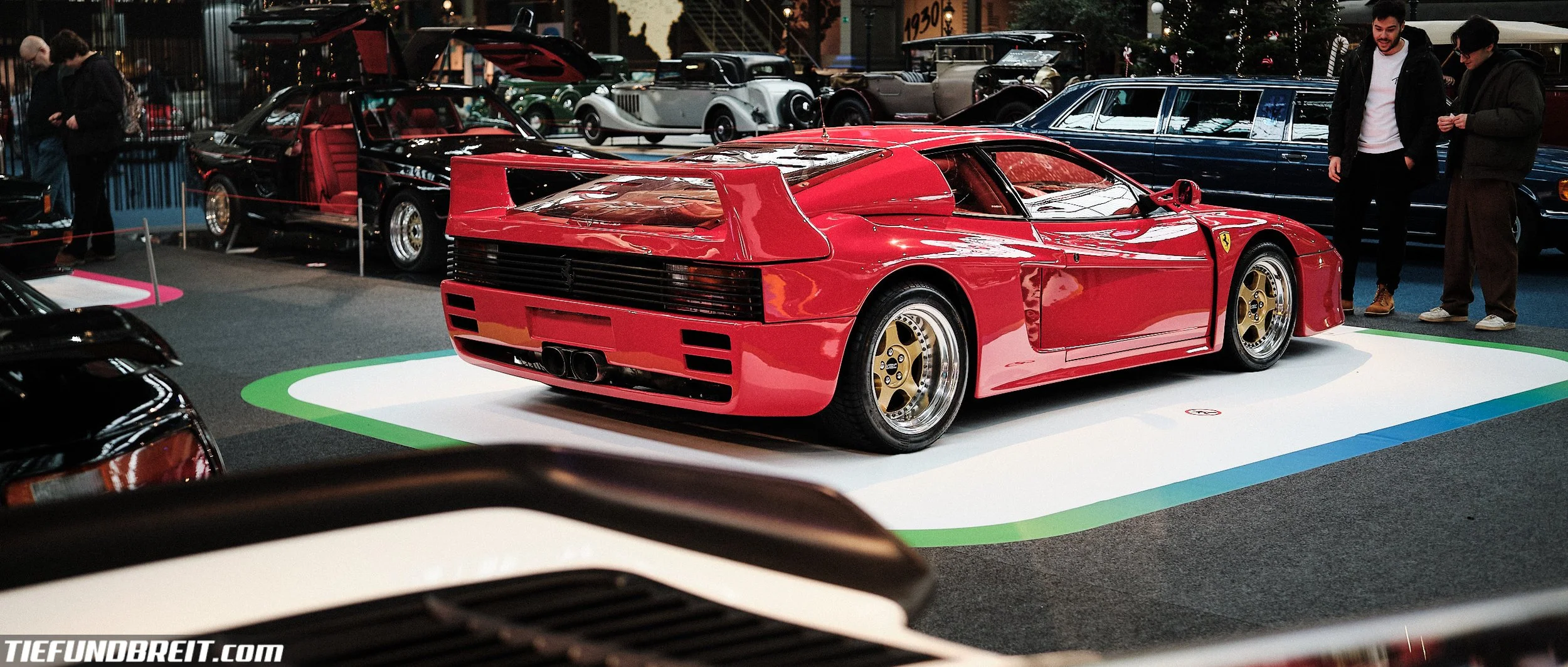
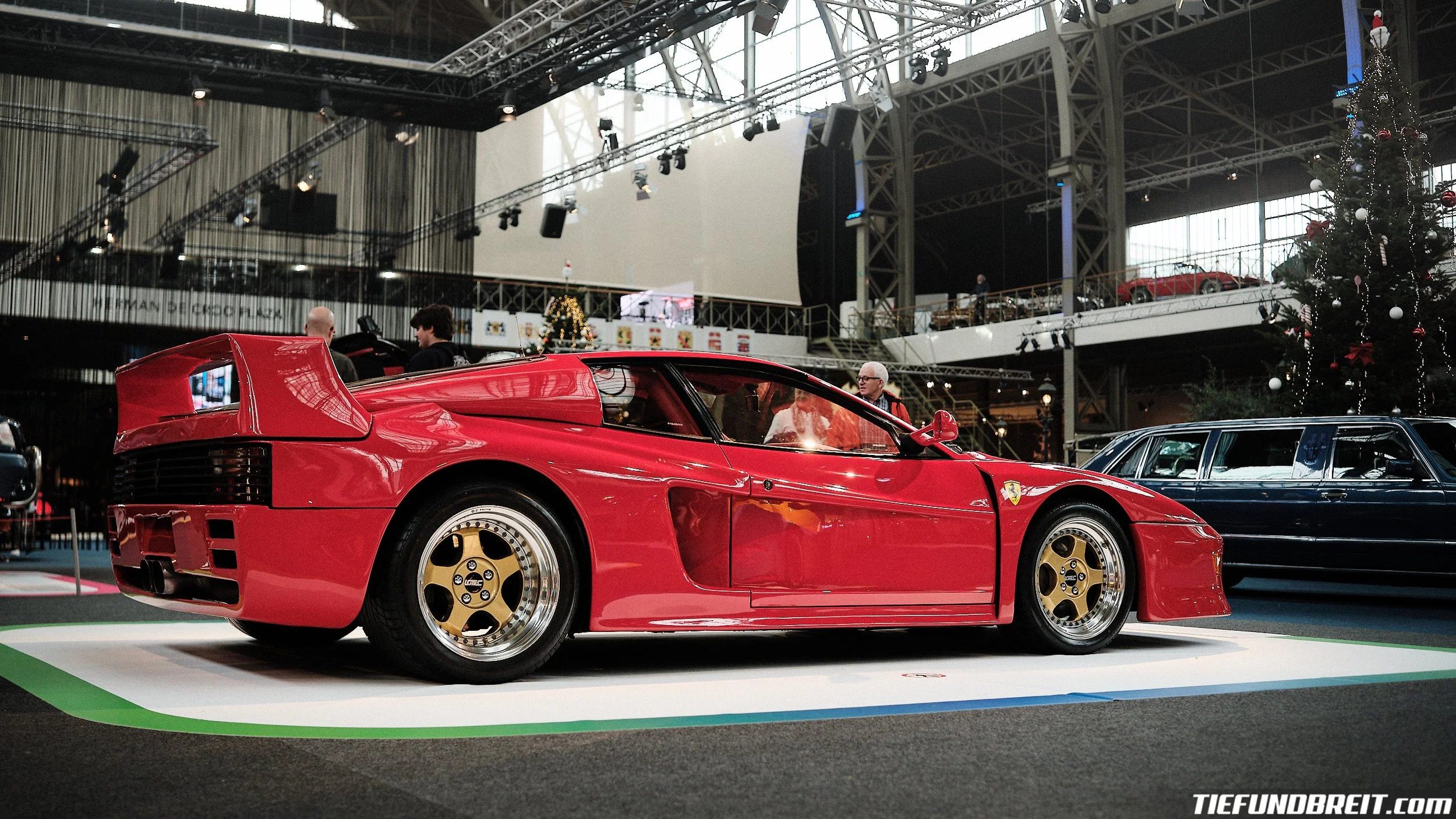
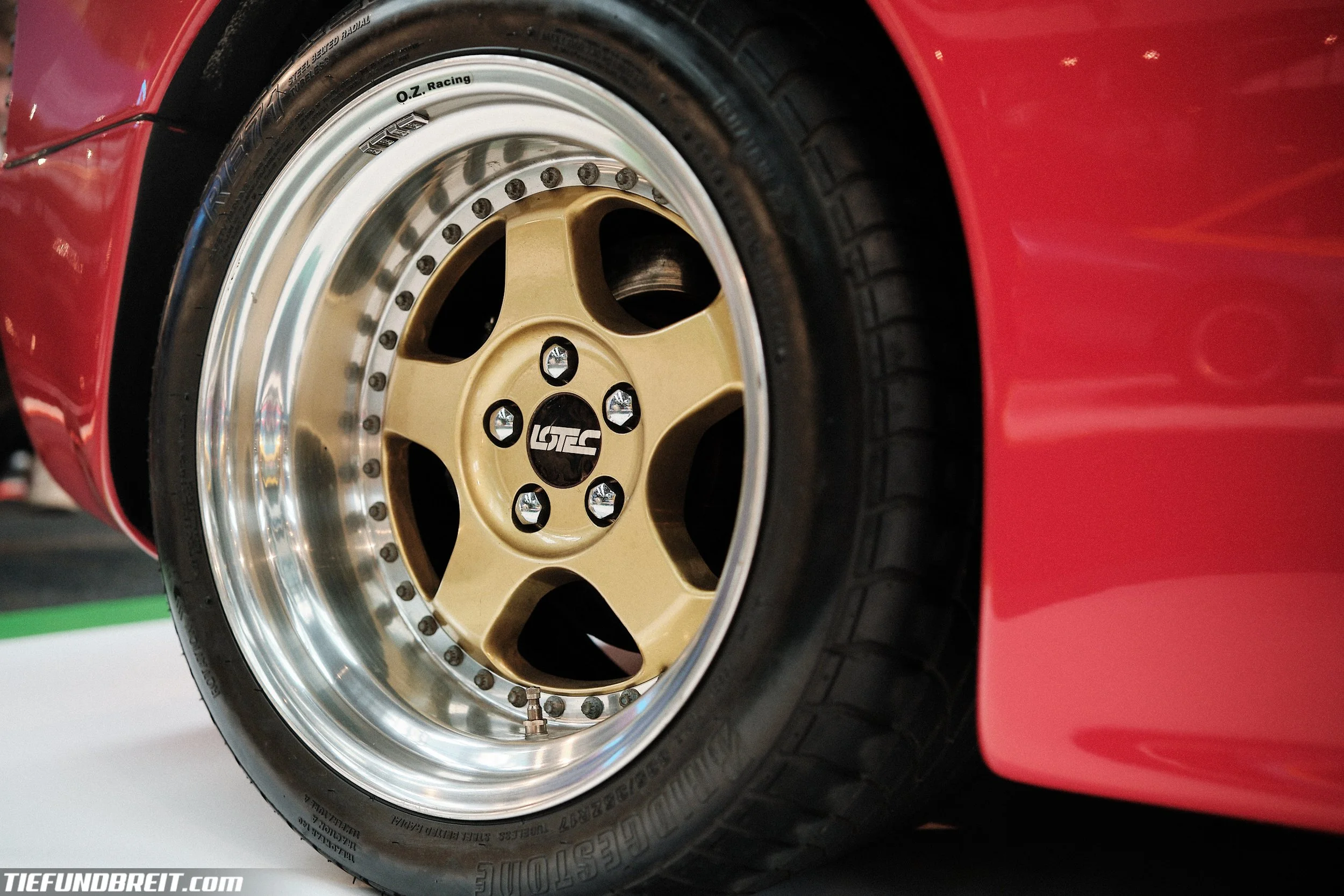
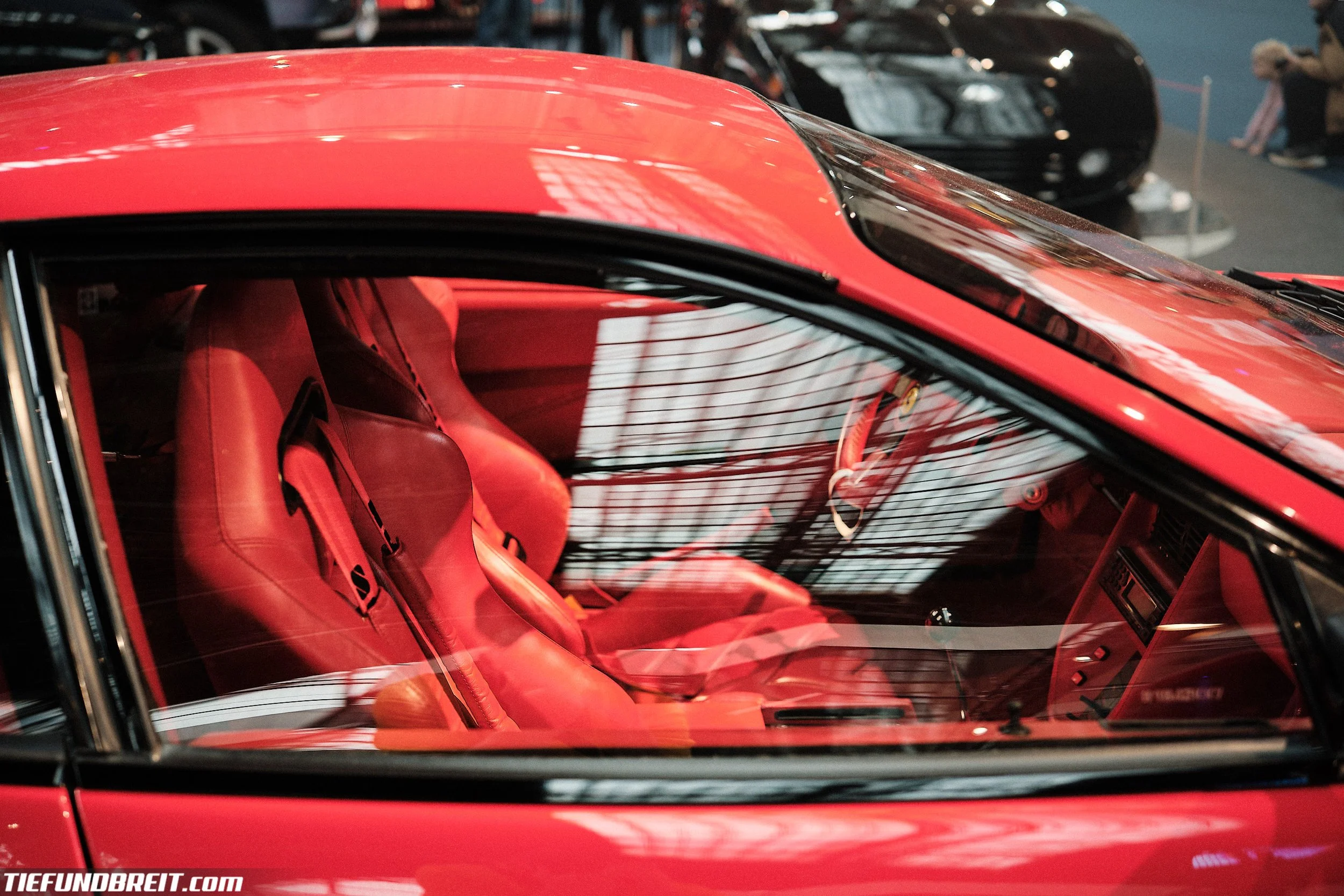
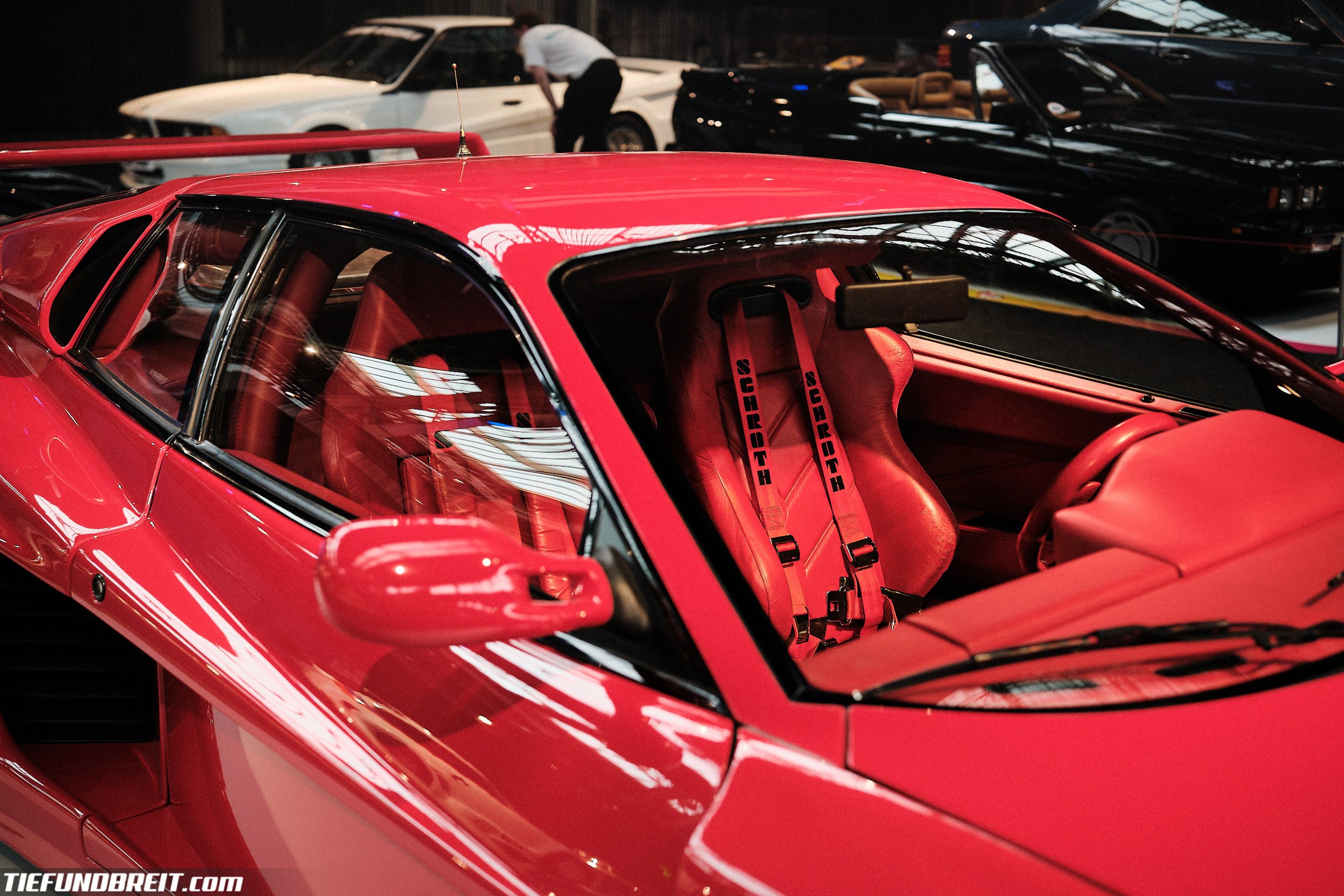
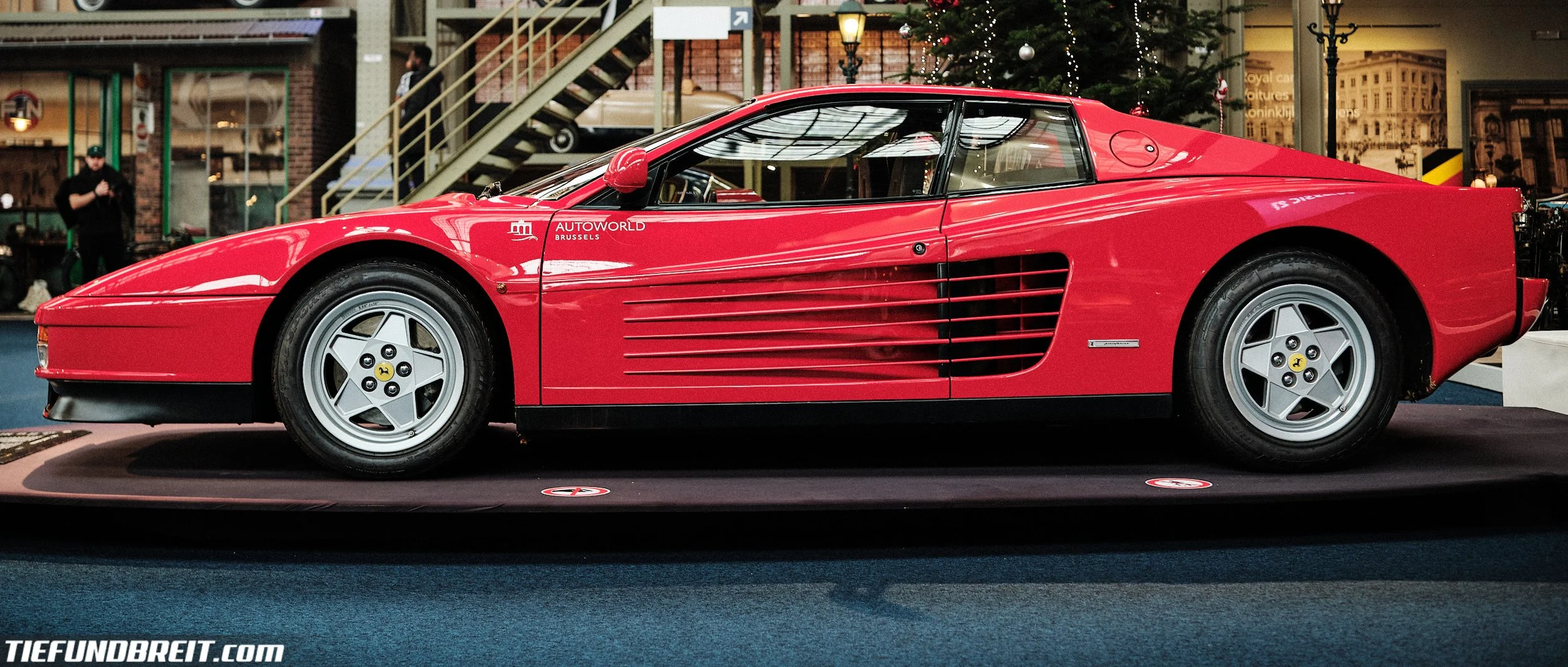
Probably the most powerful car in the exhibit was the Lotec TT1000. You might be asking yourself, "What in the world is a Lotec TT1000?" The answer is simple: a Ferrari Testarossa where everything has been dialed up to 11.
Lotec took a Testarossa, draped it in carbon fibre body panels clearly inspired by the legendary F40, and then strapped twin turbos to the V12 engine for supposedly 1000hp and 1100Nm (811 lb-ft). The whole car had a presence like it drove straight out of an Outrun video game.
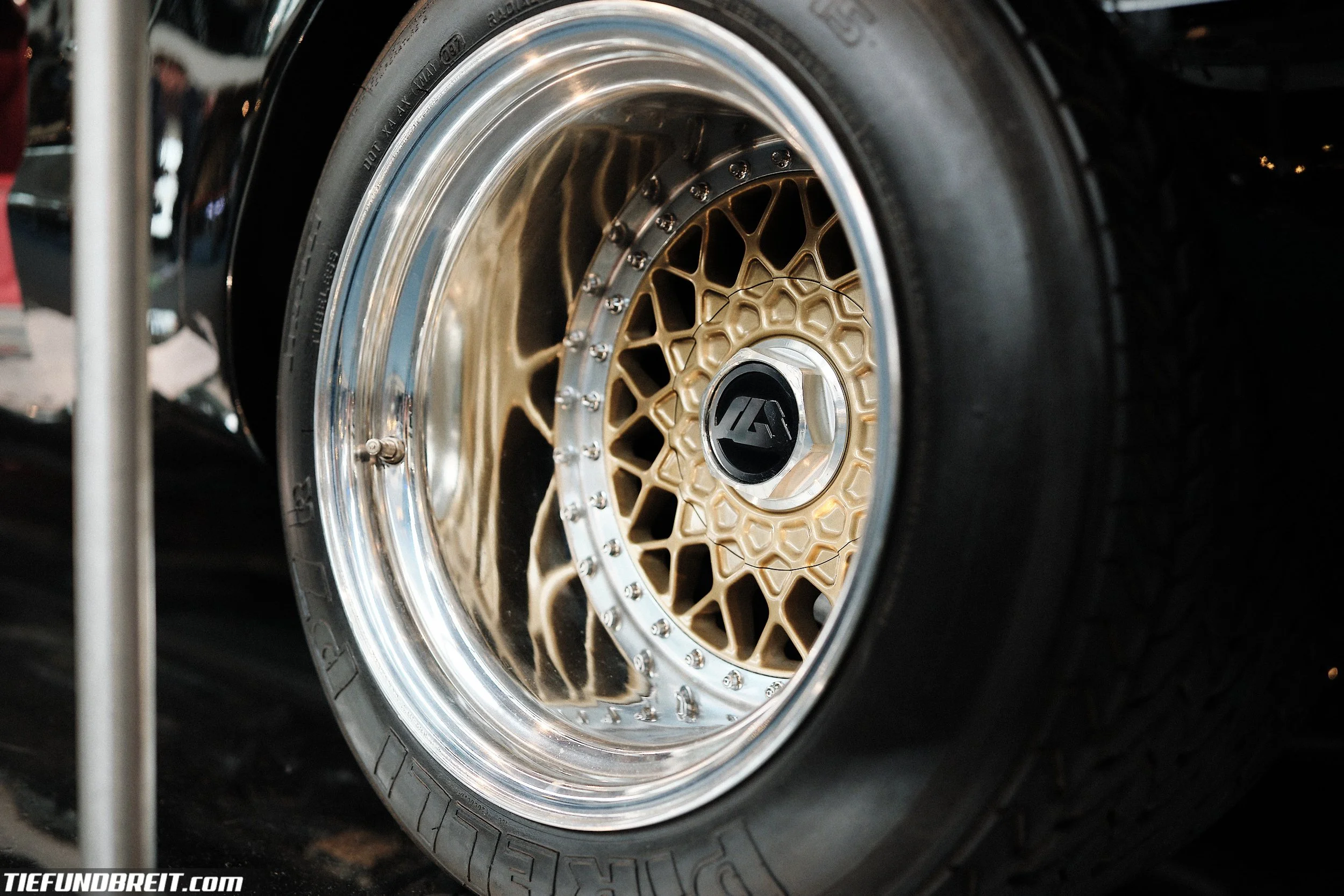
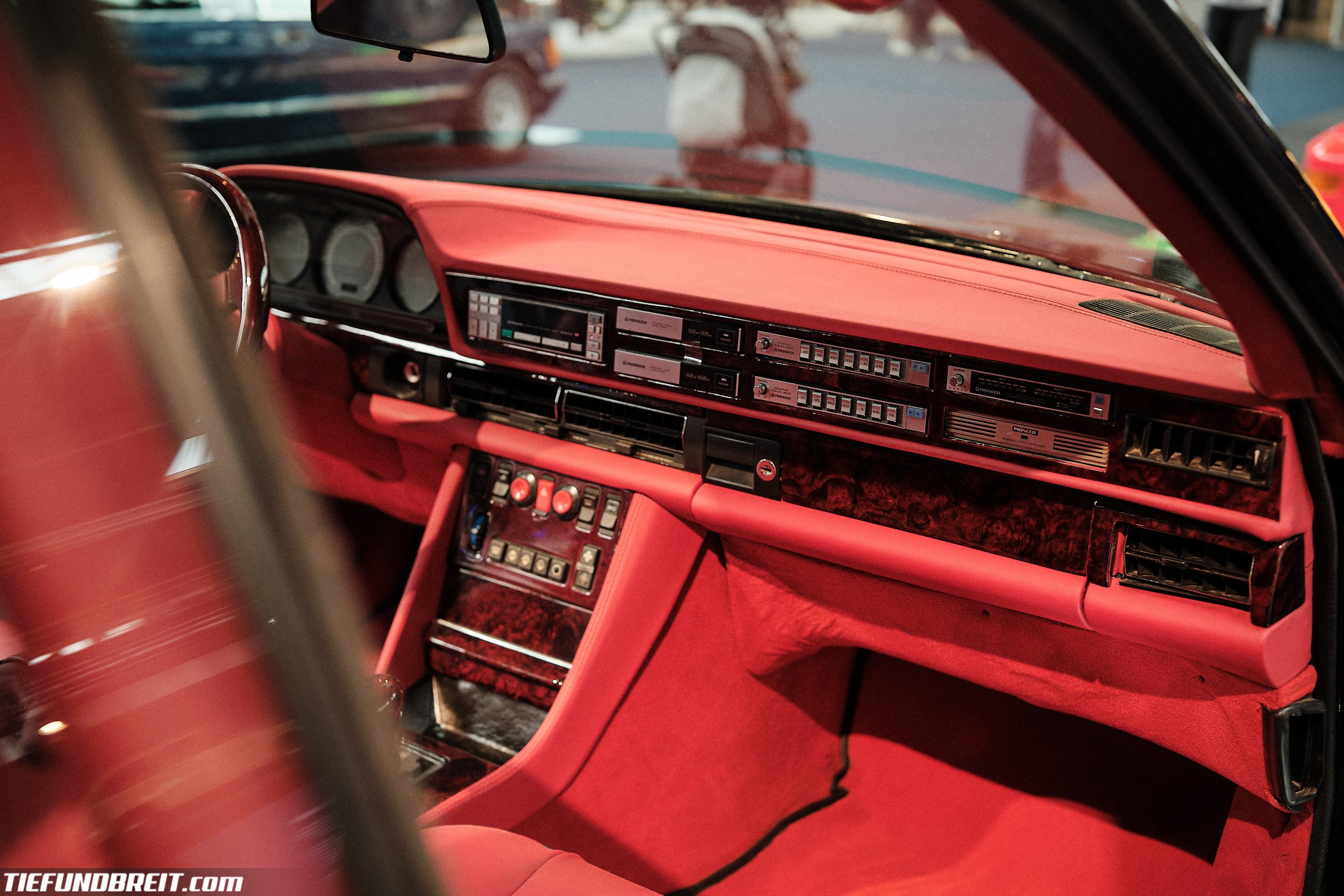
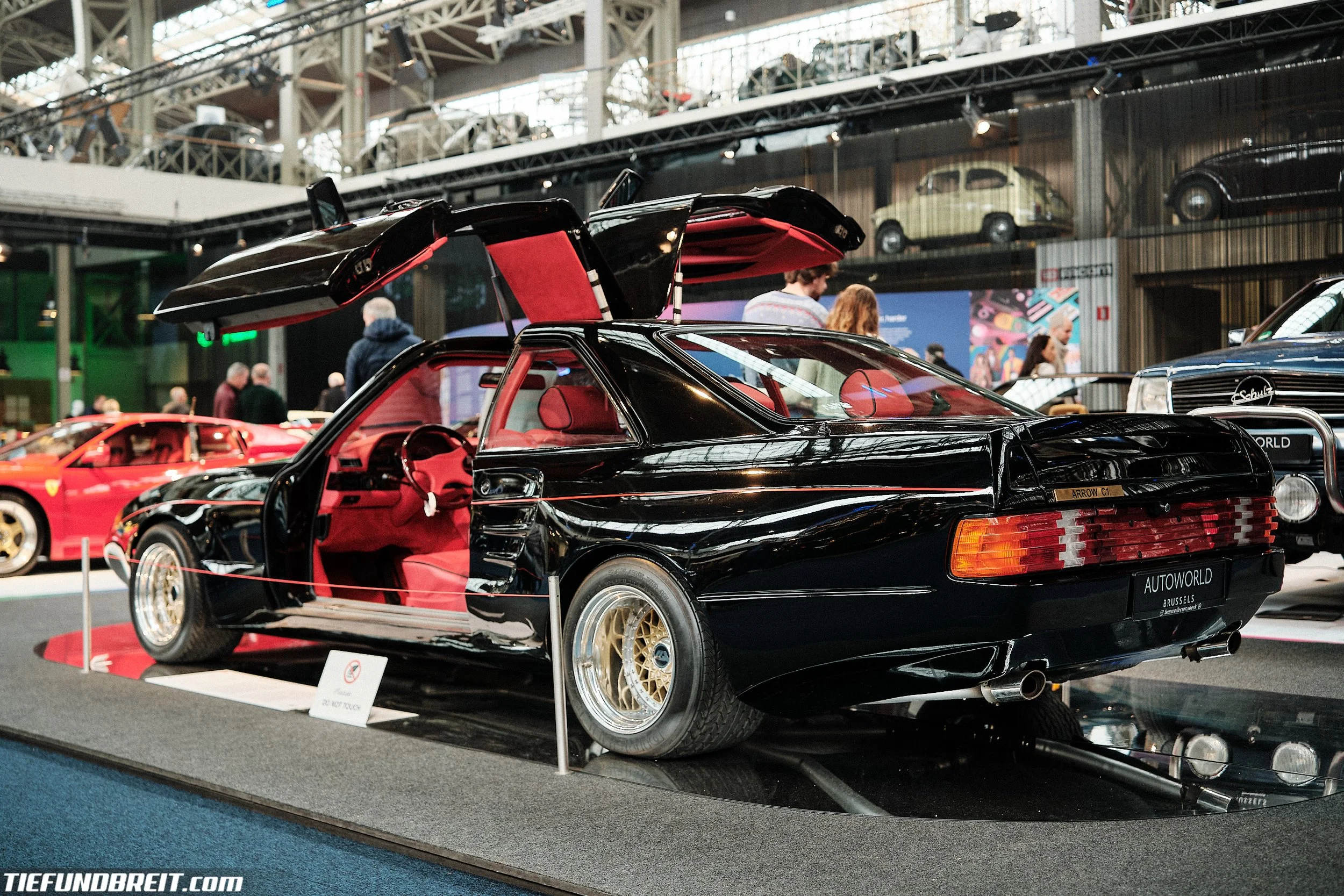
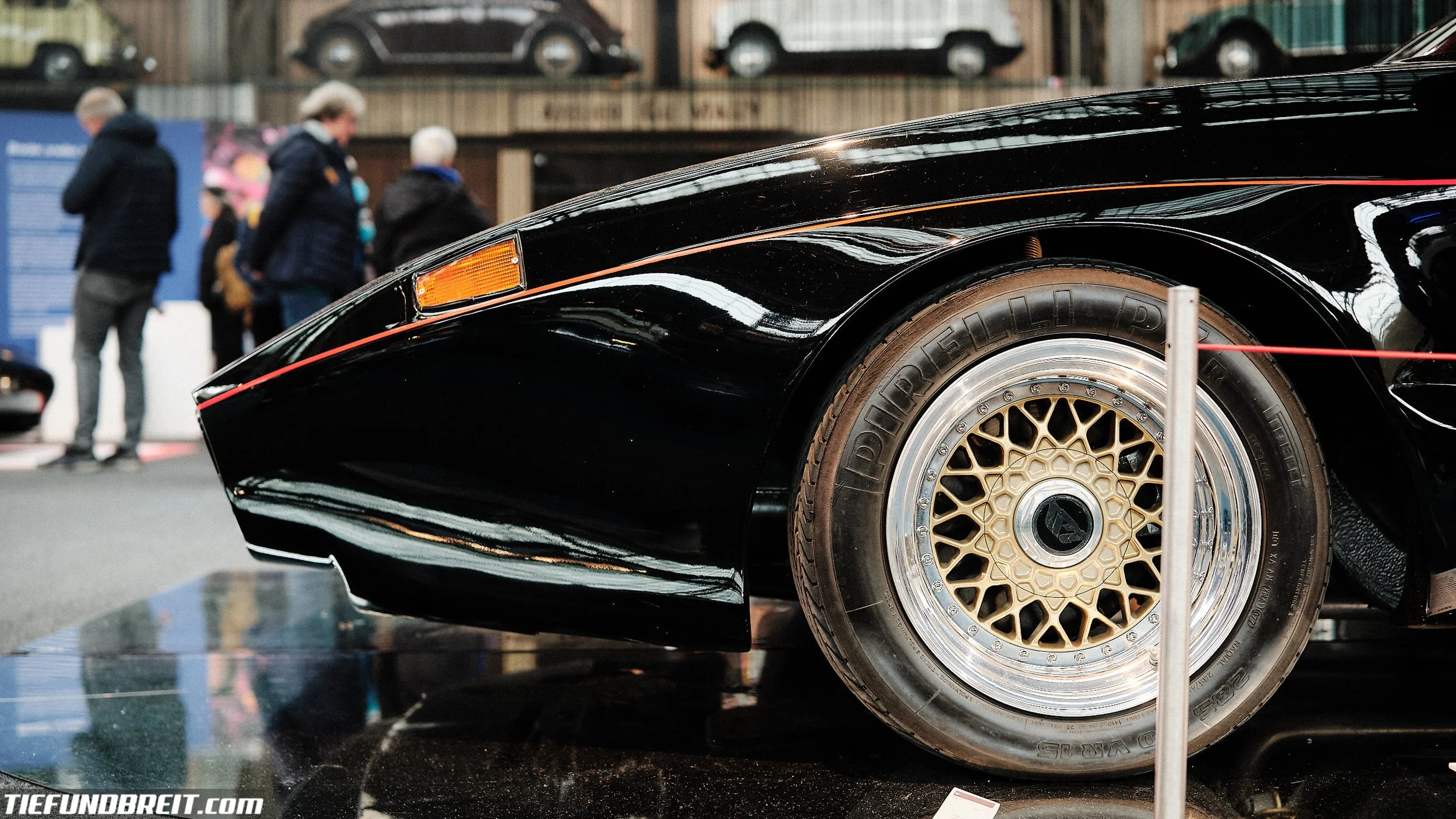
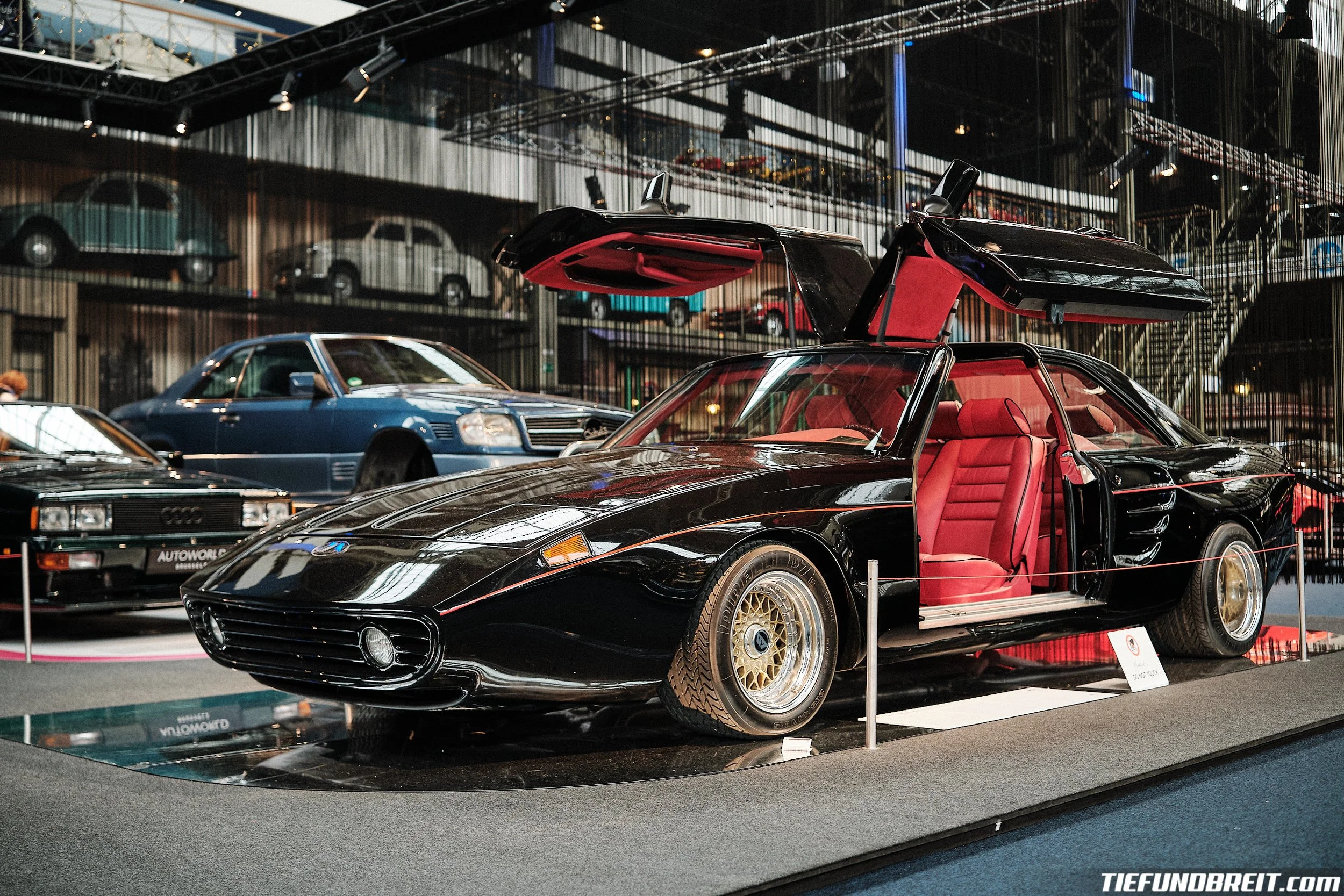
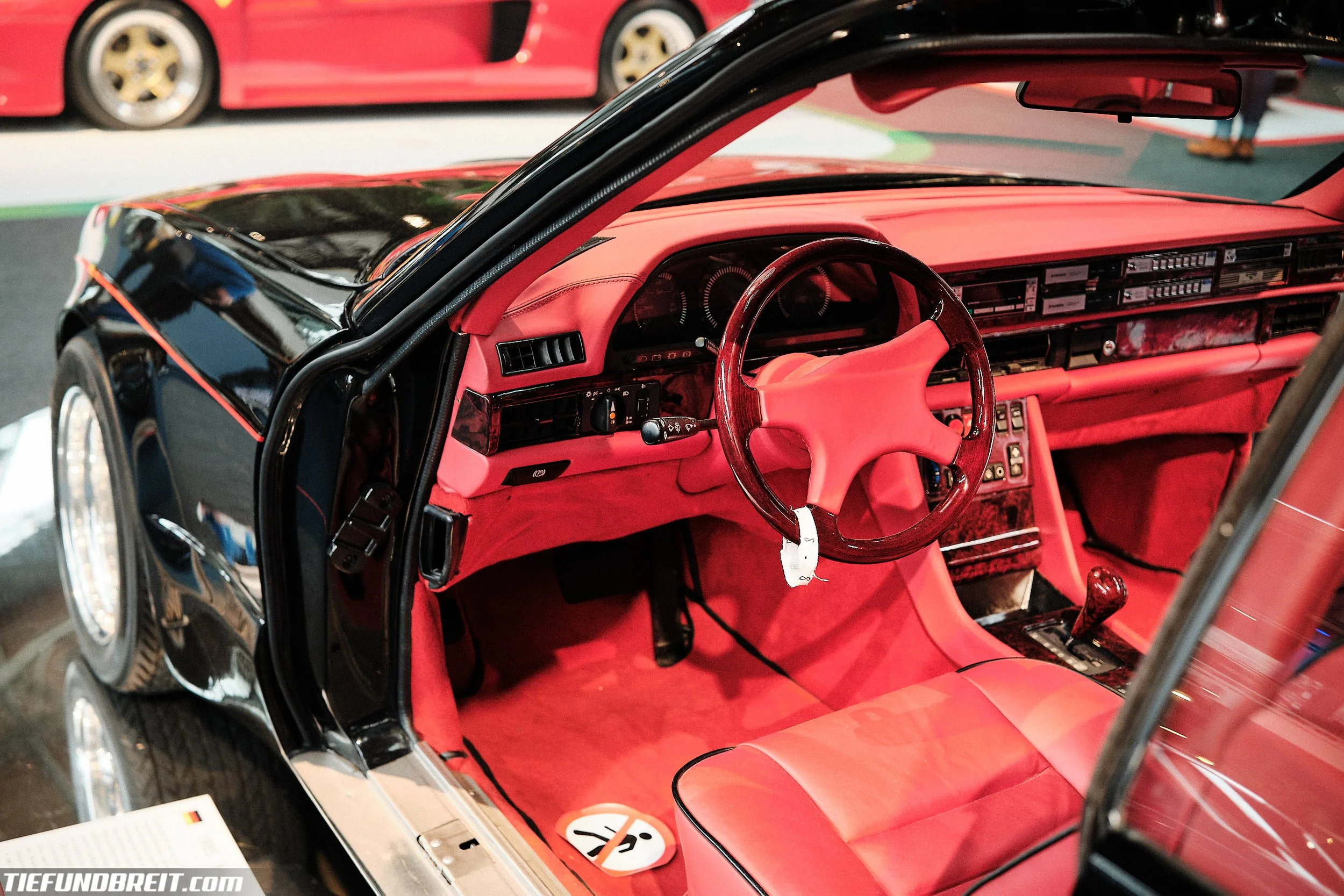
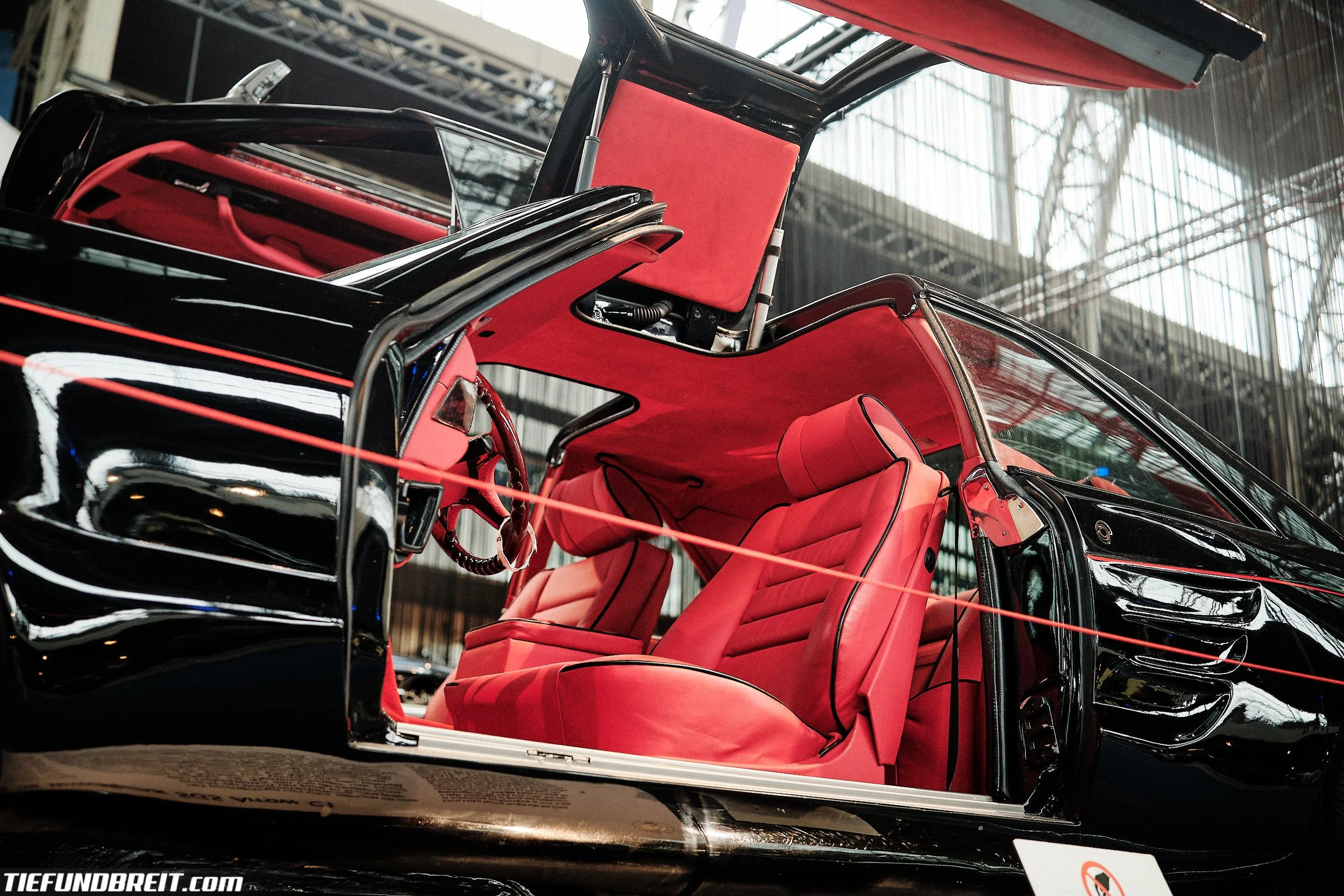
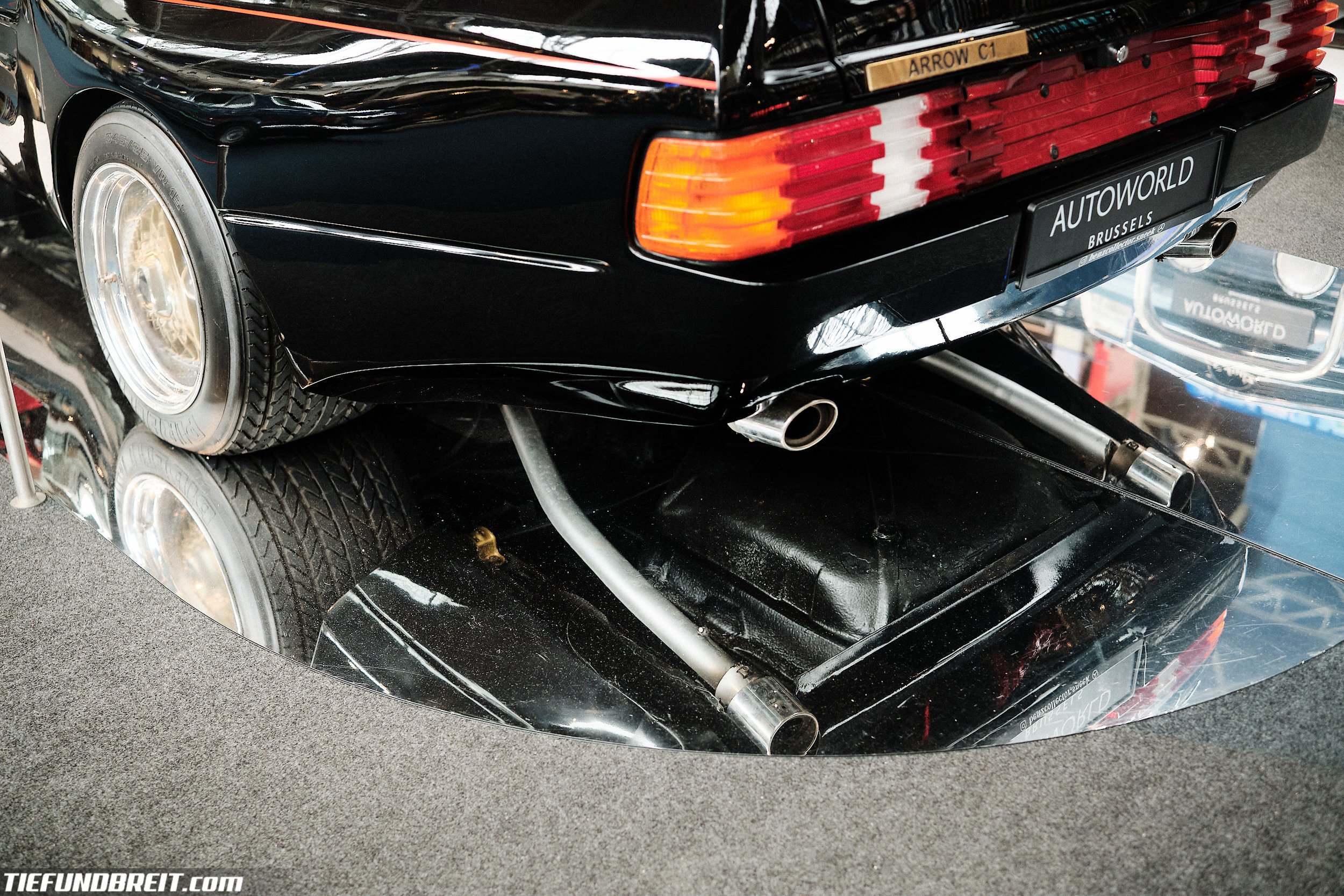
From a completely outrageous Ferrari, we move on to an equally outrageous Mercedes. This creation was probably the most coke-infused fever dream that ever was: the SGS Arrow C1.
SGS, or Styling Garage Service, could without a doubt be called the craziest of all the German tuners of this era. They mostly worked on Mercedes but didn’t shy away from other vehicles - whatever the customer wanted. The Arrow C1 was based on the Mercedes 500SEC S-Class Coupe and received an outrageous bodykit consisting of the nose panel of a Mercedes C111 concept car, pop-up headlights, a widebody, and of course those unmistakable gullwing doors. What a crazy, crazy machine.
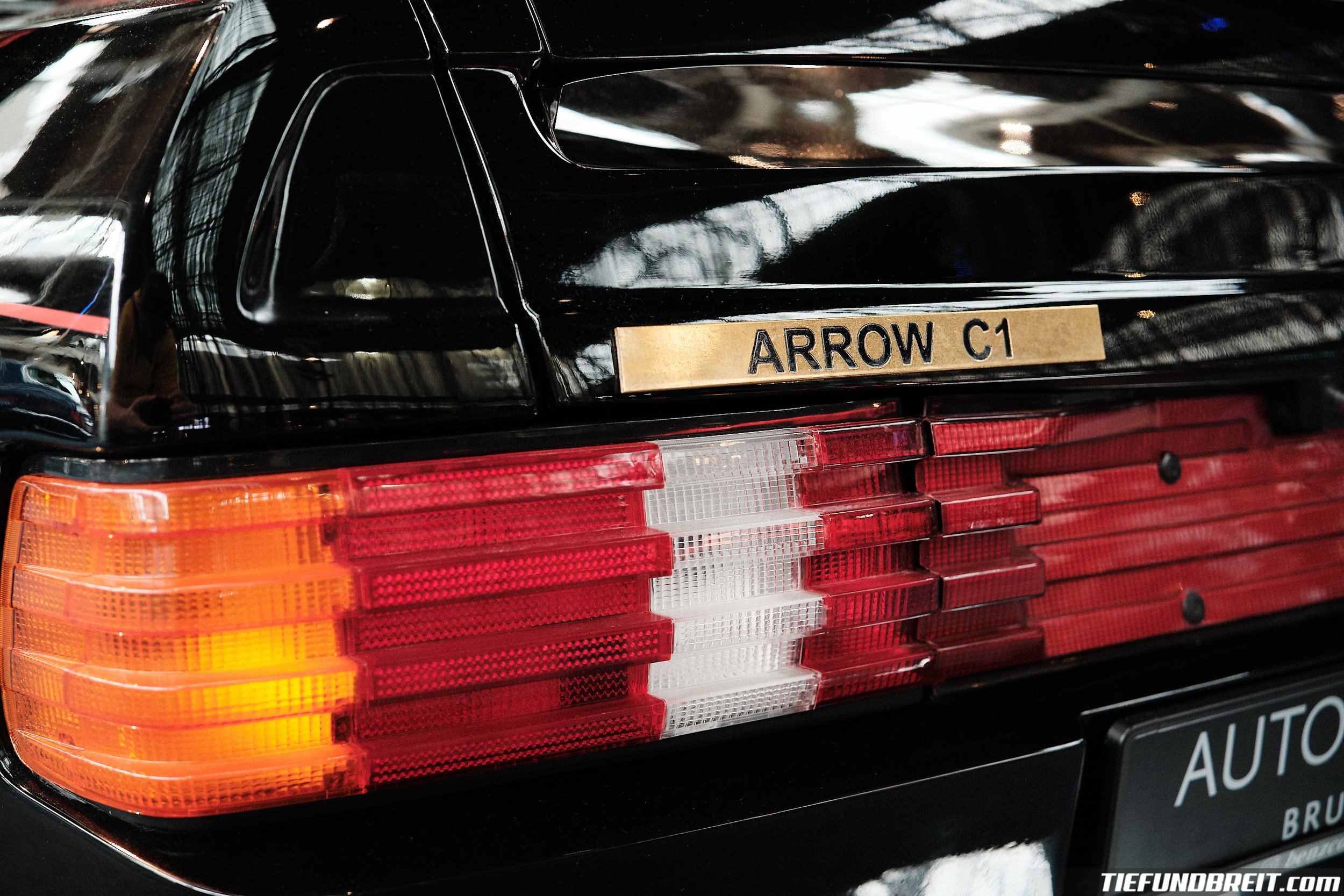
What an utterly mad machine that is. The 80s were a wild time. Sadly, this also marks the end of the special exhibit, but worry not. I have prepared a look at some of the other highlights in the museum as well.
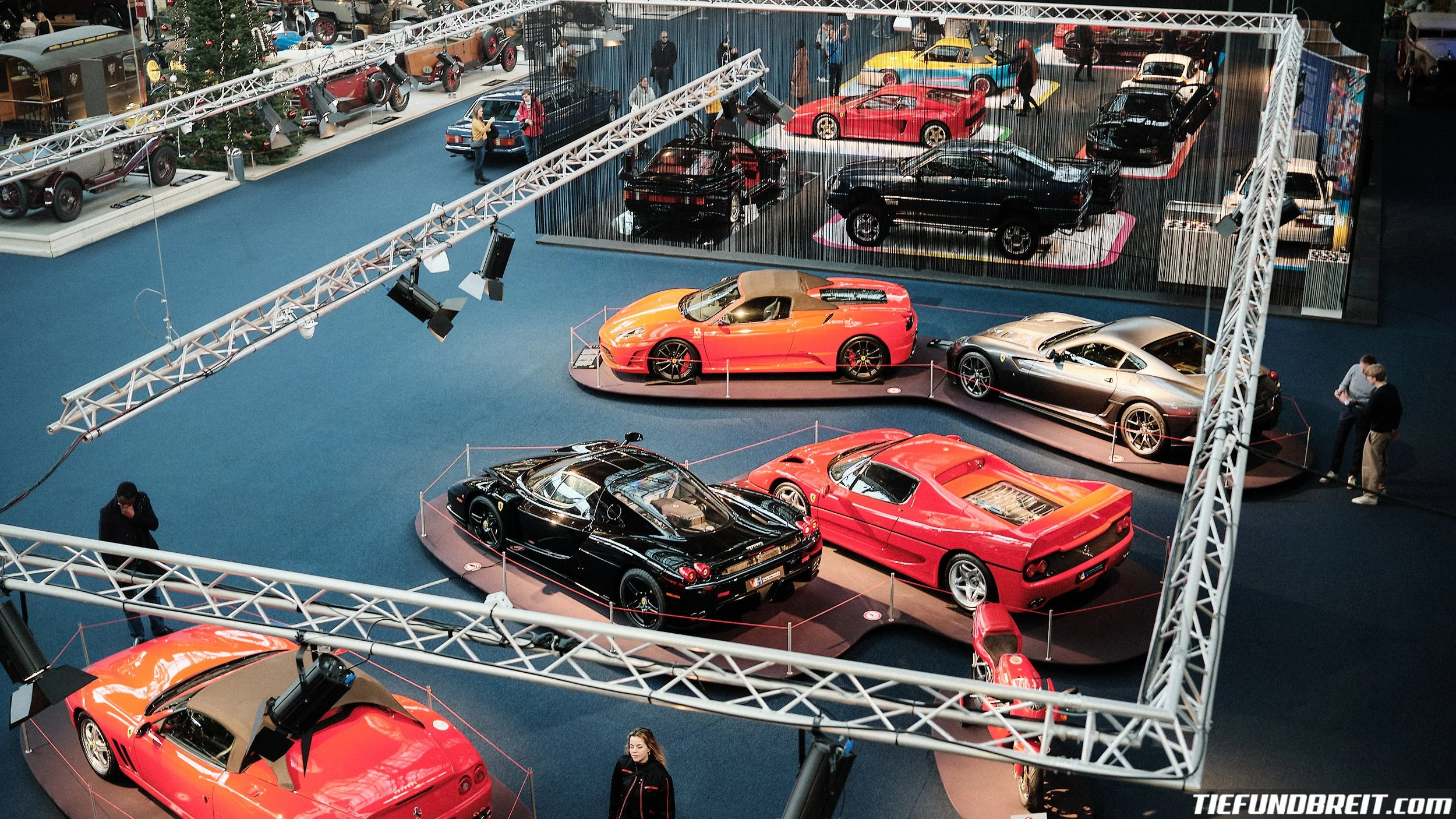
Continuing on the ground floor of the museum will lead you to an eclectic mix of vehicles, ranging from vehicles that are a hundred years old to some more modern, very fast, and exclusive cars.

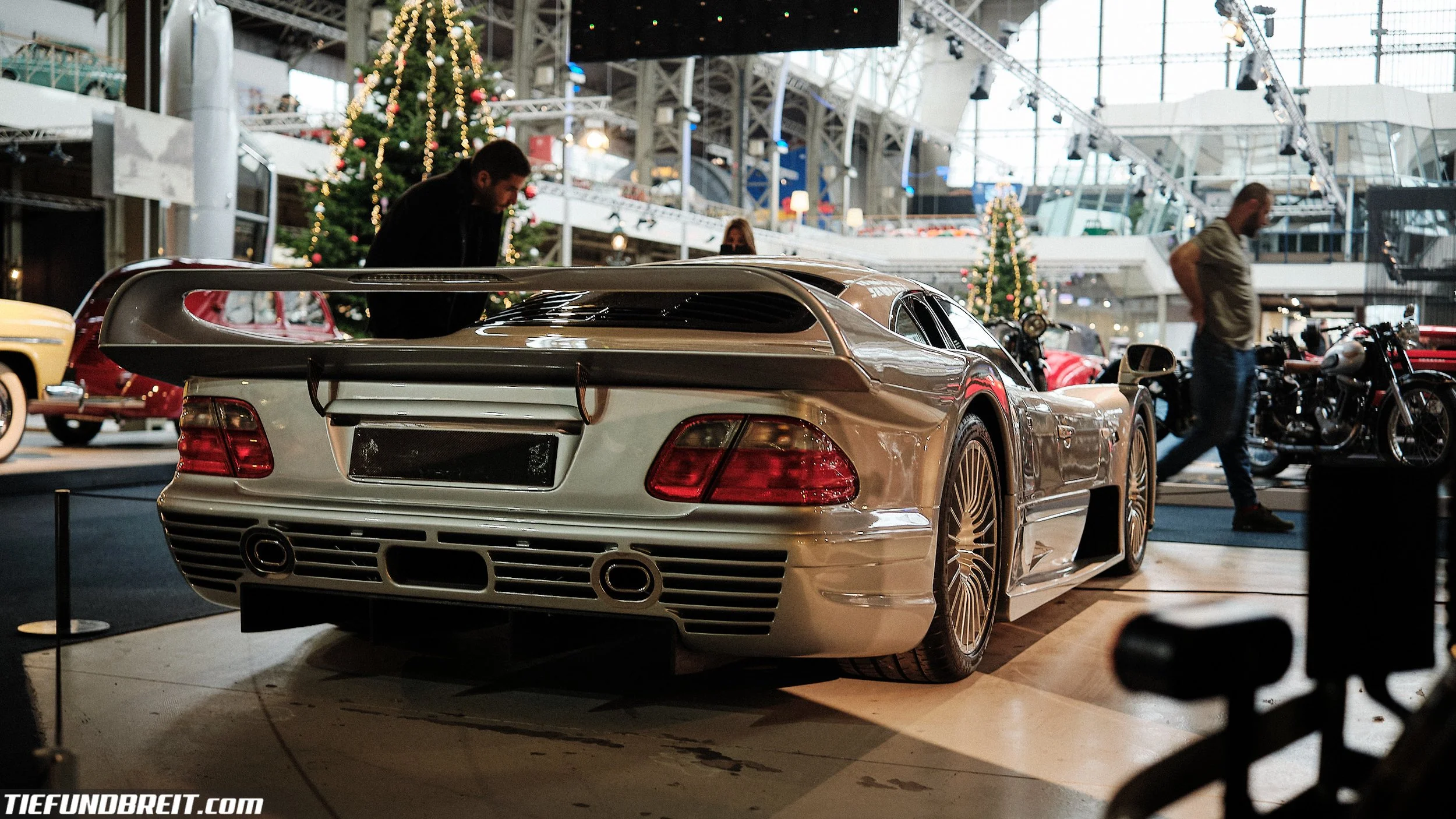
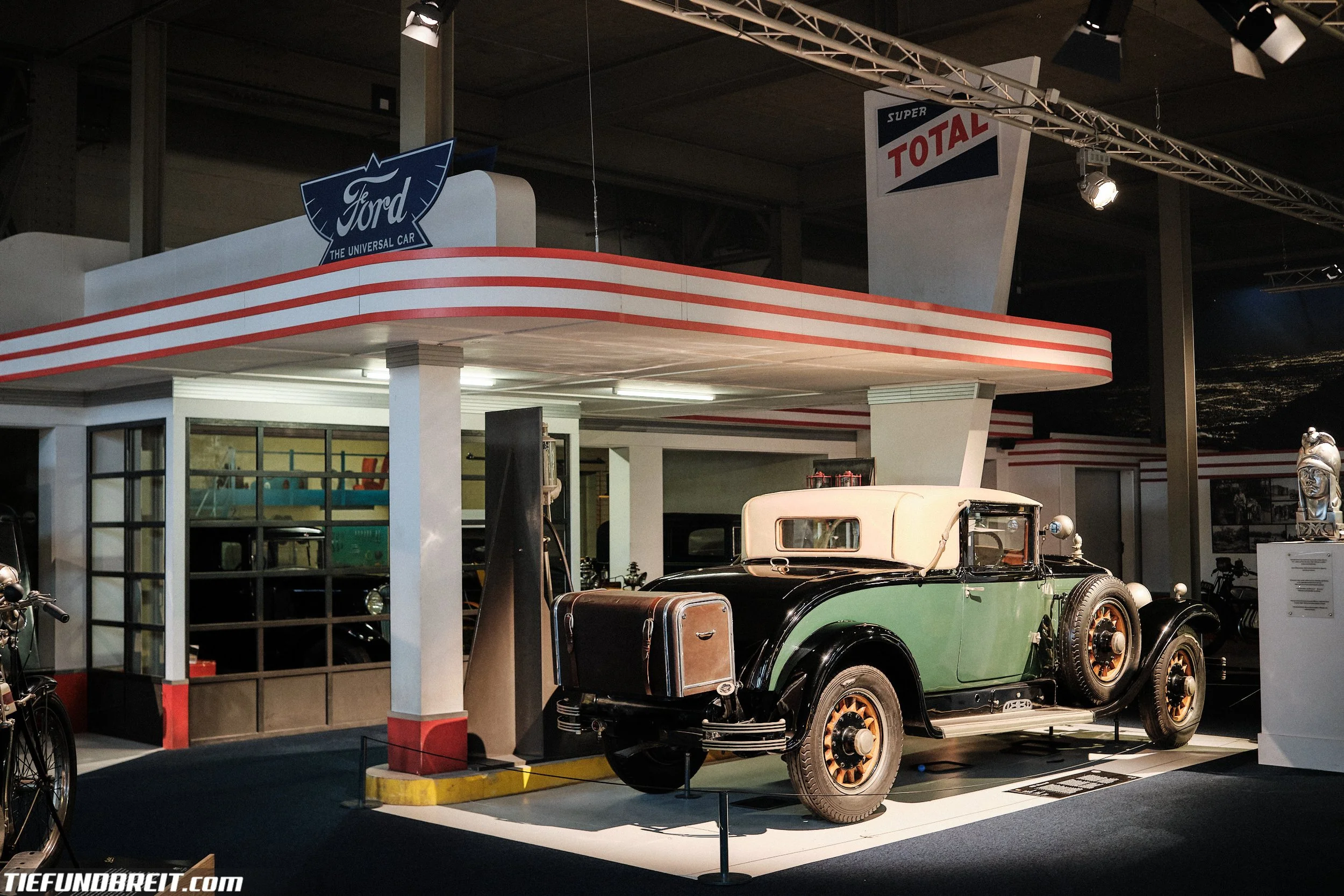
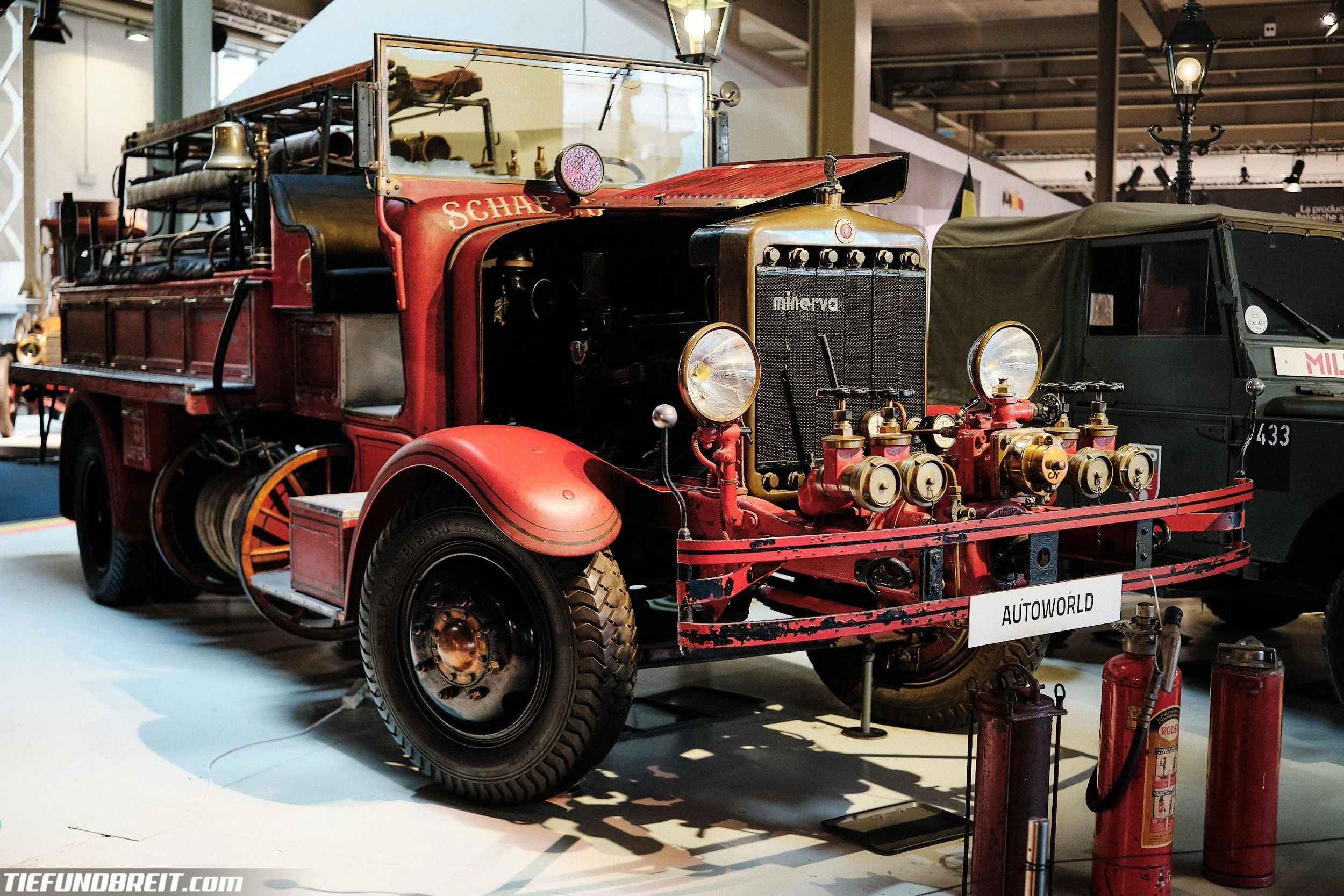
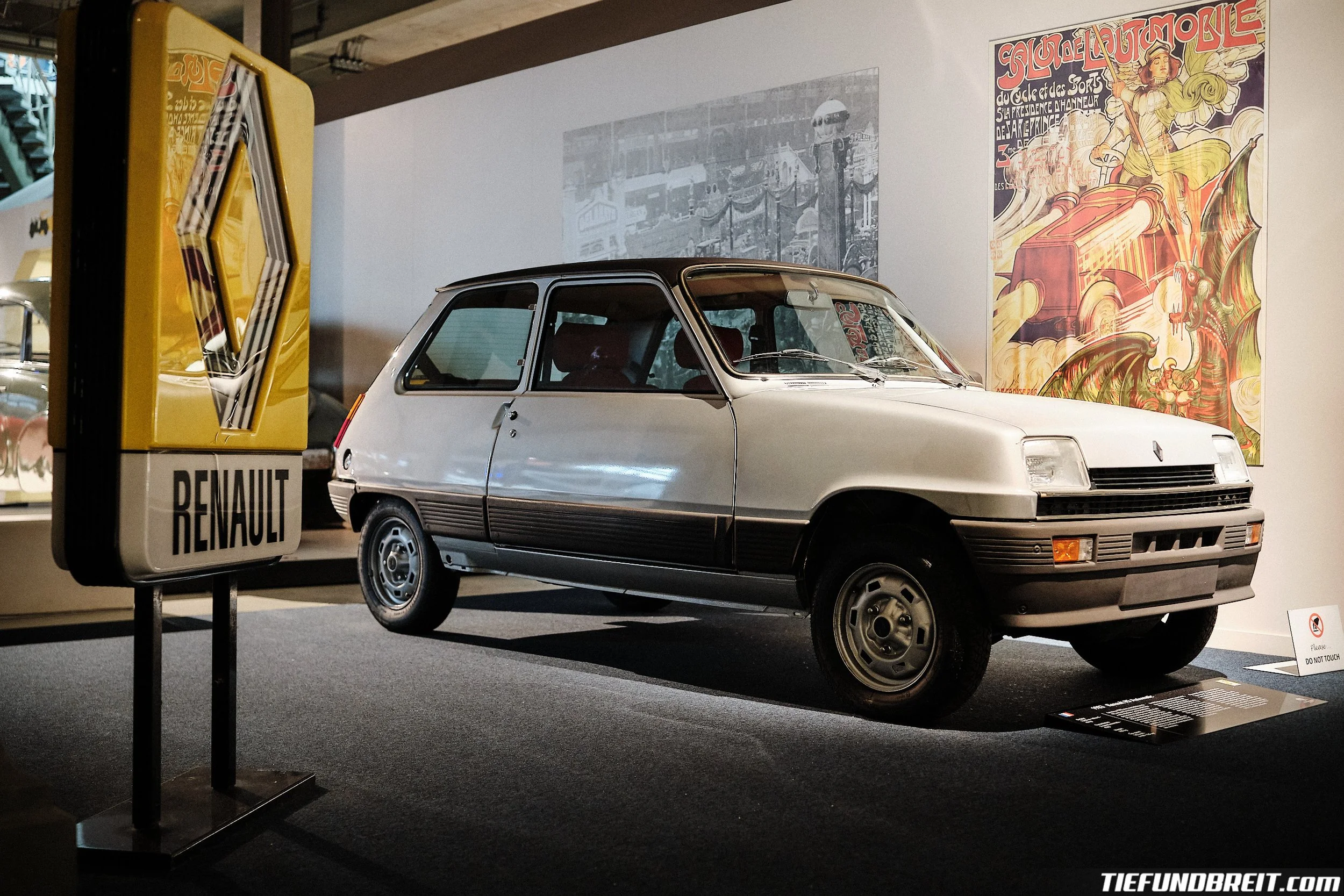
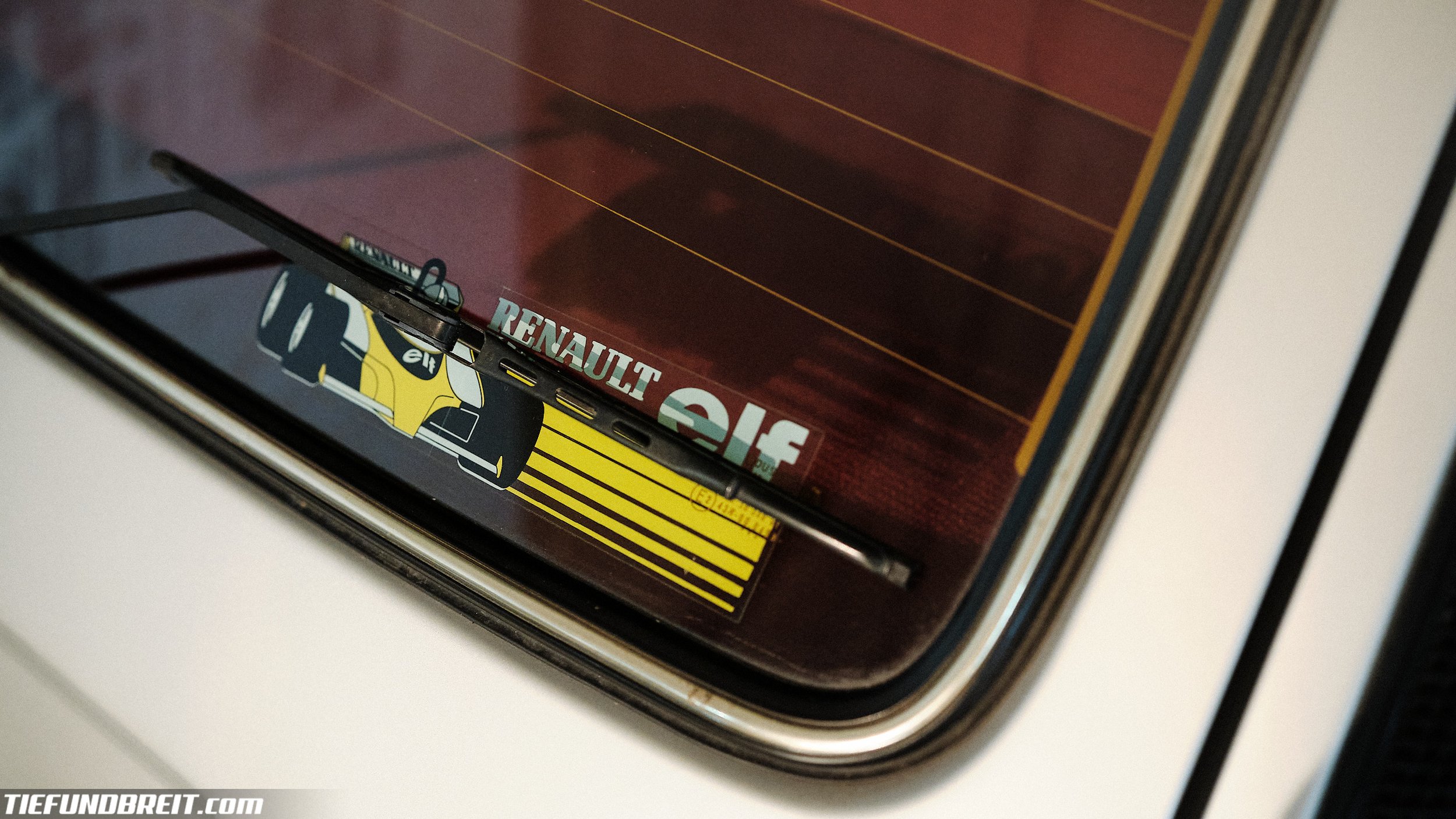
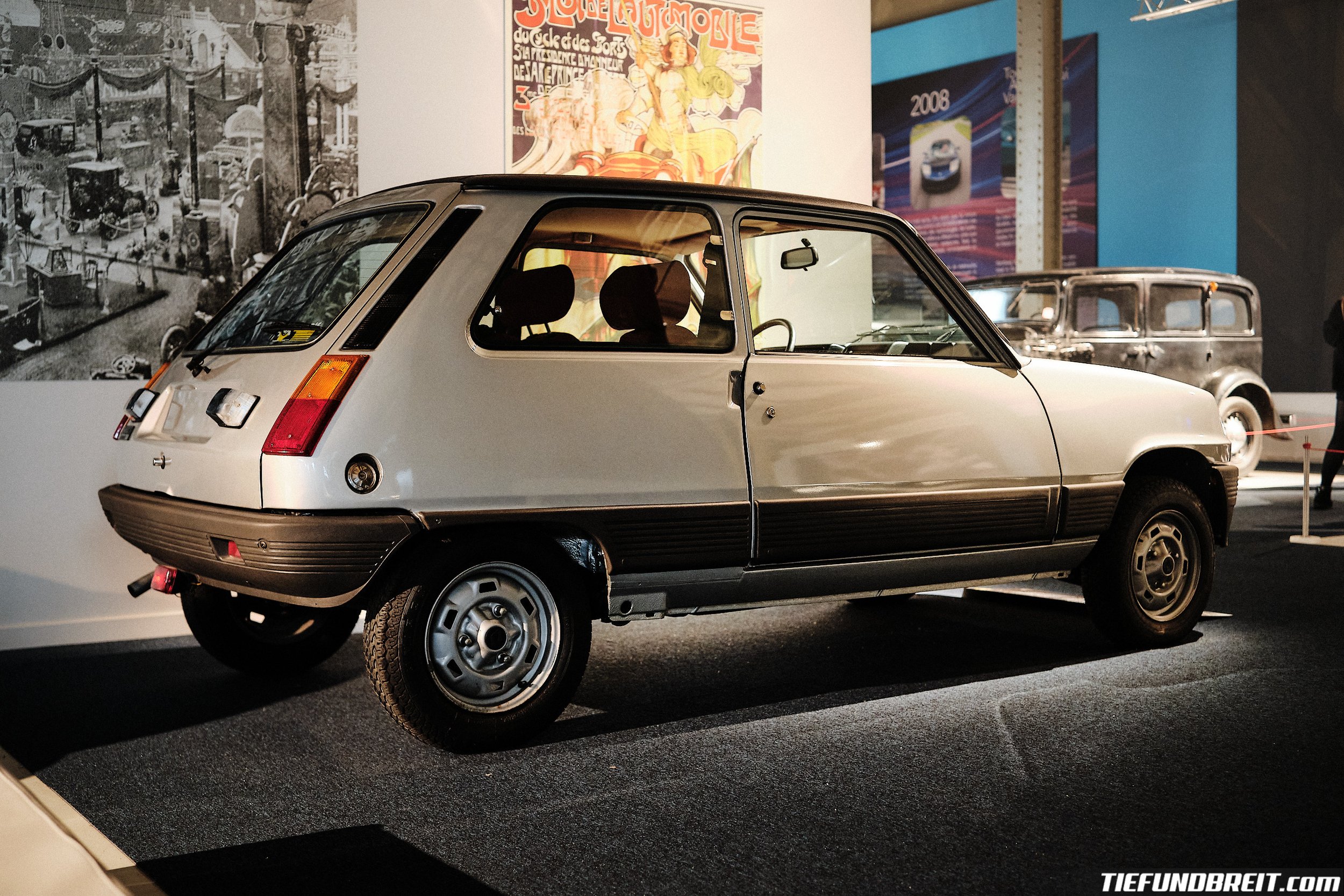
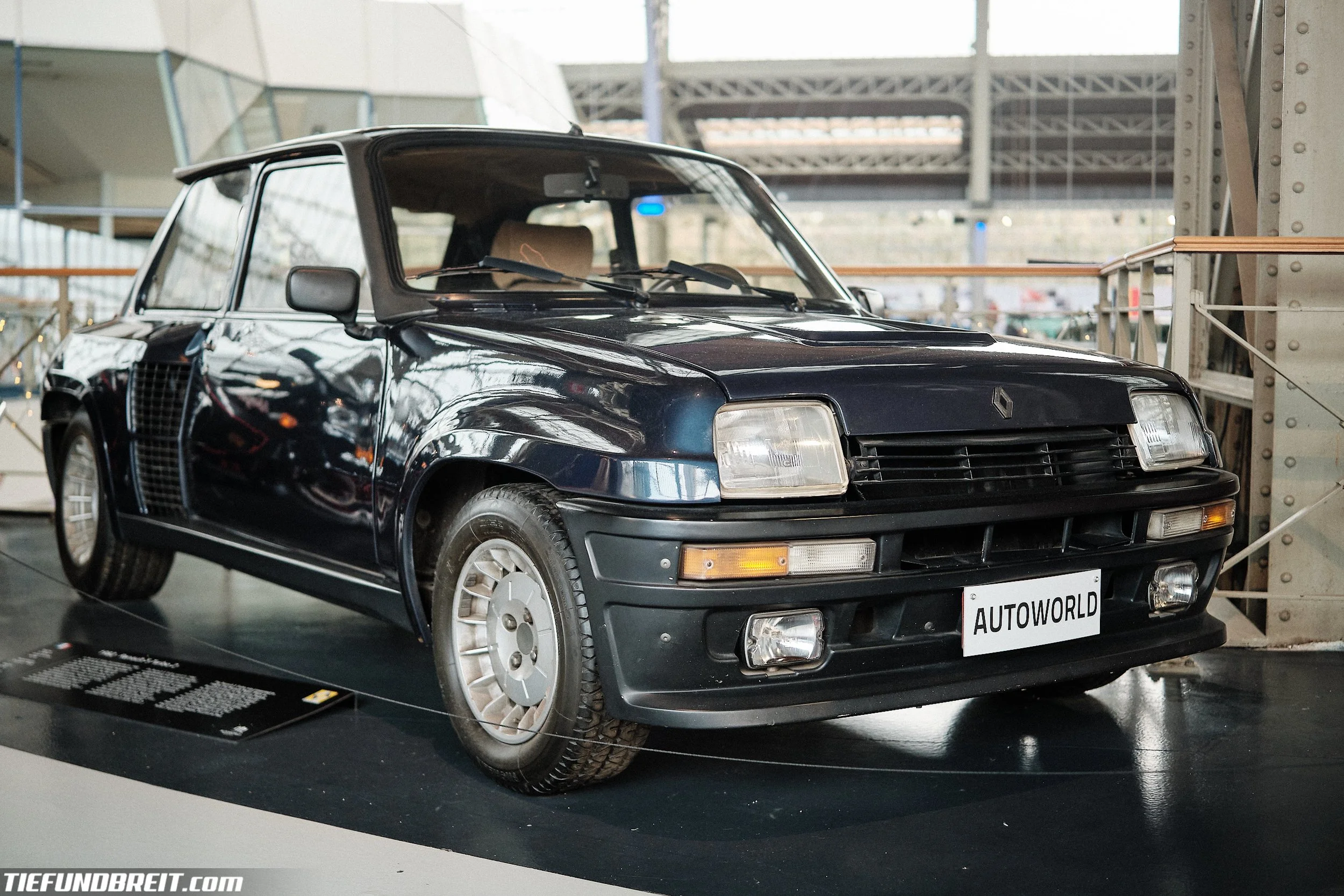
As I turned a corner, I stumbled upon something that made me smile: a neat little display of an original Renault 5, albeit the later model after 1984, sitting next to a huge Renault sign. The reason this made me smile is that my current daily driver is a 2025 Renault 5 E-Tech, and it has been ages since I saw an old R5 in the flesh. It’s interesting to see which details of the original Renault were carried over to the current one.
The museum is spread out over two floors. The upper floor is more a balcony that runs the length of the building but leaves the middle open. Still, it is packed with interesting vehicles. I slowly made my way along the balcony, enjoying the cars on display, until a certain vehicle made me stop in my tracks.
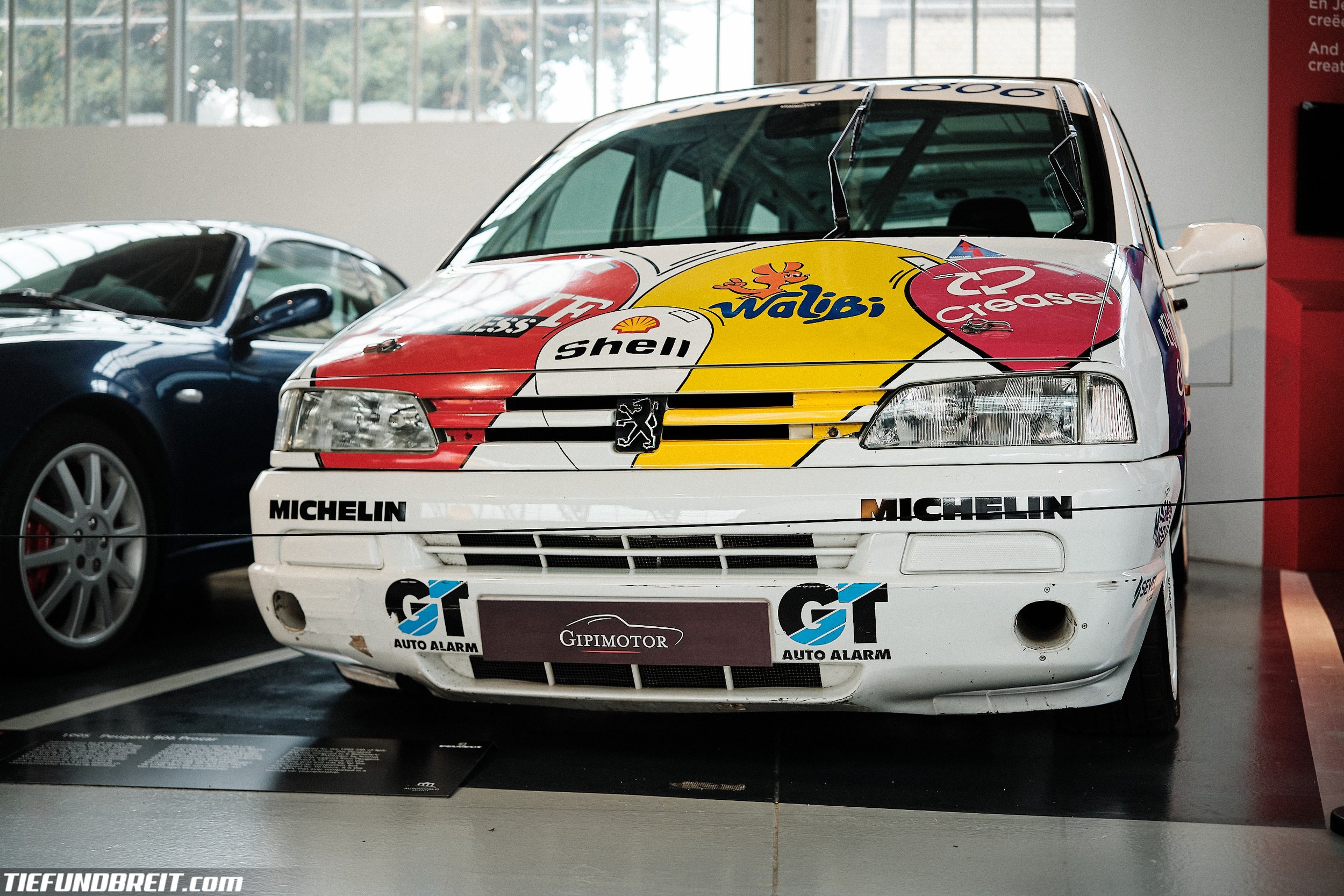
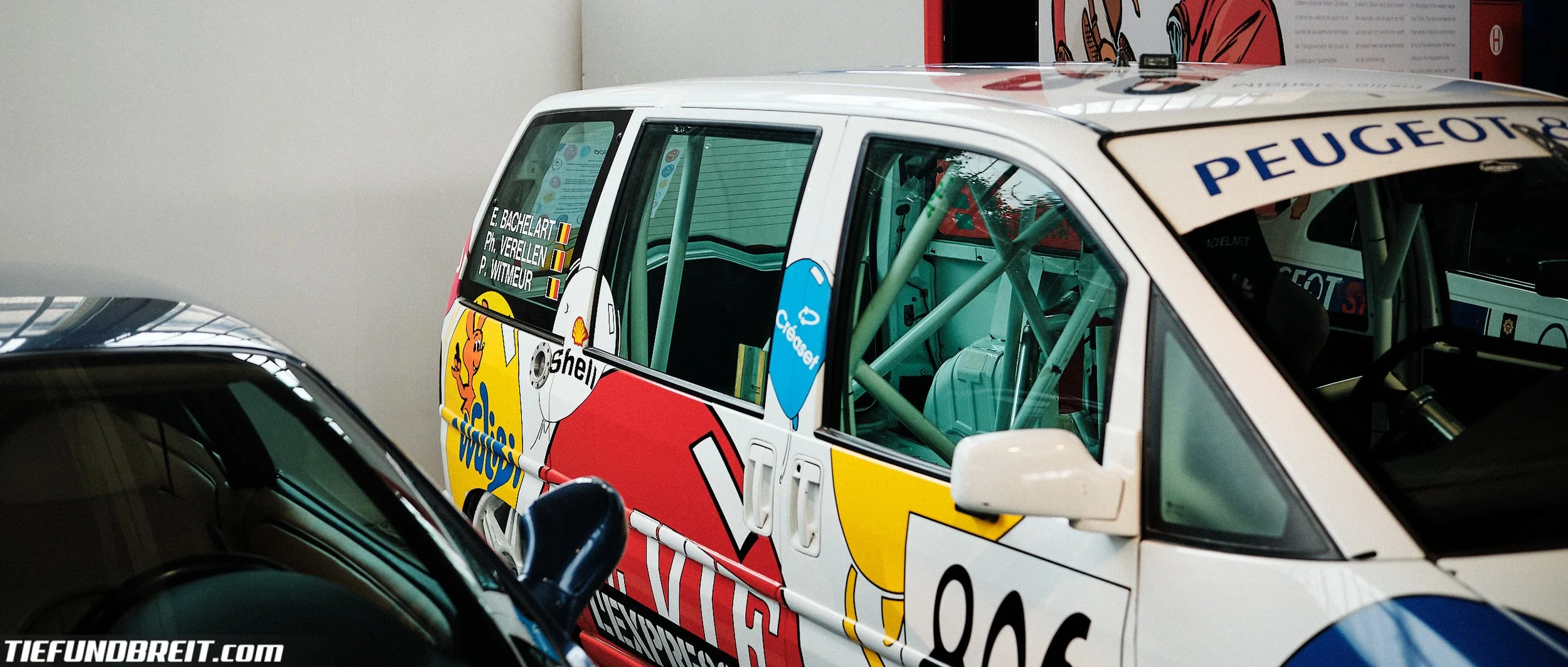
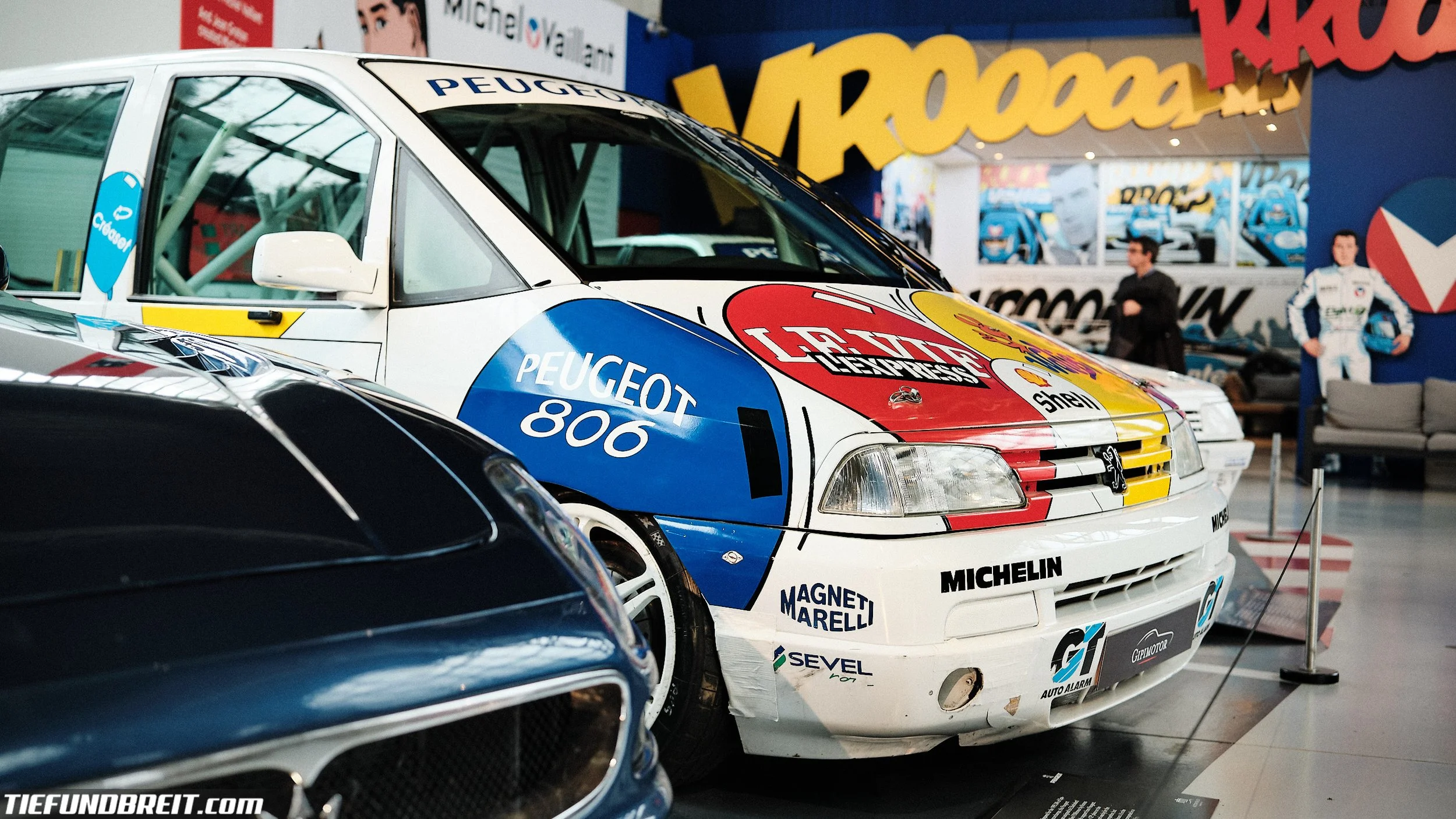
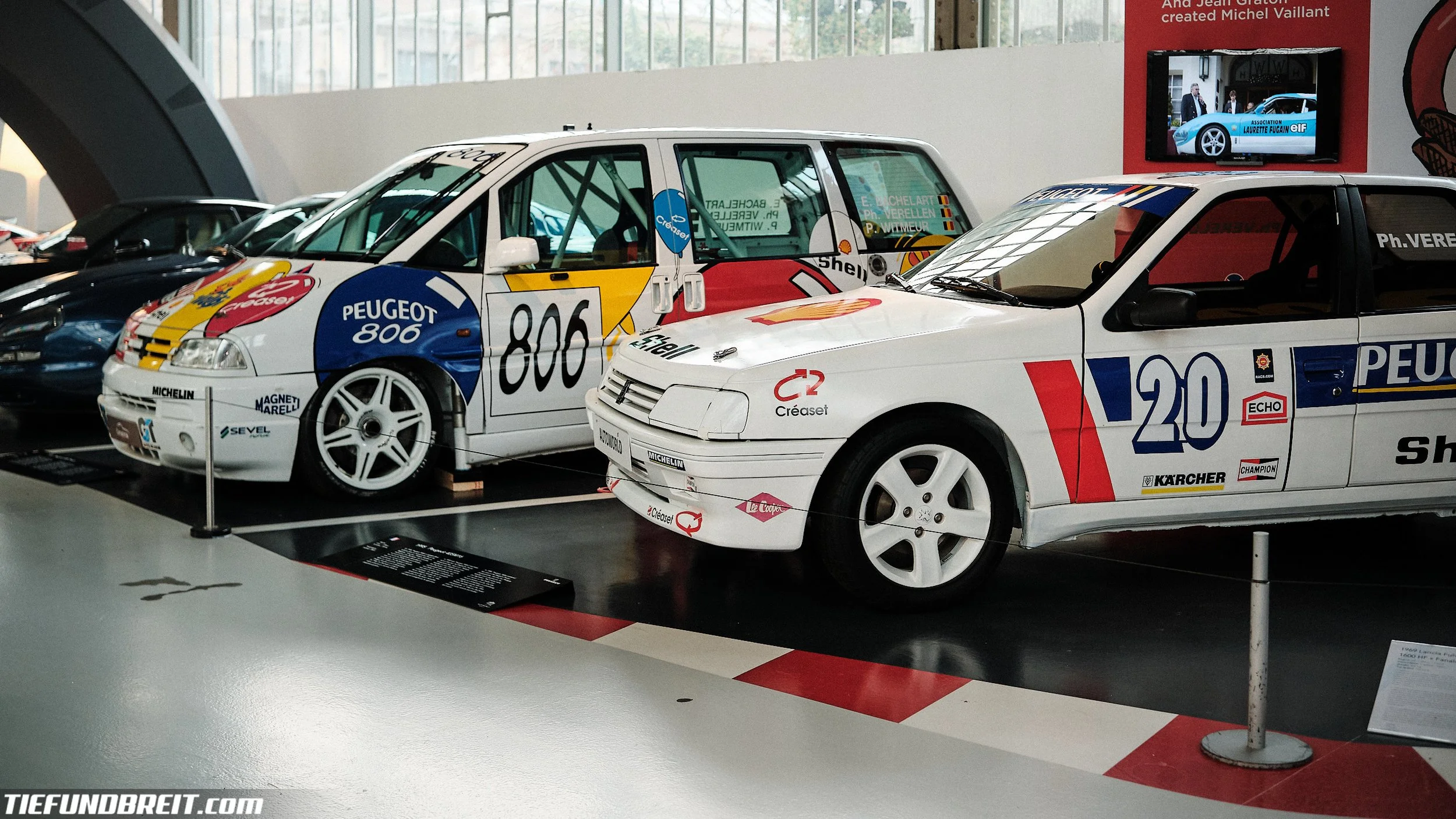
The vehicle in question? Well, I hesitate to call it a car, as it is in fact a minivan. I have long been a bit of a nerd about unusual race cars, and one of my absolute favorites is the Peugeot 806 Procar. This was basically a PR stunt by Peugeot. Peugeot had introduced the 805 in 1994, and Peugeot’s marketing lead at the time, Pascal Witmeur, who just so happened to be a passionate racer, pushed the idea of entering it into the Spa 24h race in 1995.
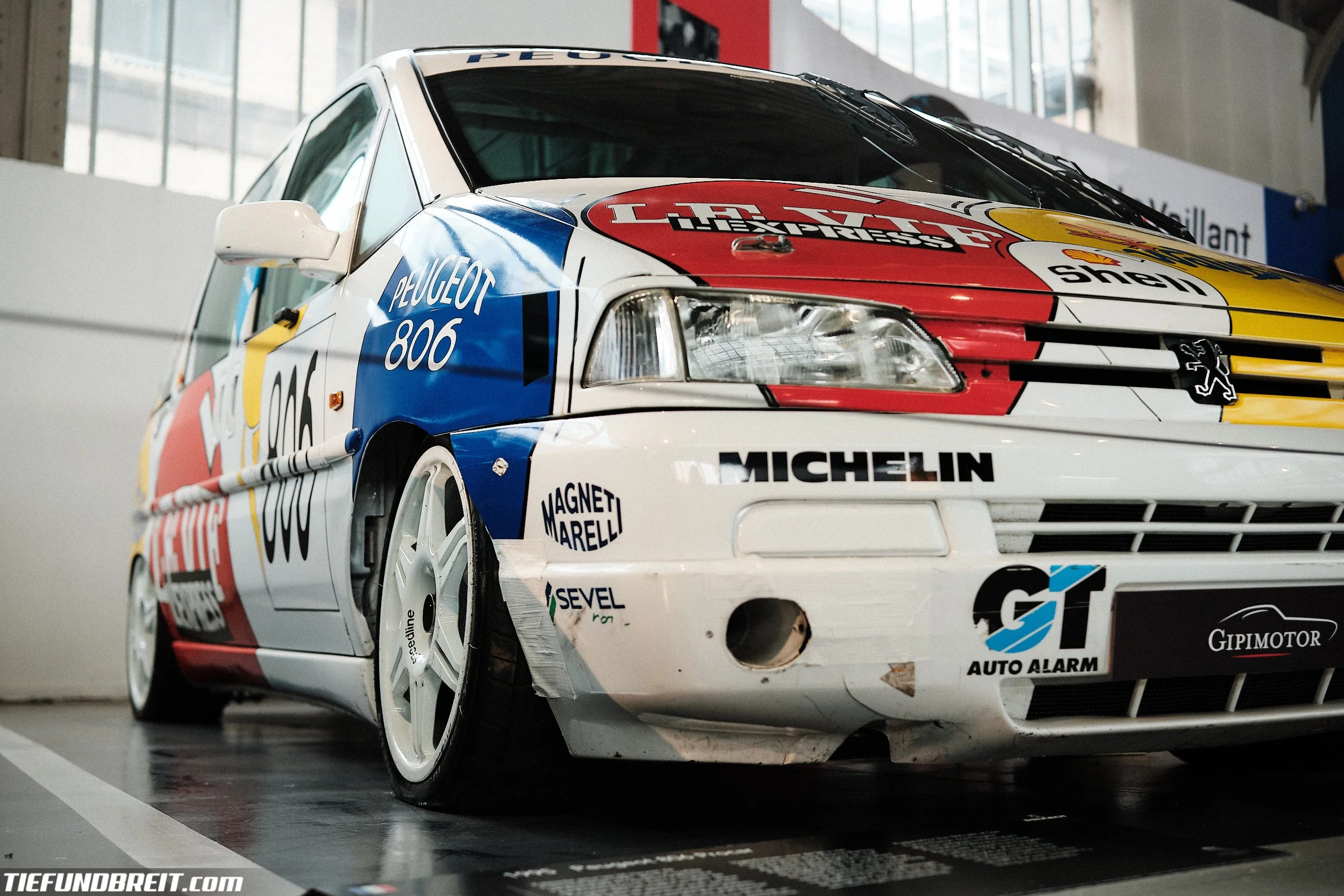
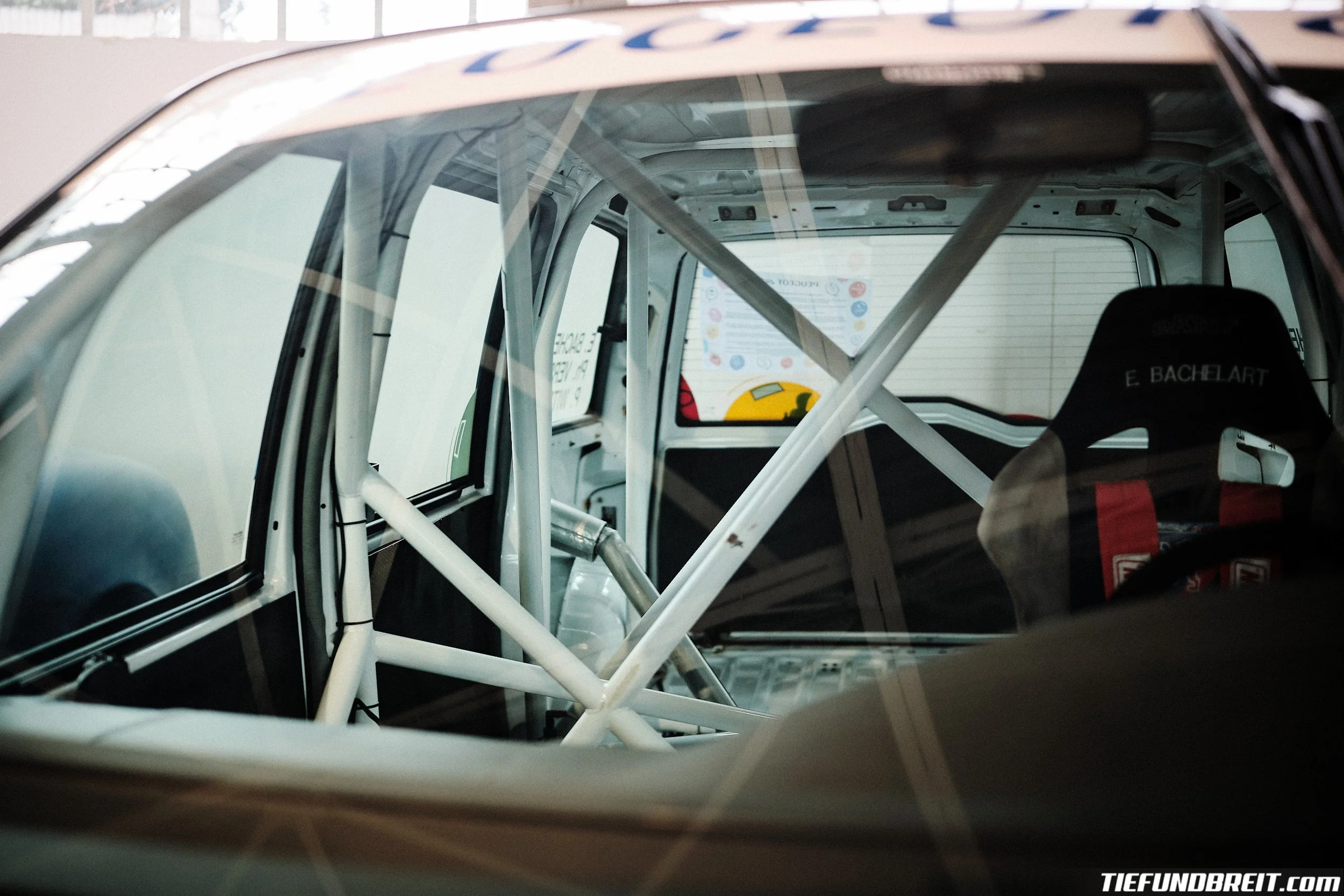
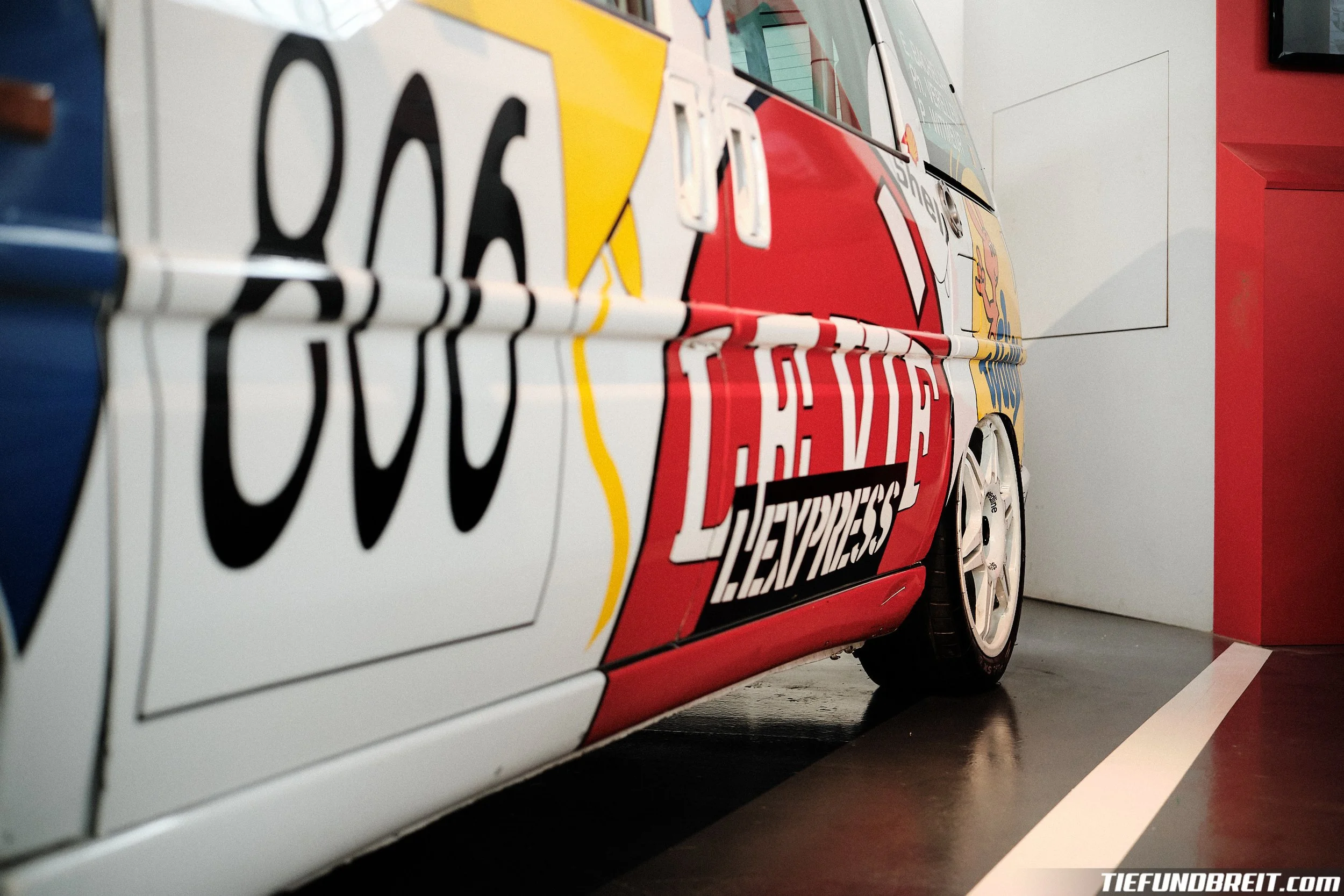
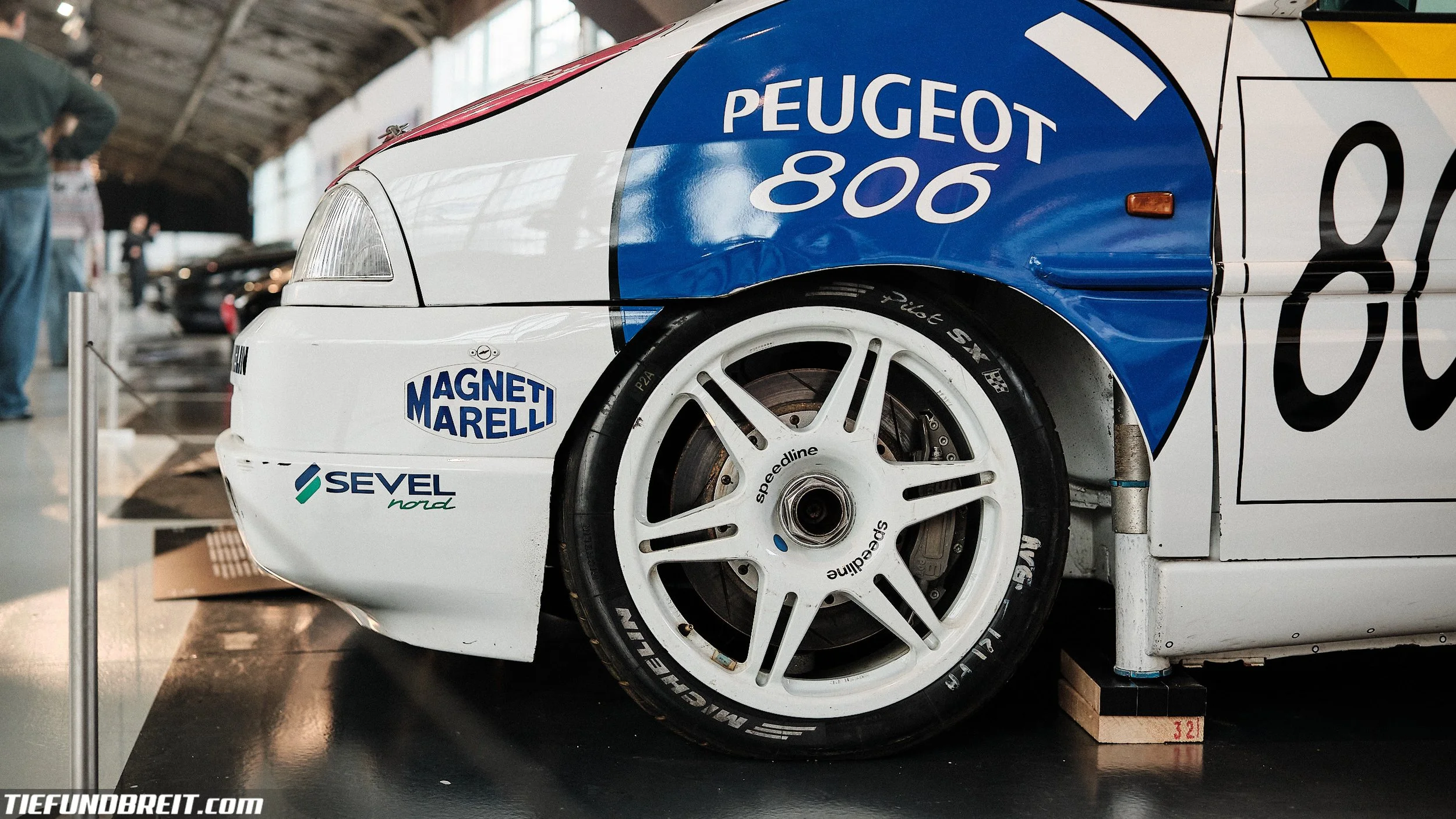
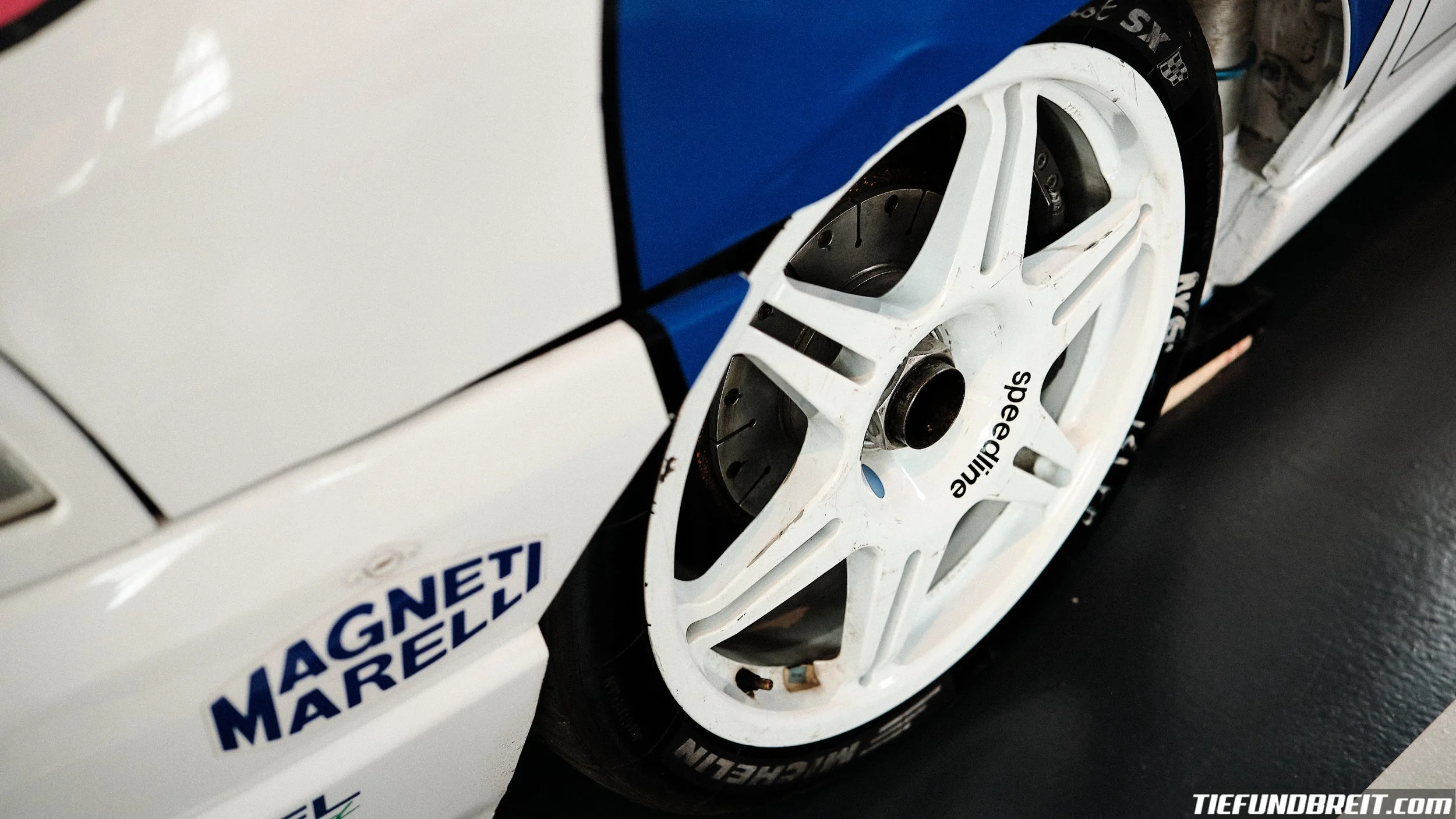
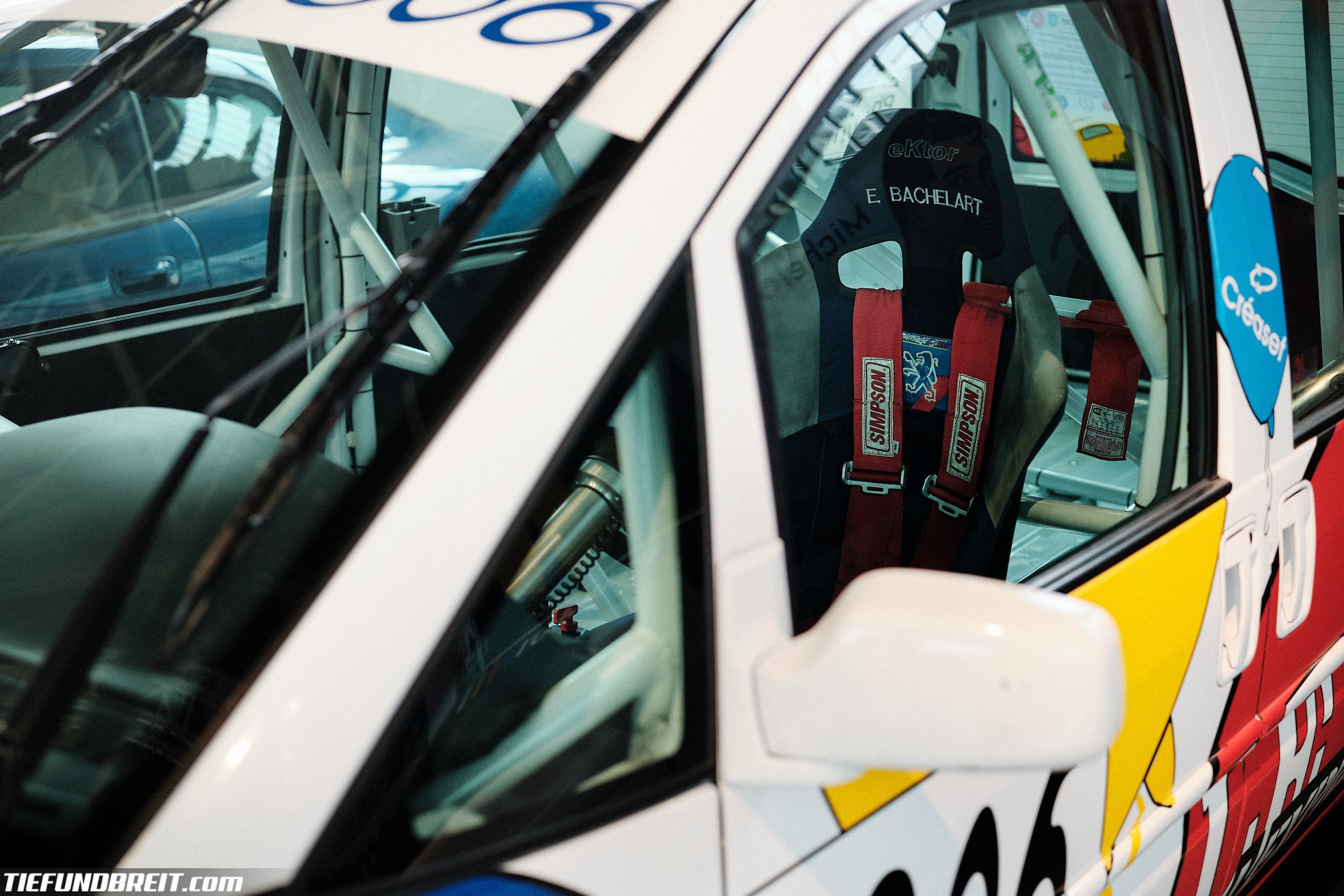
Long story short, he managed to convince the executives at Peugeot, and the project was greenlit. In just two short months, Belgian race team Kronos Racing assembled the race car—or race van, I guess. The suspension was based on the suspension of the Peugeot 405 Mi16 supertouring race car. The engine was based on a 306 Maxi rally engine, but modified with a cylinder head based on the 405 Mi16. The end result was a high-revving 2.0 inline-4 pushing around 280hp to the front wheels. Sadly, the 806 did not complete the race, retiring after just ten hours due to technical issues. Still, it is fondly remembered as one of the oddest entries into a 24-hour race ever.
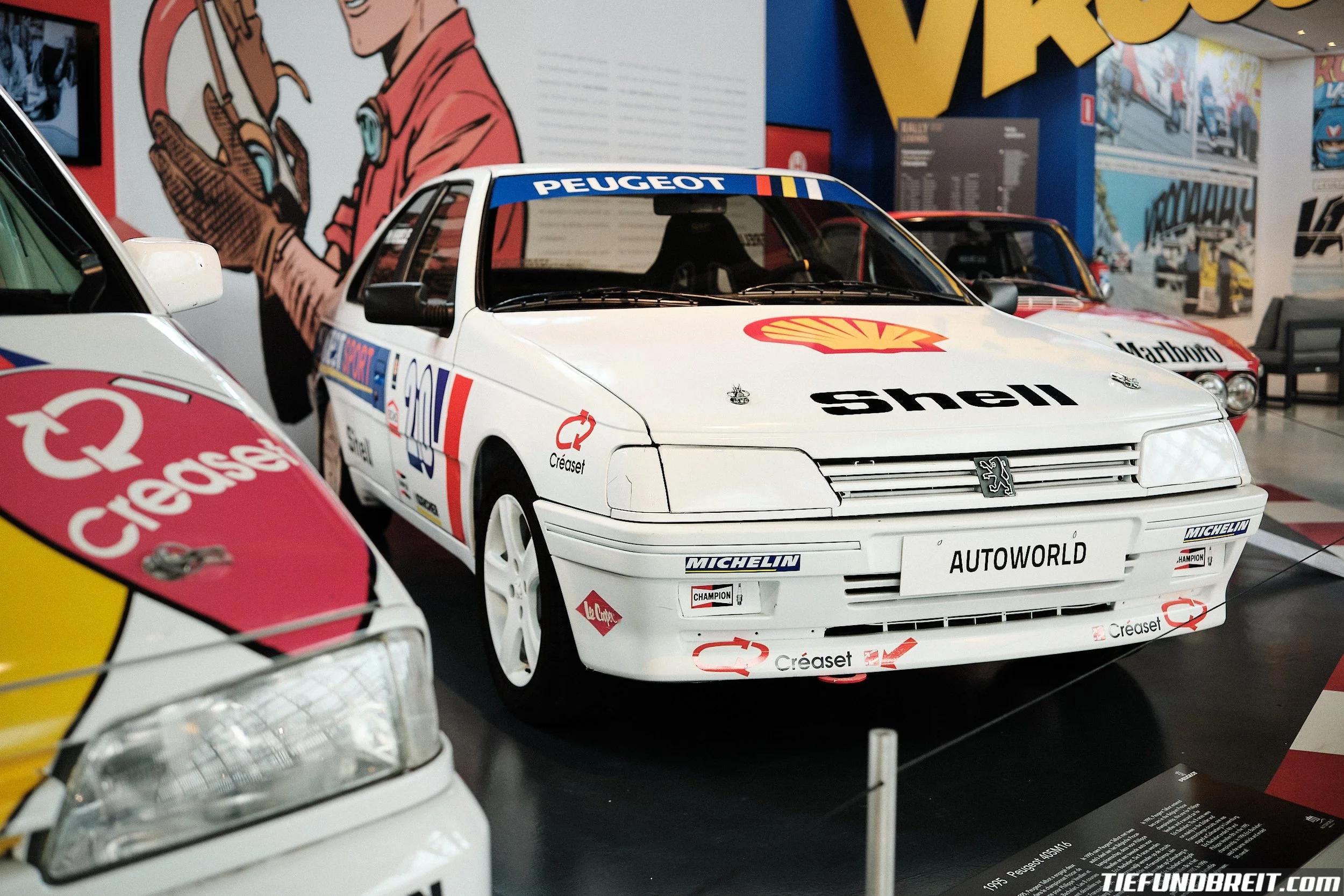
Next to the 806 was a Peugeot 405 Mi16. Supposedly a race car as well, but I think it might have been a replica. The high ground clearance, wheels that look like they belong on a street car, and the absence of a cage or roll bar all point in that direction. Still, it is a pretty cool car.
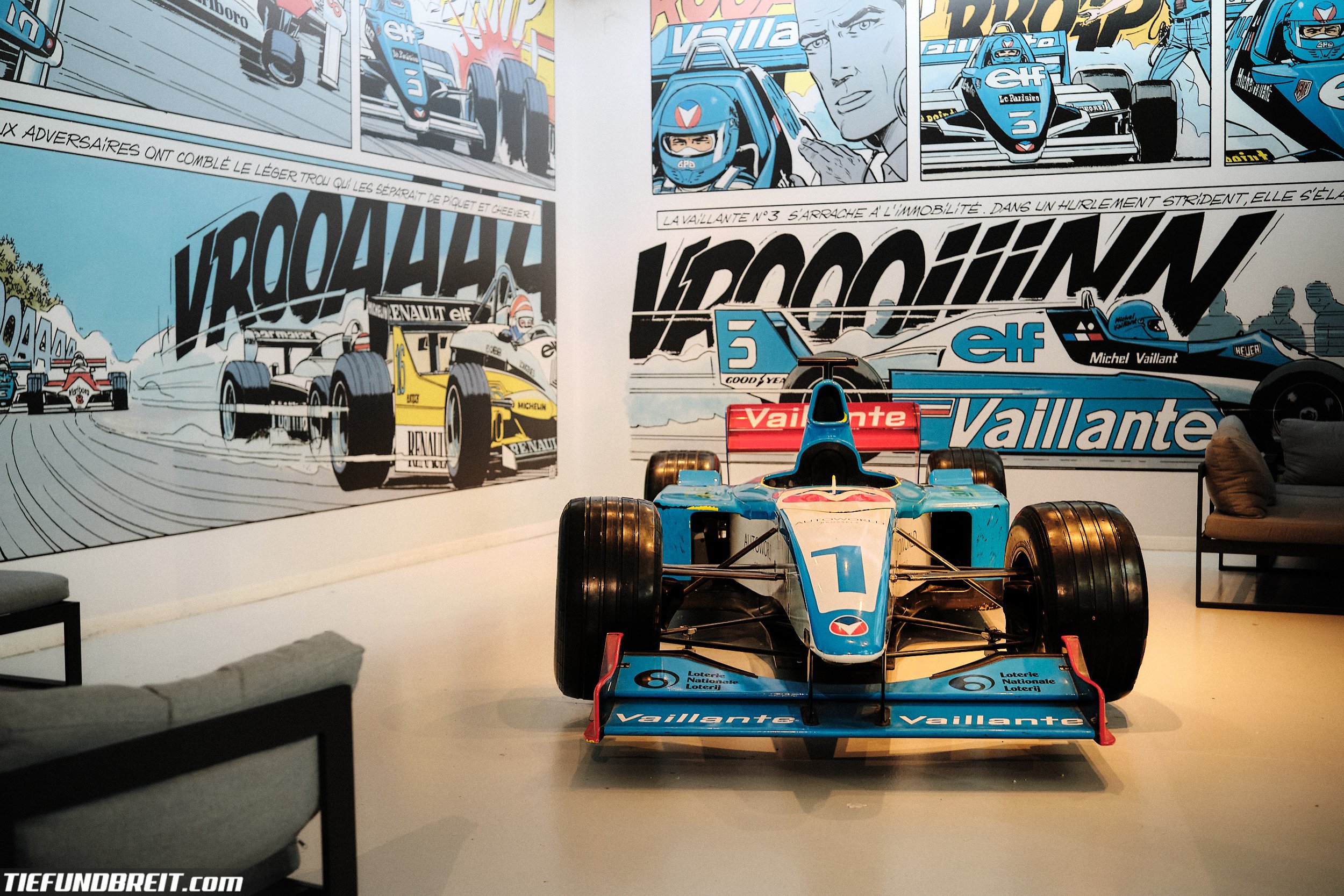
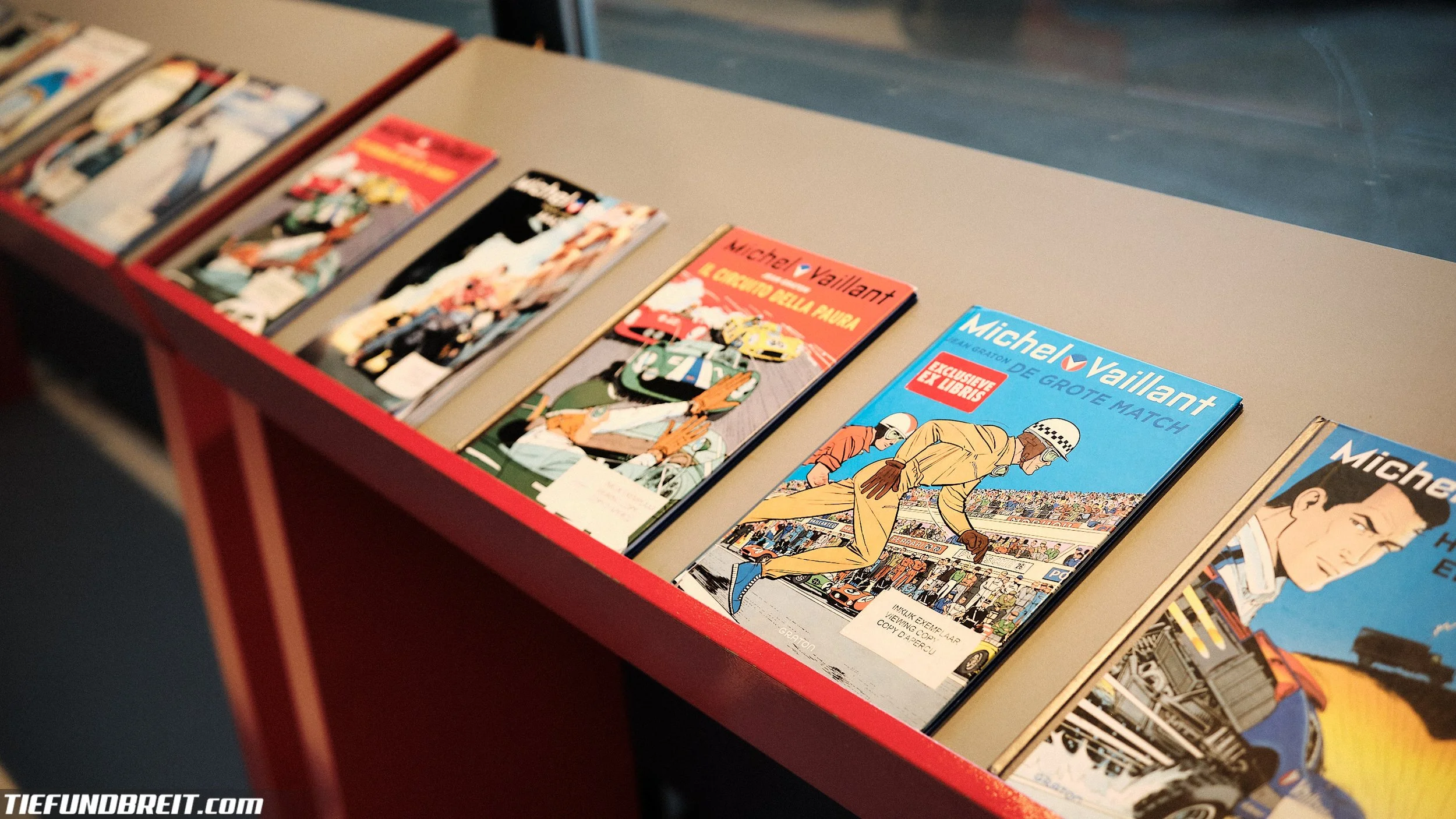
The second-floor balcony also housed some more interesting motorsports history to look at, including a beautiful Ford Capri, a mean-looking Porsche 996, and a section dedicated to the Michel Vaillant comics. If you have never heard of these, they are a French comic book series about a racing driver and his adventures. They even made an animated series that I watched as a kid.
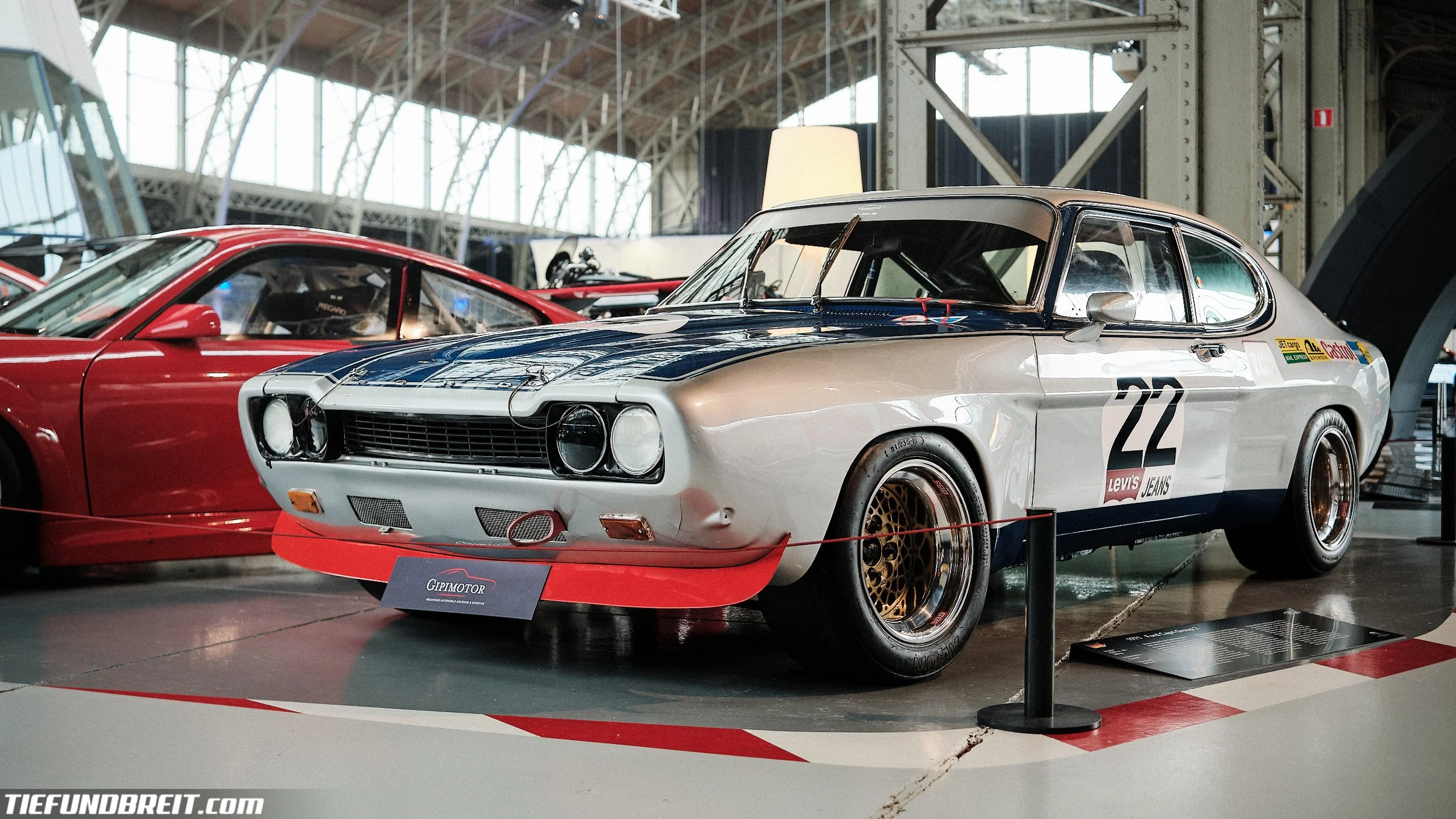
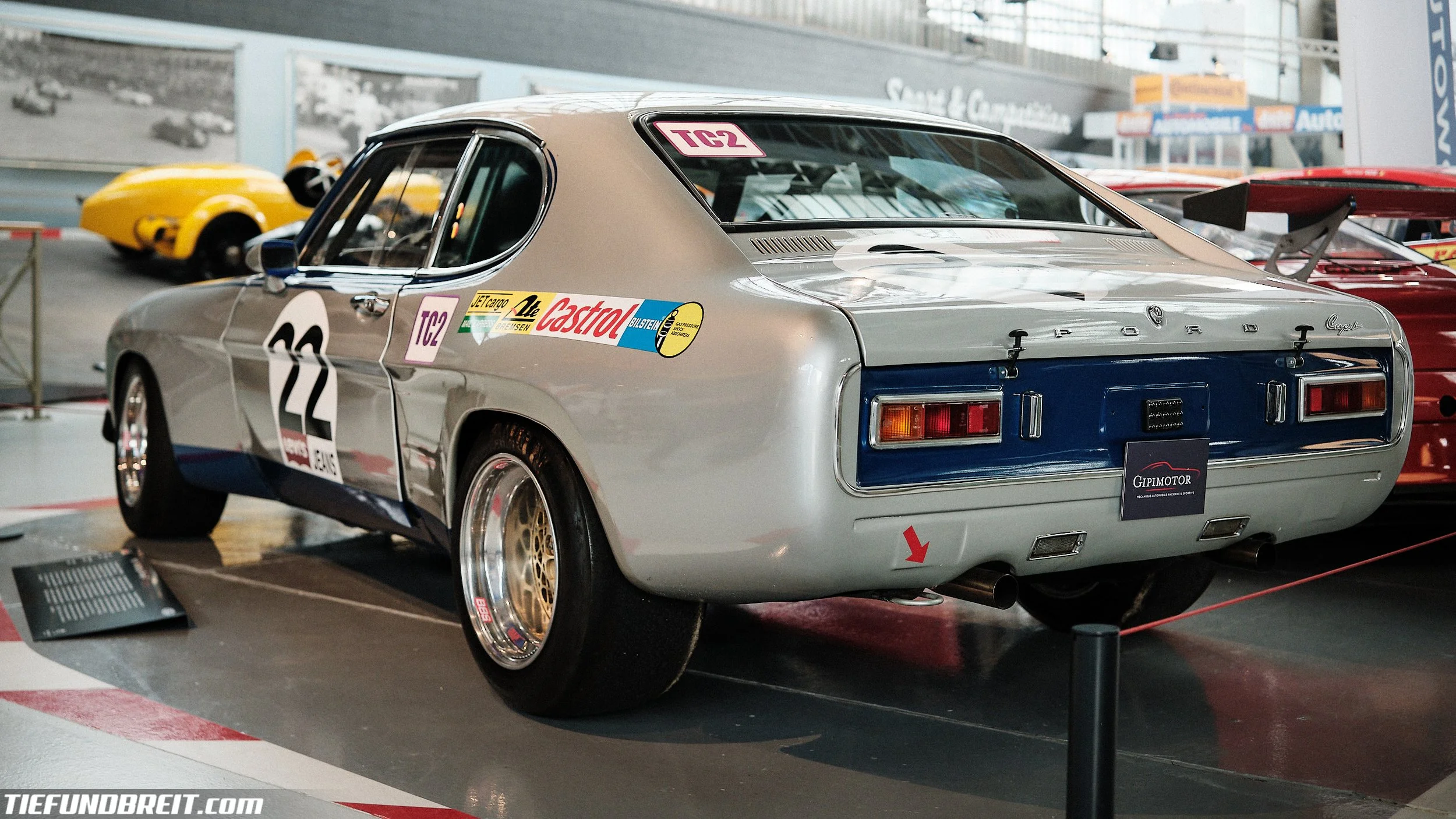
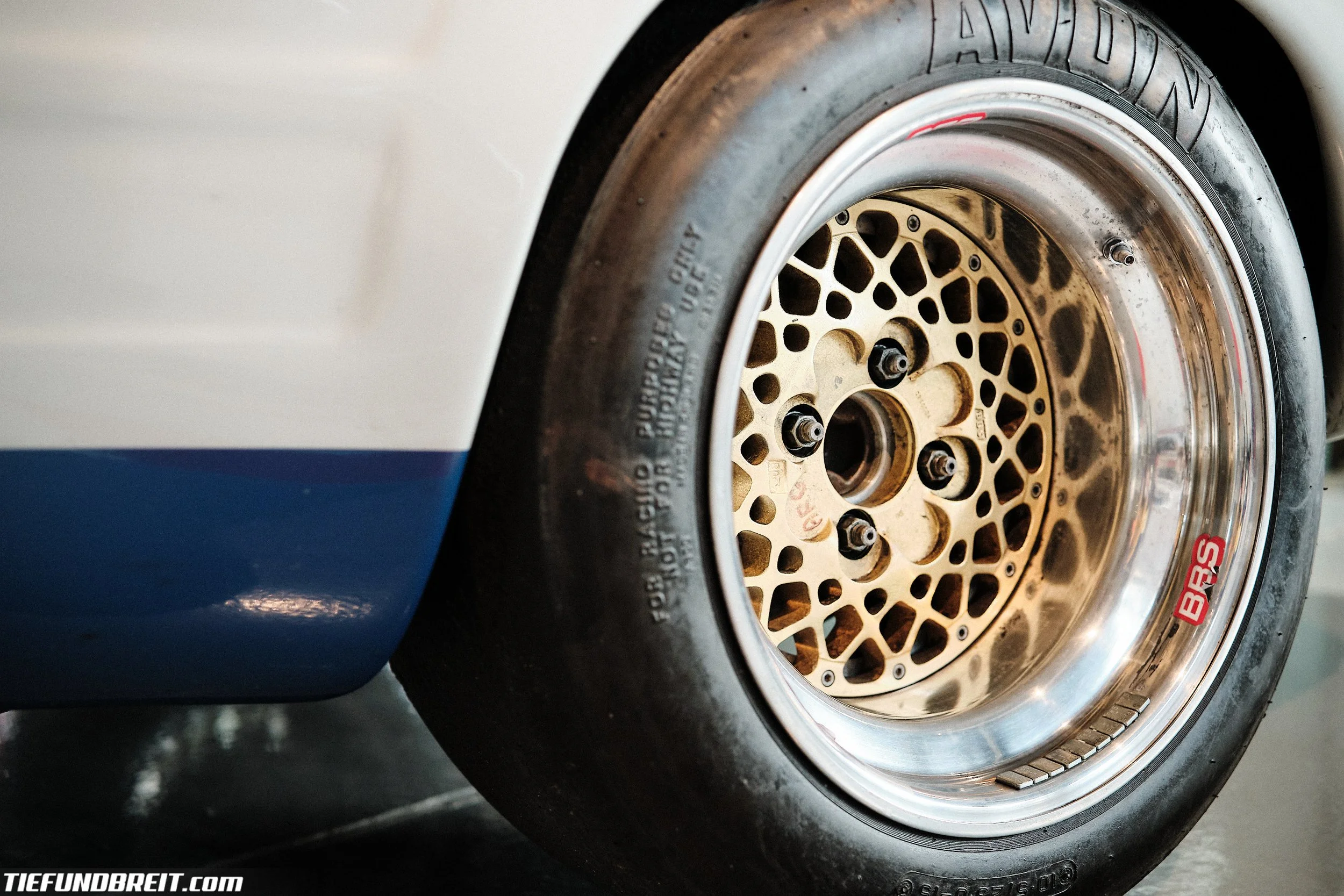
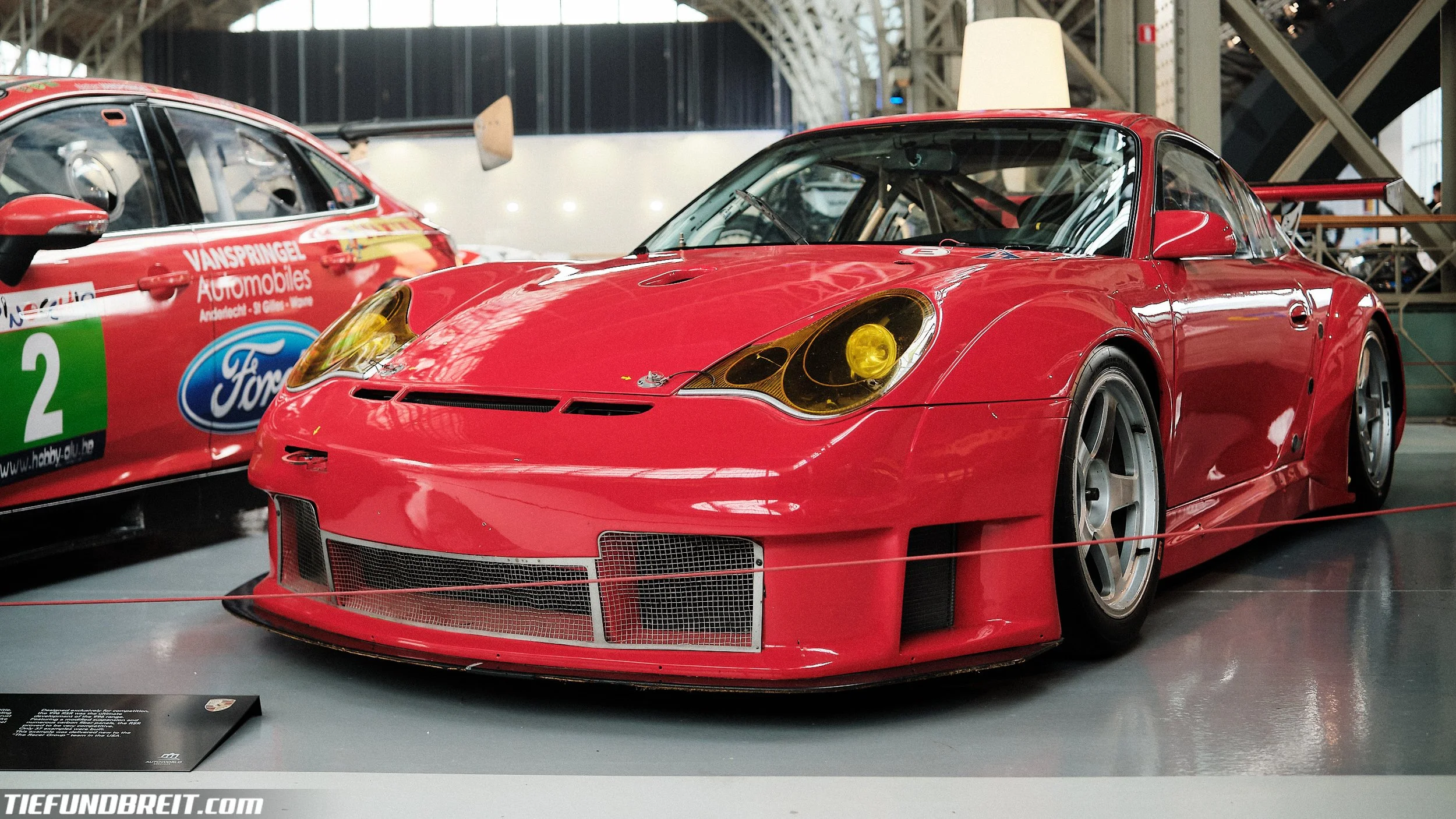
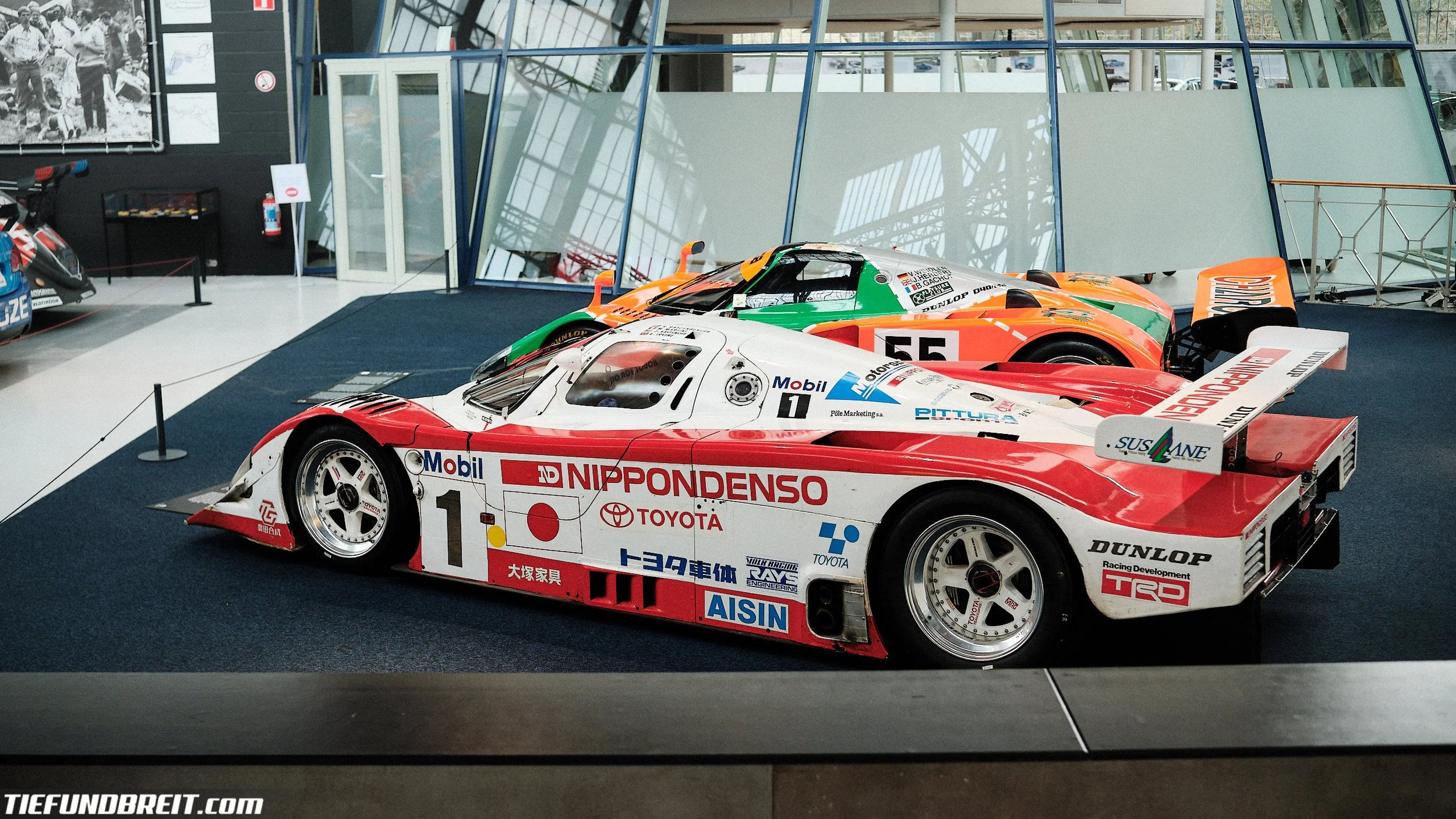
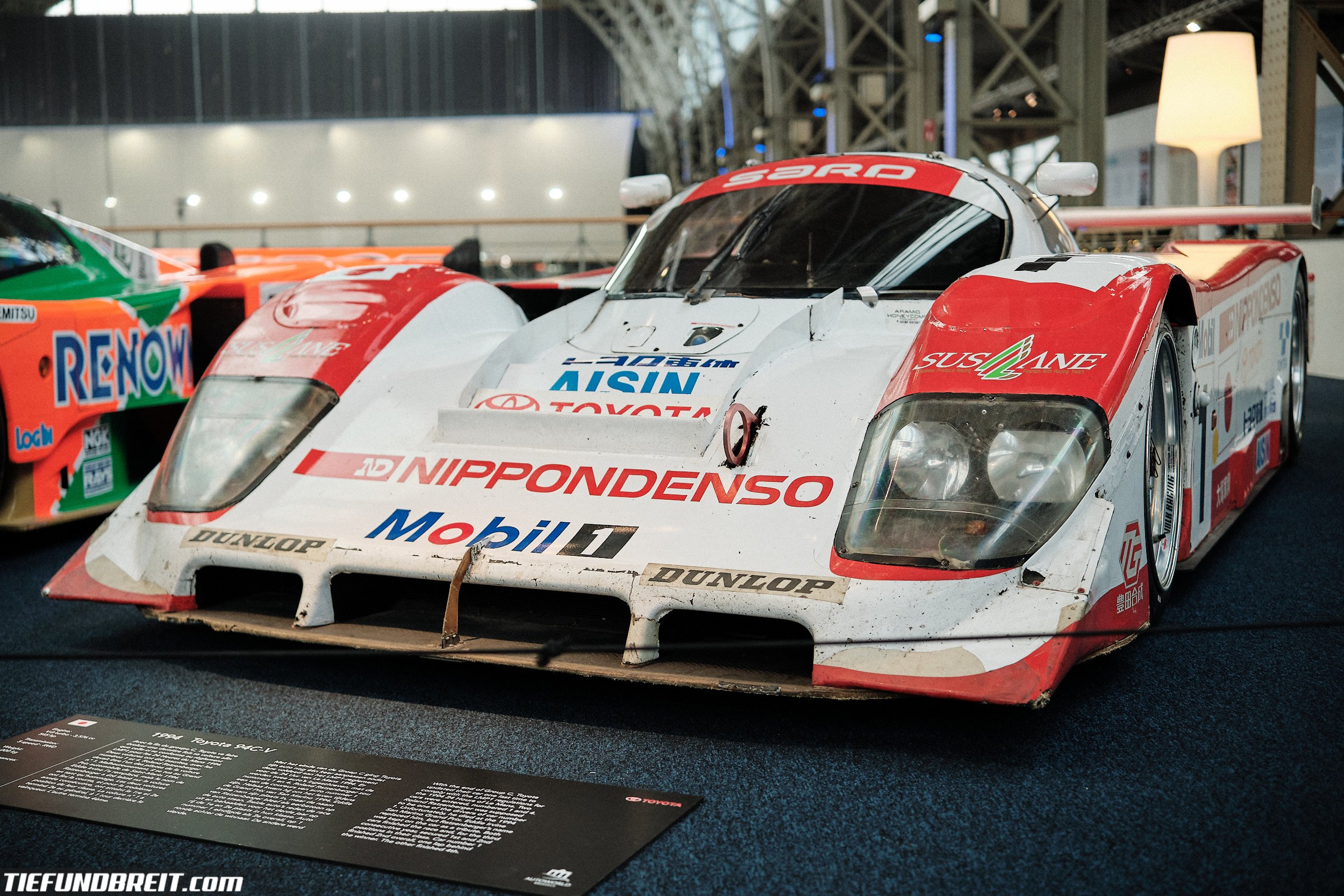
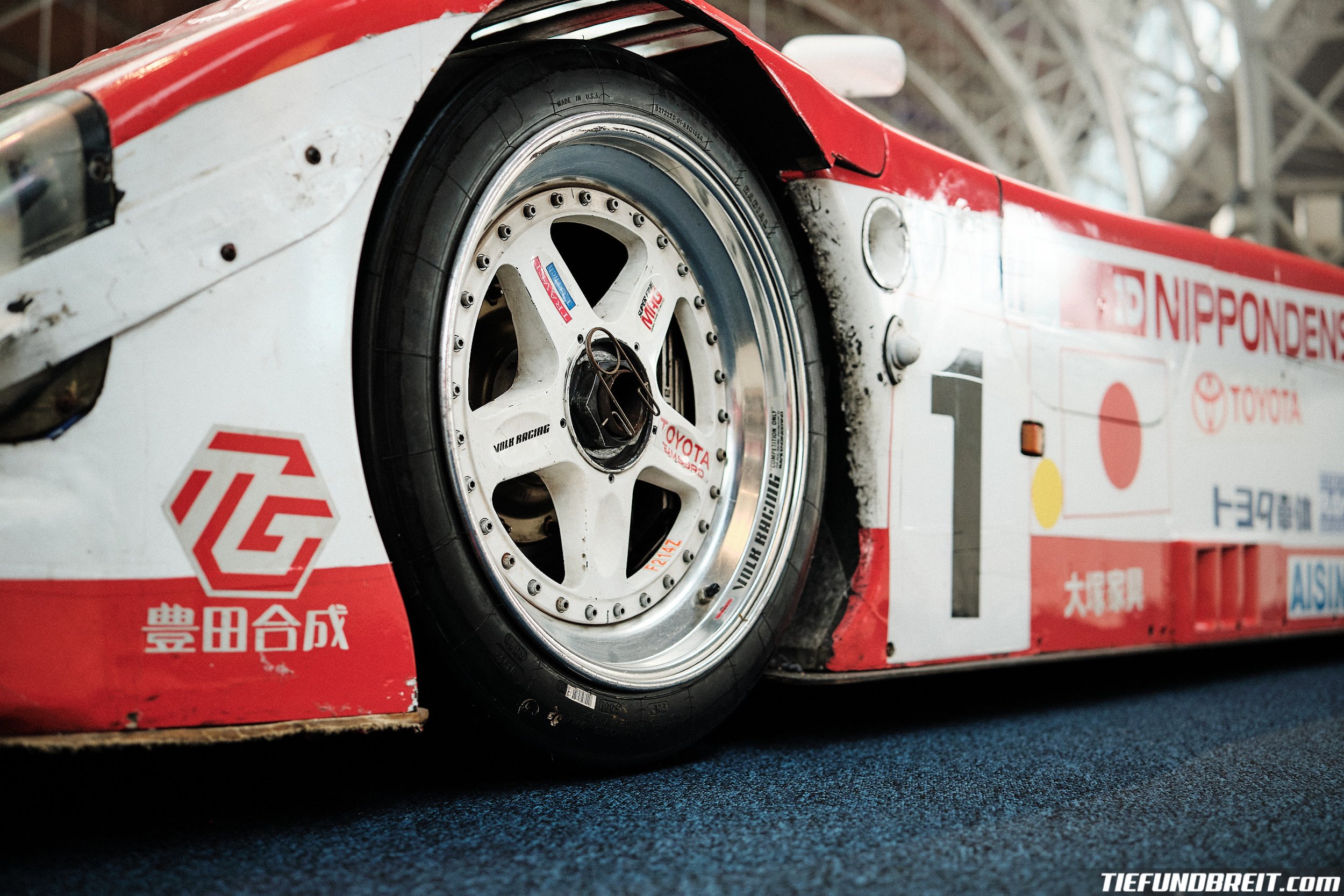
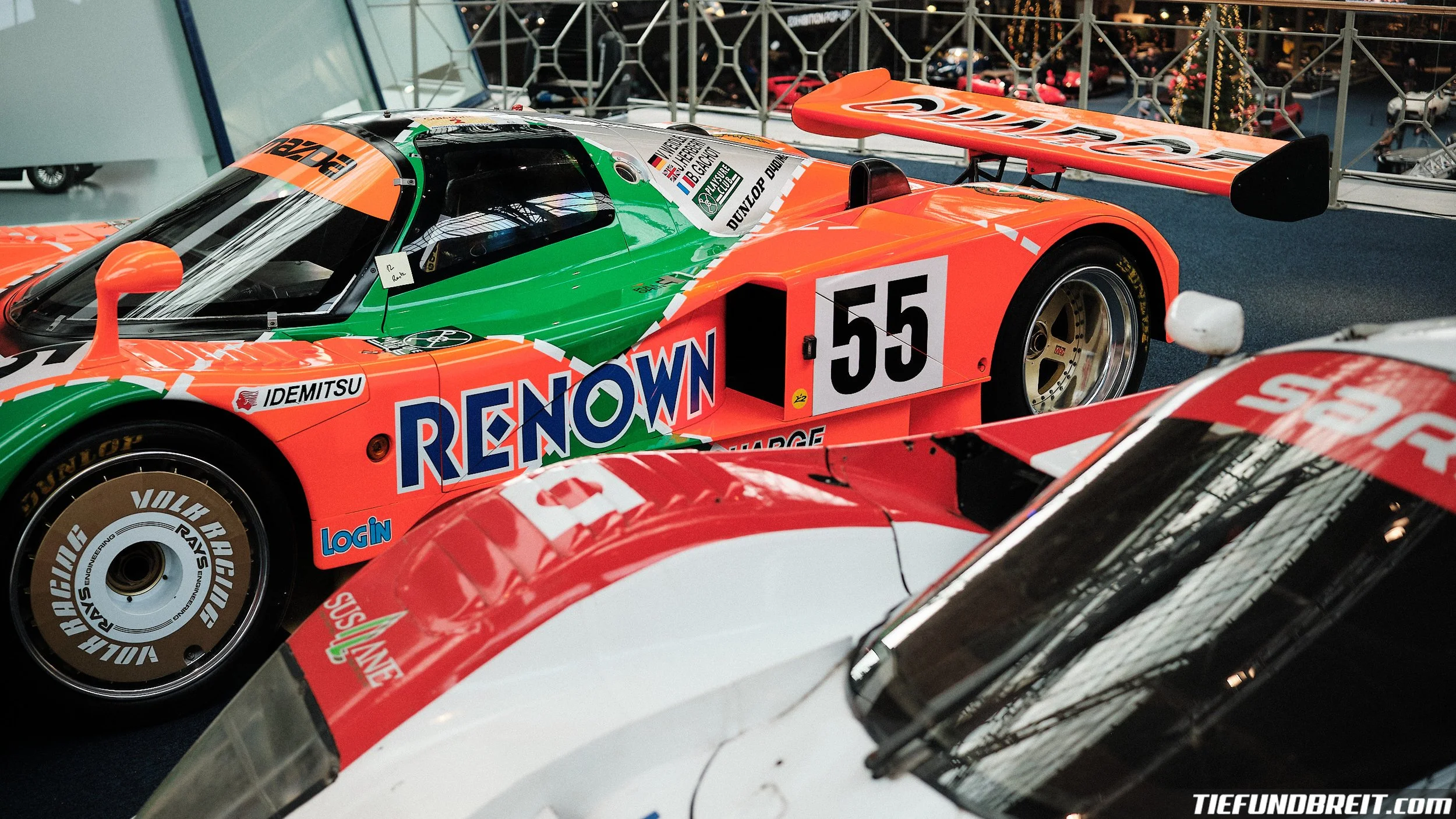
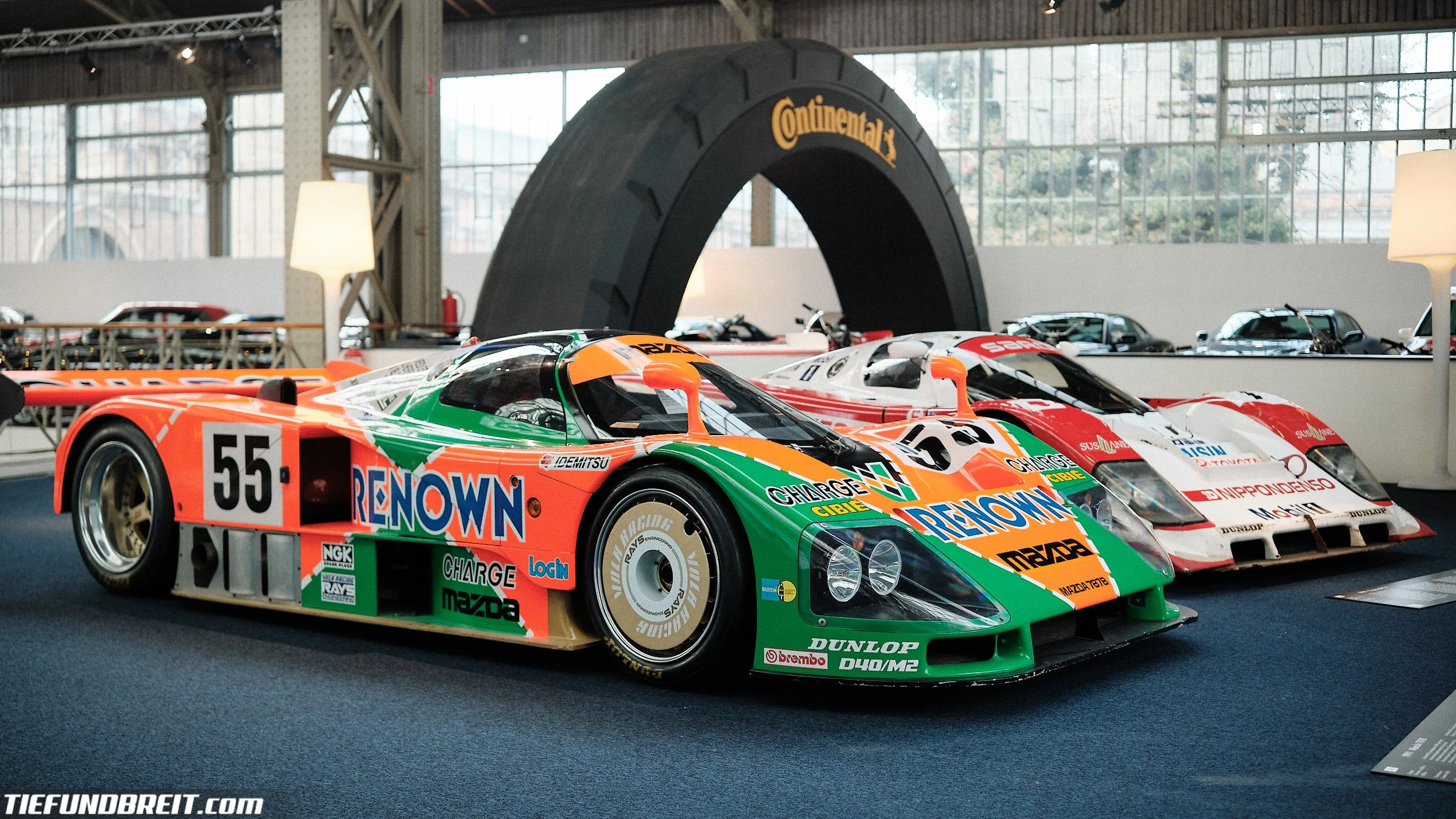
I went into this museum not knowing what to expect, and so I was not prepared to spot yet another of my favorite race cars. Group C is another passion of mine. This is what I think of when I think ‘racecar dialed up to 11’. The two cars in question were a Toyota 94C-V that raced in the 1994 24 Hours of Le Mans, and of course the legendary Mazda 787B. It is a shame these were just static displays. One of these days, I will have to make it to a racetrack and see a 787 driven in anger during a classic race. As it is, just looking at it is also plenty - the bright green and orange livery is legendary.
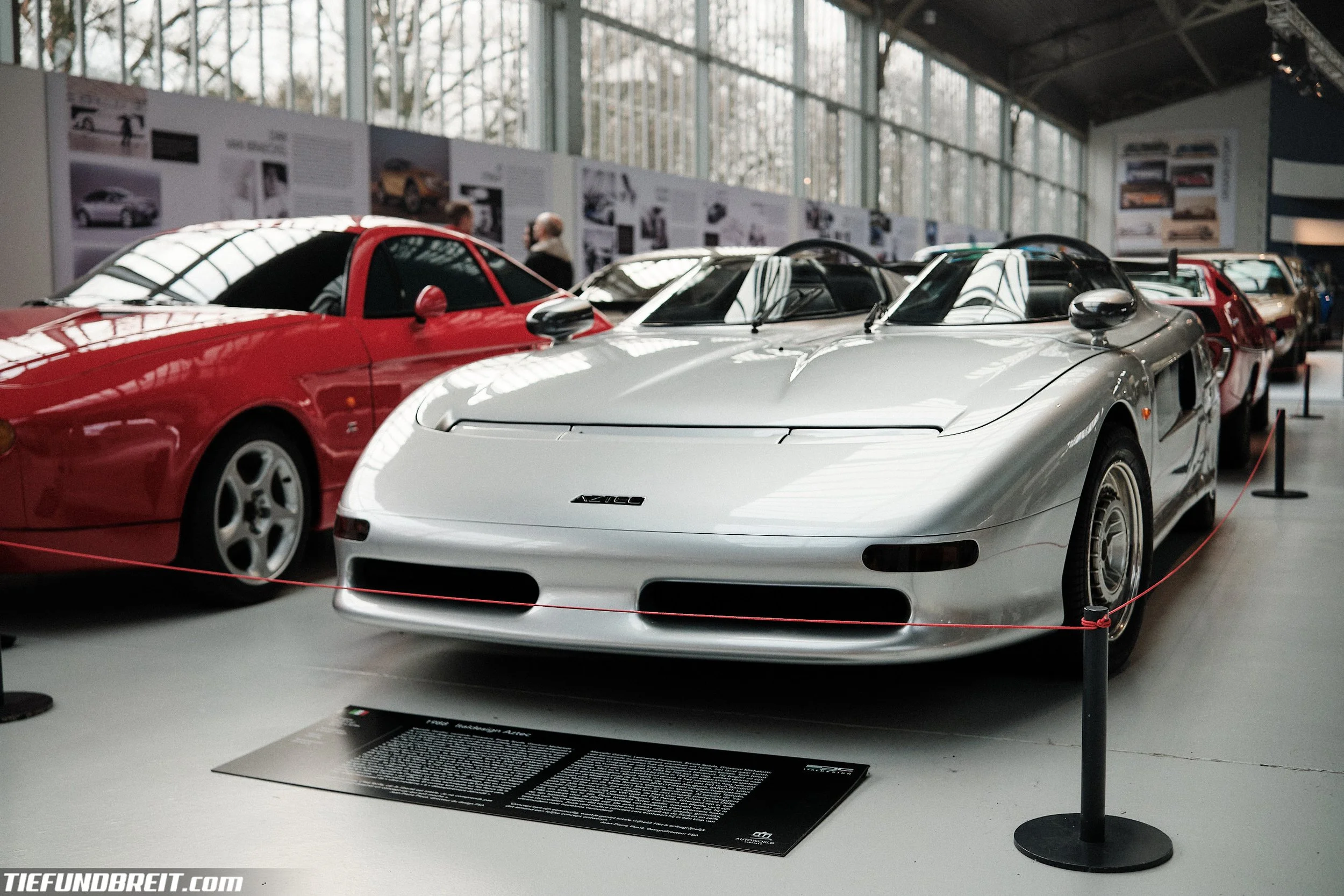
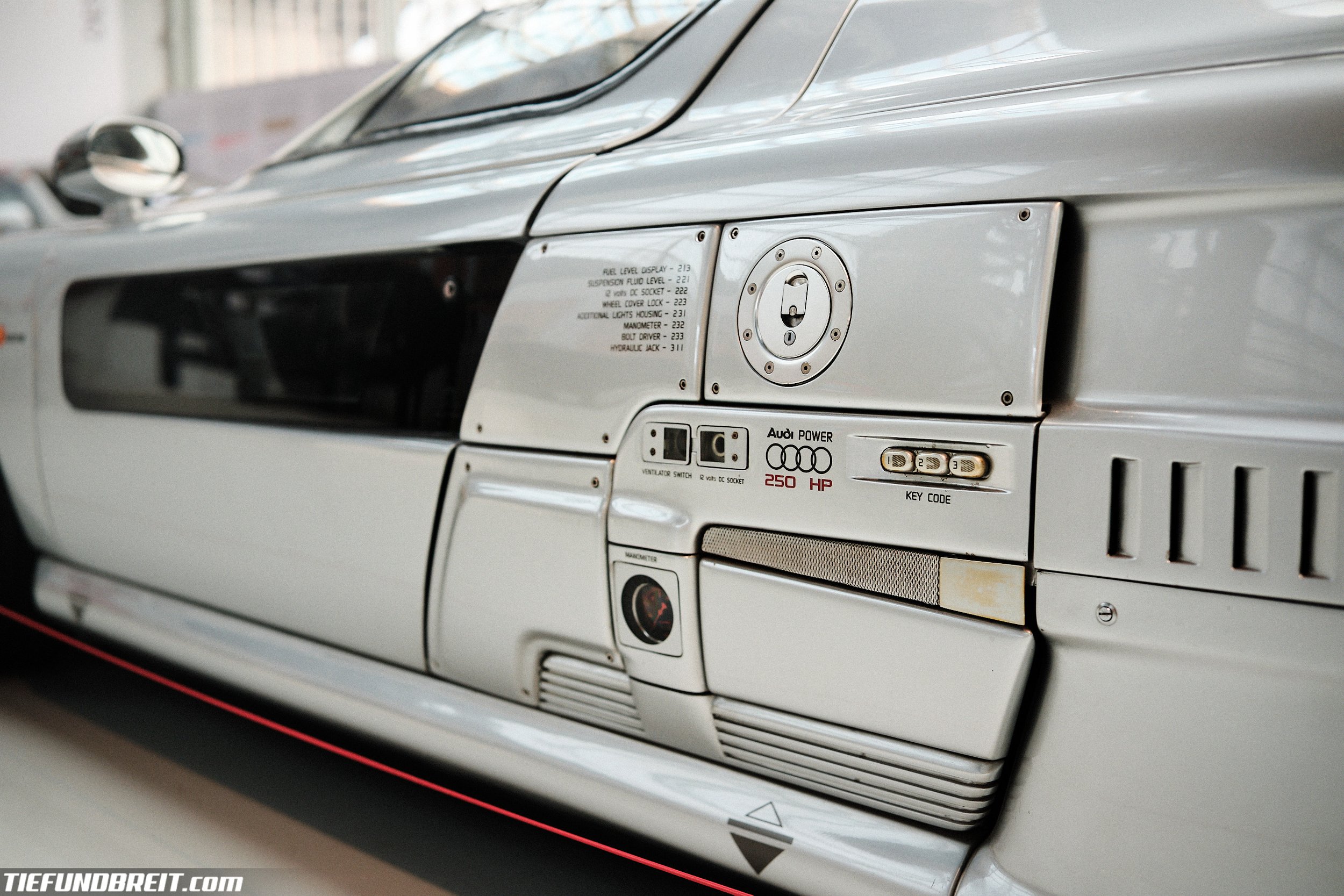
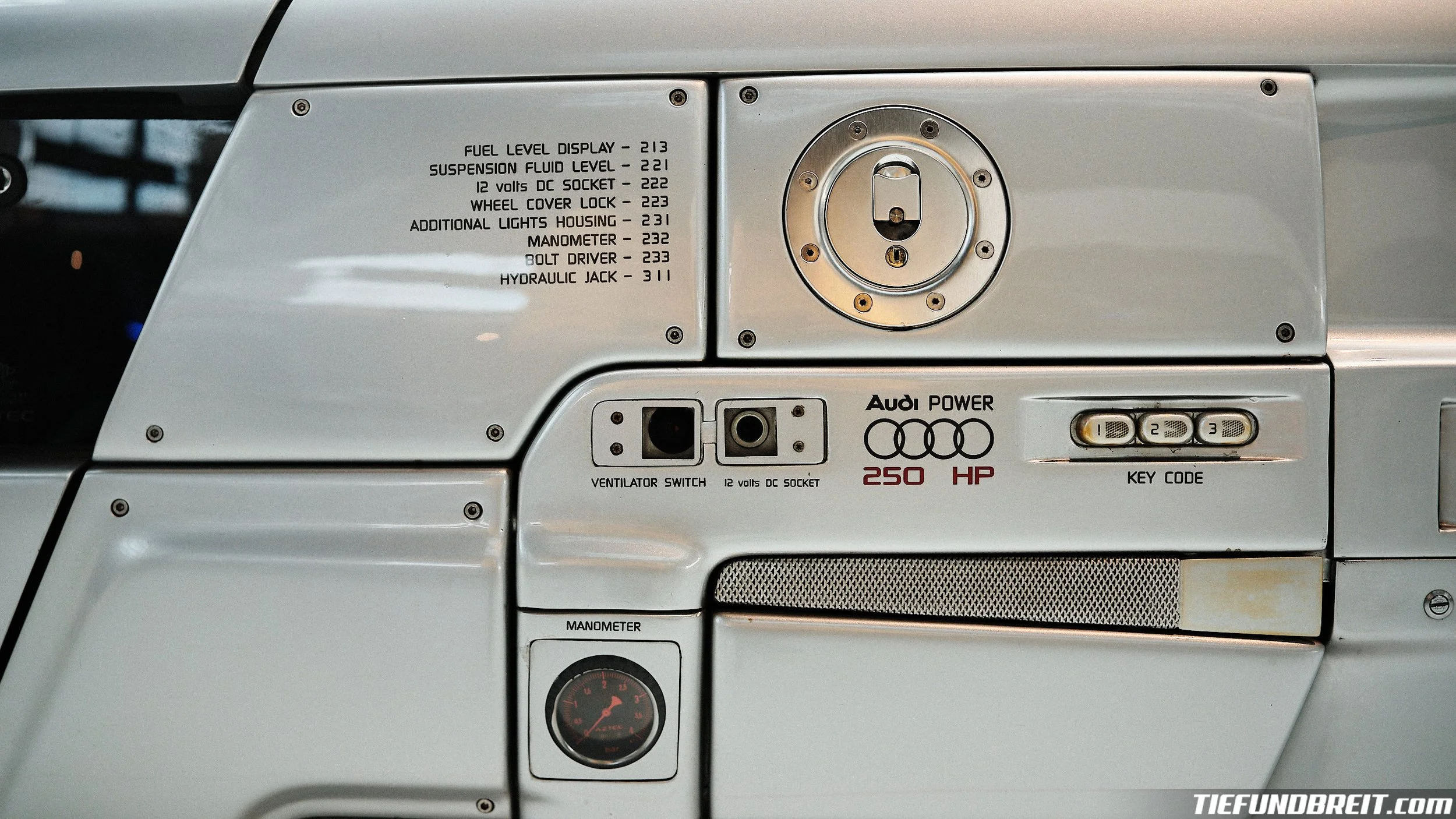
Some more highlights of the second-floor balcony included an Italdesign Aztec, a truly weird-looking vehicle. Supposedly, only 18 of these were built, out of a planned 50-unit production run. It was powered by an Audi-sourced 2.2-liter five-cylinder turbo mated to a Porsche 944 5-speed transmission and the all-wheel drive from a Lancia Delta HF Integrale. It also had a control panel on the sides where you could punch in certain codes to display some technical information or current status of the systems.
All in all, this visit was well worth it. If you ever find yourself near Brussels, be sure to stop by and have a look at Autoworld—you will not be disappointed. I will leave you with some more impressions of the upper balcony and apologize for my long ramblings. I do hope you enjoyed the read and would love it if you left a comment!